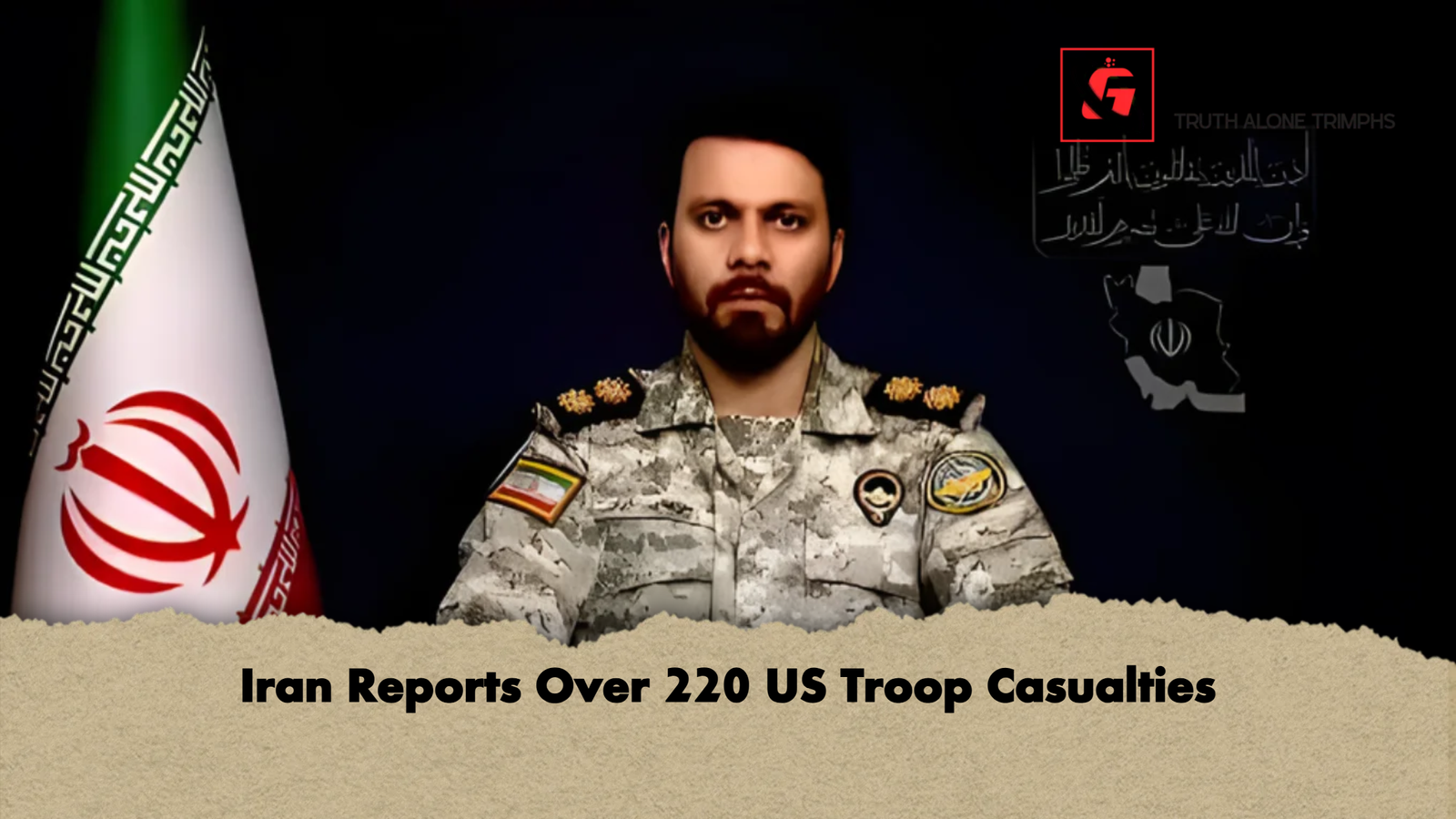
Tensions in the Middle East have sharply escalated in the past 24 hours, with Iran claiming significant casualties among US military personnel in the region. A spokesperson from Iran’s Khatam al-Anbiya Central Headquarters announced that more than 220 American soldiers and officers have been killed or injured during a series of recent strikes on US bases and assets.
The claims were published by Iran’s state broadcaster IRIB on its website, ParsToday, highlighting the intensifying confrontation between Tehran and Washington.
Recent Attacks and Casualties
The Iranian official stated that multiple strategic locations, including naval and air installations, were targeted in the attacks:
US Fifth Fleet Naval Base: 21 US personnel killed, several others injured.
Al-Dhafra US Base: Approximately 200 US personnel killed or wounded.
Northern Persian Gulf Oil Vessel: A US-owned tanker reportedly attacked, resulting in additional casualties.
The spokesperson added that destructive operations against US facilities remain ongoing, signalling Iran’s commitment to sustained military action.
| Location / Asset | US Casualties | Notes |
|---|---|---|
| US Fifth Fleet Naval Base | 21 killed, several injured | Naval personnel targeted |
| Al-Dhafra US Base | ~200 killed/wounded | Air and ground installations targeted |
| US-Owned Oil Tanker, N. Persian Gulf | Not specified | Vessel attacked, casualties reported |
Iran’s Operational Endurance
In addition to reporting casualties, Iran claims it is capable of sustaining current military operations for at least six months. IRGC spokesperson Ali Mohammad Naeini, speaking to the semi-official Fars News Agency, said:
“The armed forces of the Islamic Republic of Iran are capable of continuing this intense level of conflict for at least six months.”
This statement emphasises Tehran’s position that it is prepared for prolonged engagement despite mounting international pressure and ongoing US–Israel operations.
Regional and Strategic Implications
Analysts suggest that Iran’s assertions serve dual strategic purposes. Domestically, they aim to bolster public morale and reinforce confidence in the military. Internationally, they communicate a warning to the US, Israel, and regional actors that Iran maintains operational capability to strike key military and economic targets.
The escalating conflict has already disrupted critical shipping routes, including the Strait of Hormuz, threatening global oil and LNG supplies. Experts warn that continued military exchanges could intensify regional instability, heighten the risk of miscalculation, and potentially provoke further confrontation between major powers in the Persian Gulf.
As the situation develops, both strategic messaging and operational actions will remain closely monitored, with implications for energy markets, regional security, and international diplomacy.
Word count: 372