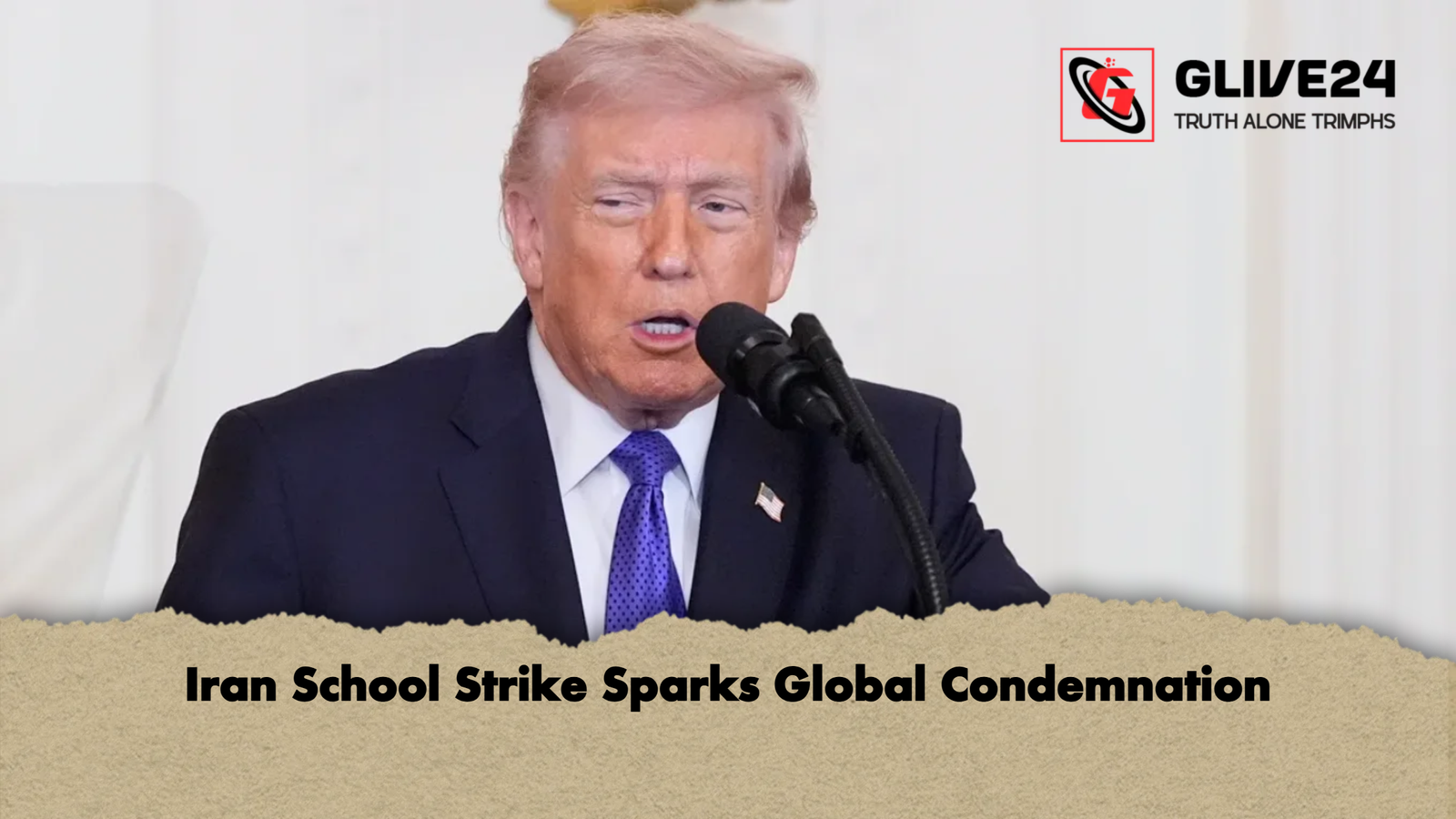
A deadly assault on a girls’ school in southern Iran has provoked international outrage, with reports indicating over 165 students killed. The attack, carried out amid escalating regional tensions, has drawn sharply contrasting claims of responsibility. Tehran has accused Israel and the United States, while former US President Donald Trump has directly attributed the incident to Iranian forces, intensifying global debate over accountability and evidence.
US Leadership Response
On Saturday, 7 March 2026, Trump addressed the incident aboard Air Force One, stating:
“No, the United States is not responsible. Based on what I have seen, this was carried out by Iran.”
US Secretary of Defense Pete Hegseth, speaking alongside Trump, offered a more cautious perspective, noting that investigations are ongoing while emphasising:
“Only Iran targets civilian populations deliberately.”
Trump reiterated his position, highlighting Iranian culpability and differentiating it from previous White House statements. Earlier, on Wednesday, White House Press Secretary Caroline Leavitt had said that, to her knowledge, the United States was not involved, while acknowledging that the Department of Defense is investigating.
Details of the Attack
Satellite imagery and analyses from US and Israeli military sources suggest the strike followed patterns consistent with conventional air operations, though official verification remains pending. Iranian authorities continue to maintain that foreign powers orchestrated the assault, condemning the killing of children as a national tragedy. Iranian President Masoud Pejeshkian stated:
“The memory of this school attack will never be erased from the history of our nation.”
| Parameter | Details |
|---|---|
| Location | Girls’ school, southern Iran |
| Date of Attack | Saturday, 7 March 2026 |
| Fatalities | 165+ school students |
| Alleged Perpetrators | Iran (per Trump), US & Israel (per Tehran) |
| Investigation Status | Ongoing by US Department of Defense |
| International Response | Widespread condemnation |
| Iranian Statement | Attack will remain a national memory |
Strategic and Humanitarian Implications
The assault underscores the vulnerability of civilian infrastructure in conflict zones, raising pressing concerns regarding the protection of children and non-combatants under international law. Analysts warn that the incident may escalate tensions between Tehran, Washington, and Jerusalem, potentially influencing diplomatic negotiations, regional security, and humanitarian interventions.
Experts note that contradictory claims reflect the complex information environment of modern conflicts, where satellite intelligence, open-source data, and political narratives intersect.
With more than 165 lives lost, the attack highlights the human cost of geopolitical disputes, while ongoing investigations seek clarity on responsibility. Both US and Iranian officials have pledged further reviews, yet the debate over accountability, proportionality, and the protection of civilians continues to dominate international discourse.