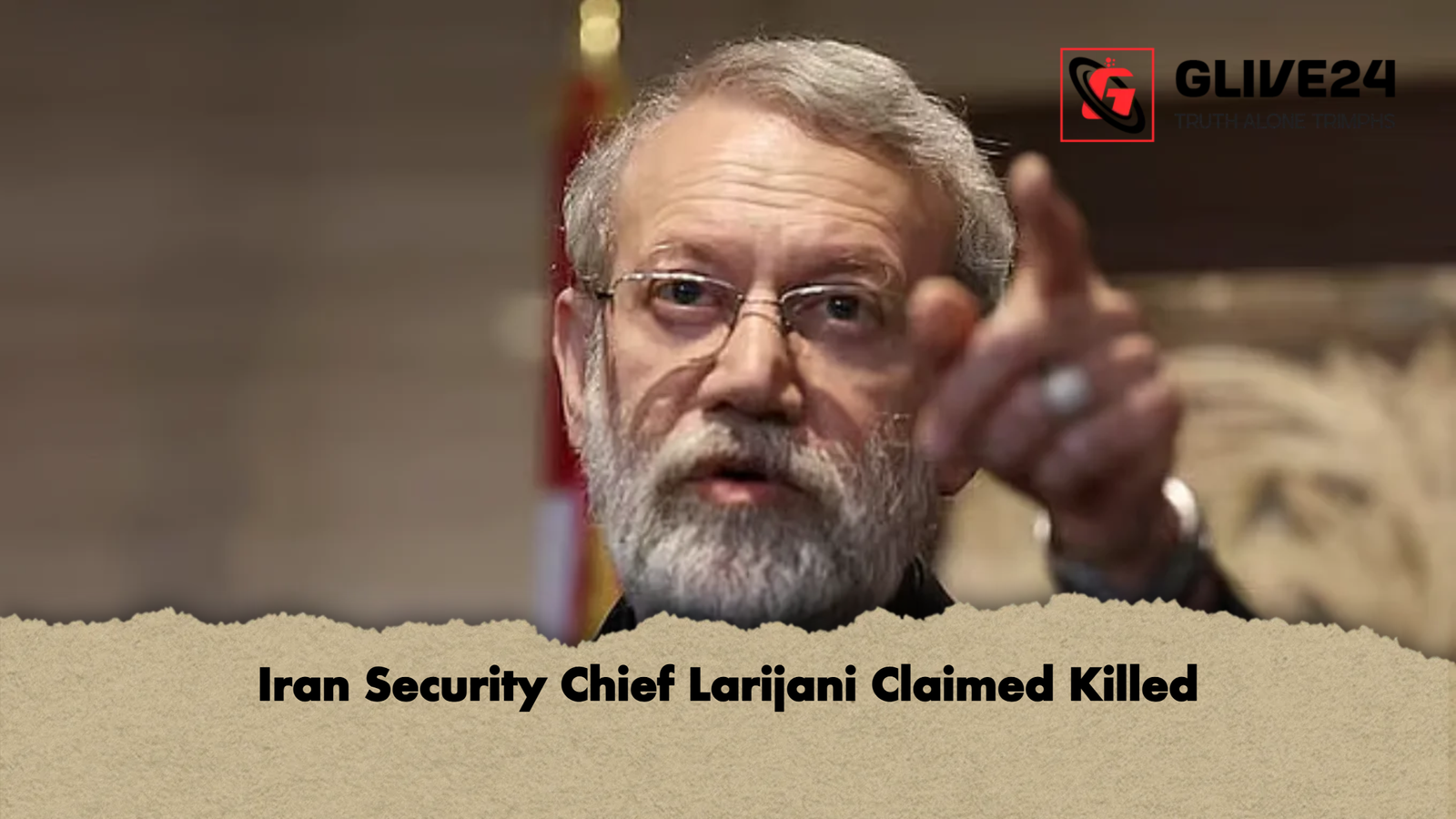
Israel’s Defence Minister, Israel Katz, has claimed that Ali Larijani, the head of Iran’s National Security Council, and Qassem Soleimani, the commander of the Basij forces, have been killed. Larijani was regarded as one of Iran’s most senior and influential surviving political figures, playing a key role in shaping the country’s security and diplomatic policies for decades.
In a statement issued on Tuesday, Katz confirmed the alleged deaths, sending ripples through international media outlets. However, Tehran has yet to issue any official comment or confirmation, leaving the global community awaiting verification from Iranian authorities.
Larijani, 67, had long been seen as a calm and pragmatic force within Iran’s power structure. A former parliamentary speaker and a key negotiator in discussions with Western powers over Iran’s nuclear programme, he was recognised for his strategic acumen and intellectual pursuits. Notably, Larijani authored a book on the eighteenth-century German philosopher Immanuel Kant, reflecting his philosophical interests and a broader vision beyond the immediate political sphere.
The context surrounding this claim is particularly tense. On 1 March, a reported US-Israeli airstrike allegedly targeted senior Iranian leaders, including Supreme Leader Ayatollah Ali Khamenei and Islamic Revolutionary Guard Corps (IRGC) commander Mohammad Pakpour. Within 24 hours of this attack, Larijani appeared on state television, delivering unusually fiery and confrontational statements, a marked departure from his normally measured rhetoric. Analysts interpreted this as signalling a hardening of Iran’s stance in response to escalating regional pressures.
The Basij, a paramilitary force operating under the IRGC, plays a central role in internal security, social control, and rapid mobilisation during emergencies. Soleimani’s alleged death would represent a significant blow to this structure, potentially reshaping the balance of power within Iran’s military and political apparatus.
Key details surrounding the reported deaths are summarised below:
| Individual | Position | Age | Notable Contributions | Status |
|---|---|---|---|---|
| Ali Larijani | Head of National Security Council | 67 | Former Parliament Speaker; Negotiator in nuclear talks; Author on Kant | Claimed killed by Israel |
| Qassem Soleimani | Commander, Basij Forces | N/A | Led internal security and paramilitary operations | Claimed killed by Israel |
| Mohammad Pakpour | IRGC Commander | N/A | Military strategist; involved in regional operations | Reportedly killed in March airstrike |
| Ayatollah Ali Khamenei | Supreme Leader | 84 | Supreme authority over Iran’s political and military structures | Targeted in March airstrike |
The international community is monitoring these developments closely, recognising that confirmation of Larijani and Soleimani’s deaths could have far-reaching implications for regional stability and Iran’s internal power dynamics. News outlets worldwide are awaiting further official information to ascertain the accuracy of these claims.
With tensions already high in the Middle East, the alleged deaths of such senior figures could significantly alter diplomatic and military calculations in the region. Analysts warn that a verified loss of leadership at this level may accelerate shifts in Iran’s domestic and foreign policy priorities.