
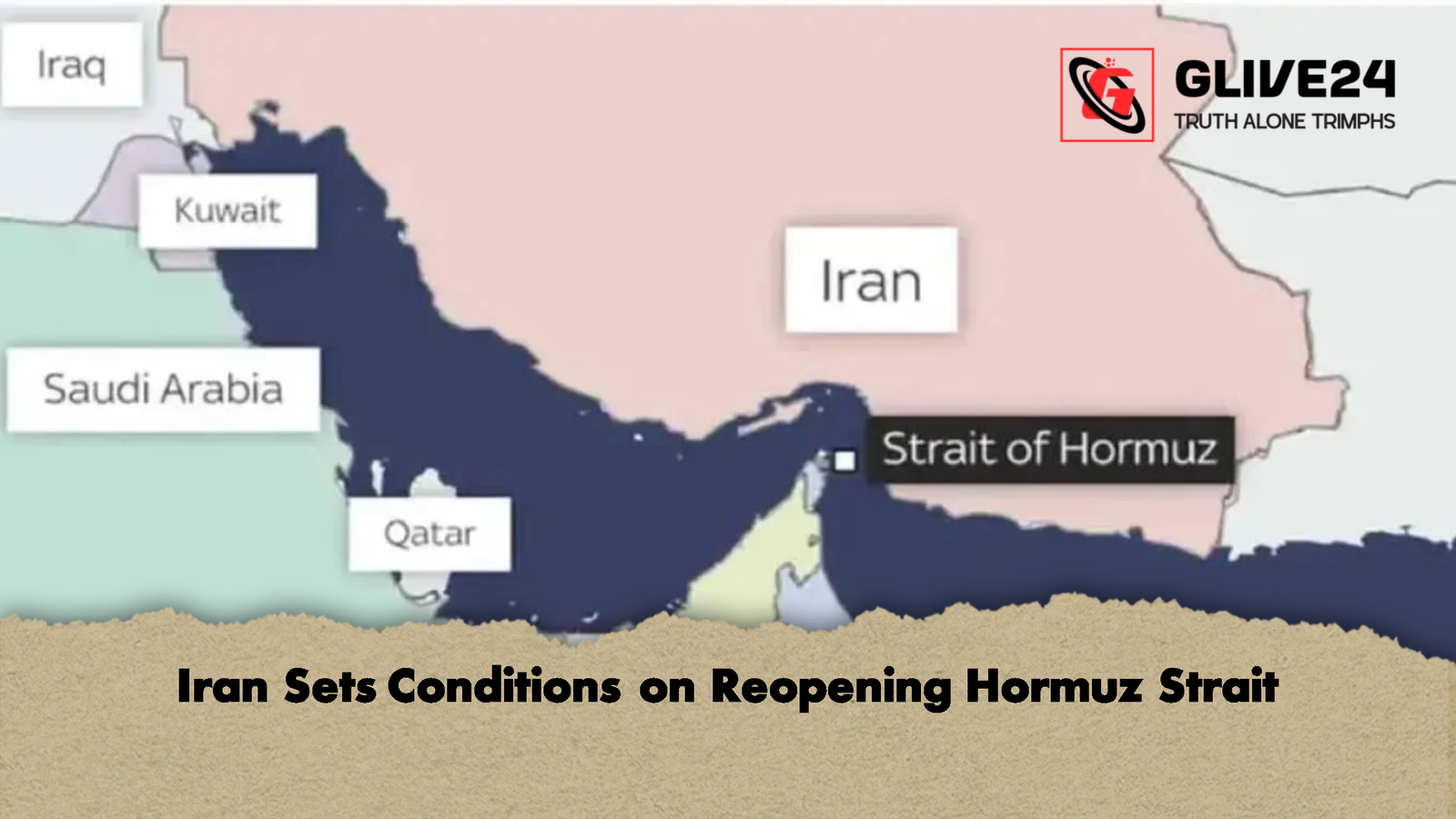
Iran has stated that the Strait of Hormuz will only be reopened under specific conditions, insisting that compensation for war-related damages must first be paid before any resumption of normal maritime traffic through the strategic waterway.
According to a statement issued on Sunday (5 April) by Seyyed Mehdi Tabatabaei, deputy head of communications at the Iranian Presidential Office, Tehran is prepared to consider reopening the vital shipping route only if a structured compensation mechanism is established.
He indicated that such compensation should be arranged through what he described as a “new legal framework”, potentially linked to transit fees or passage charges imposed on shipping vessels navigating the strait.
Proposed Framework Overview
| Category | Iranian Position |
|---|---|
| Condition for reopening | Payment of war-related compensation |
| Mechanism | New legal framework via transit fees |
| Route affected | Strait of Hormuz |
| Stakeholders | Iran, maritime shipping operators, international actors |
The Strait of Hormuz is one of the world’s most critical energy corridors, through which a significant proportion of global oil and gas shipments pass daily. Any disruption to its operations has immediate implications for international energy markets and global shipping stability.
Tabatabaei’s remarks also included a sharp response to recent statements attributed to former United States President Donald Trump. He criticised Trump’s rhetoric regarding Iran and alleged threats against Iranian civilian infrastructure, describing the comments as driven by “frustration and anger” and dismissing them as inappropriate and inflammatory.
His comments come amid escalating verbal exchanges between Tehran and Washington, with both sides trading accusations over regional security tensions and maritime stability.
In a parallel development, Trump himself has faced political backlash in the United States following remarks made on his social media platform Truth Social, in which he used highly controversial language regarding Iran and ongoing geopolitical tensions. The statement has drawn criticism from members of the opposition Democratic Party.
US Senator Bernie Sanders strongly condemned Trump’s comments, warning that such rhetoric during a period of heightened military tension was dangerous and irresponsible. Writing on social media platform X, he urged Congress to take immediate action to end the conflict.
“Following a month of war in Iran, such statements from the President on Easter Sunday are deeply alarming,” Sanders wrote, describing Trump as “dangerous and unstable” and calling for urgent congressional intervention.
Another Democratic Senator, Chris Murphy, also criticised the remarks, describing them as evidence of what he called an “uncontrolled” and “erratic” approach to foreign policy. He suggested that, had he been part of the administration, he would be consulting constitutional experts regarding the potential application of the 25th Amendment, which governs presidential removal procedures.
Murphy further alleged that Trump’s leadership had already contributed to significant loss of life and warned that continued escalation could lead to further casualties.
As tensions intensify across political and diplomatic channels, concerns are growing internationally over the potential impact on maritime security in the Persian Gulf region and the broader implications for global stability if the dispute surrounding the Strait of Hormuz continues unresolved.