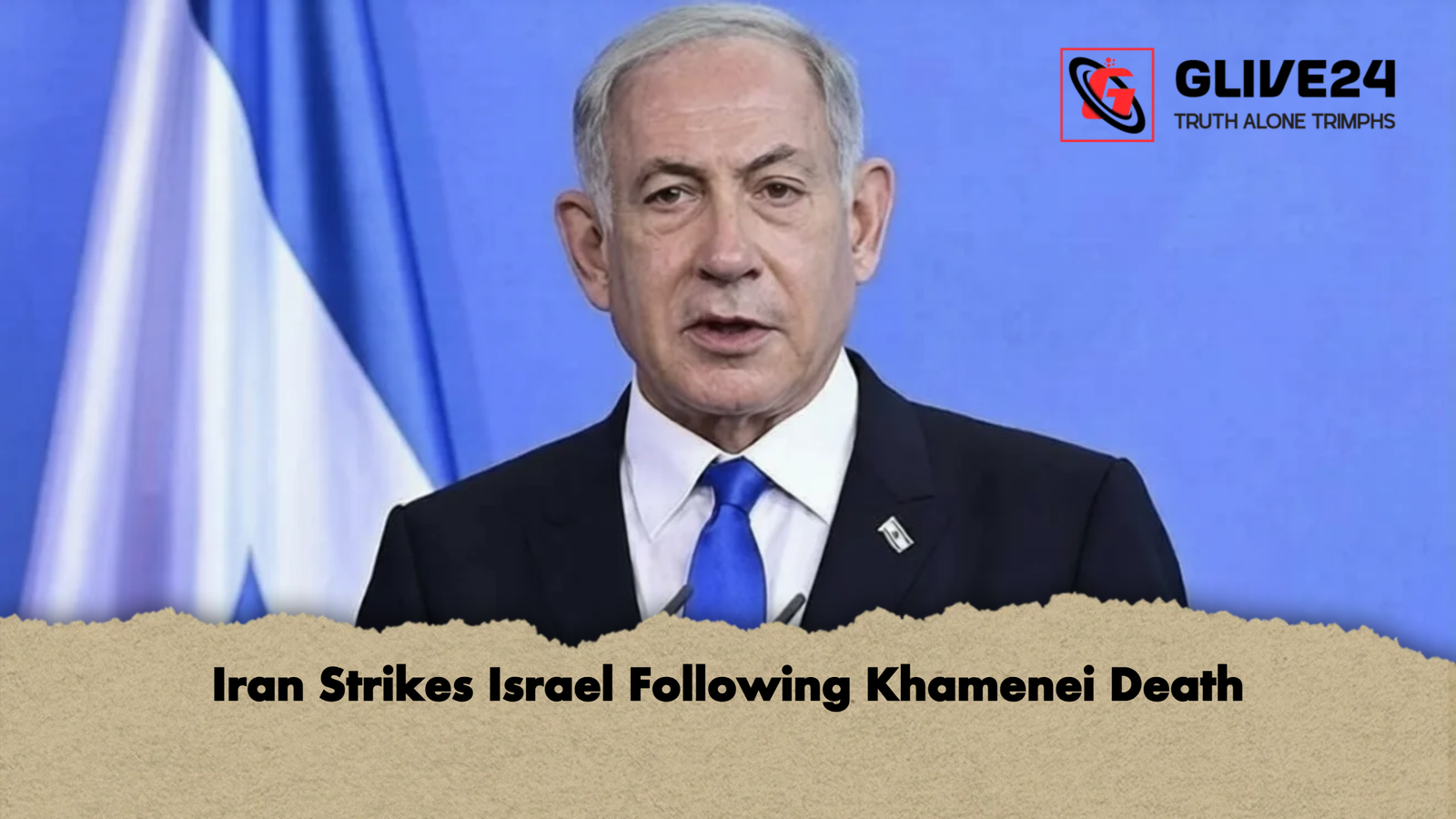
Tensions in the Middle East have escalated sharply following the death of Iran’s Supreme Leader, Ayatollah Ali Khamenei. In a direct retaliation against the joint United States–Israel military operation that targeted Iranian interests, Tehran has launched a missile strike on key Israeli installations.
On Monday, 2 March, Iran’s state-run Fars News Agency reported that the Islamic Revolutionary Guard Corps (IRGC) targeted the office of Israeli Prime Minister Benjamin Netanyahu and the headquarters of the Israeli Air Force. The attack employed Iran’s domestically developed Khaibar missiles, signalling a significant escalation in military capability.
According to Fars News, the strikes were intended as a stern warning to Israel’s political and military leadership. No information about civilian casualties has been released so far.
The backdrop to this latest escalation traces back to the failed nuclear programme negotiations. On 28 February, a joint US–Israeli strike resulted in the death of Ayatollah Khamenei, prompting Iran to declare forty days of mourning along with seven days of official government closure.
In response, US President Donald Trump stated that operations would continue in Iran until the objectives of the joint strike were fully realised, despite Khamenei’s death. Iran, for its part, has vowed to pursue equal retribution. Iranian President Masoud Padeshkian declared on 1 March, “It is the sacred duty of the Islamic Republic to avenge this assassination. Iran will employ all its military and strategic capabilities in retaliation.”
Summary of Recent Iran–Israel Conflicts
| Date | Type of Attack | Targeted Location | Casualties / Damage Reported |
|---|---|---|---|
| 28 Feb | Joint Airstrike | Key Iranian installations | At least 555 killed, 131 facilities damaged |
| 1 Mar | Iranian Retaliation | Israeli military and political sites | Not yet reported |
| 2 Mar | Khaibar Missile Strike | Office of PM Netanyahu; Air Force HQ | Not yet reported |
Analysts warn that the conflict could persist, with both military and diplomatic pressures severely affecting civilian life. The international community remains on high alert as the region grapples with instability.
The primary triggers behind this escalation are the failed nuclear negotiations and the assassination of Khamenei. Experts suggest that the unfolding Iran–Israel–US confrontation could reshape regional and global political dynamics.
At present, heightened security measures remain in effect on both sides, and the situation continues to be closely monitored by international observers.