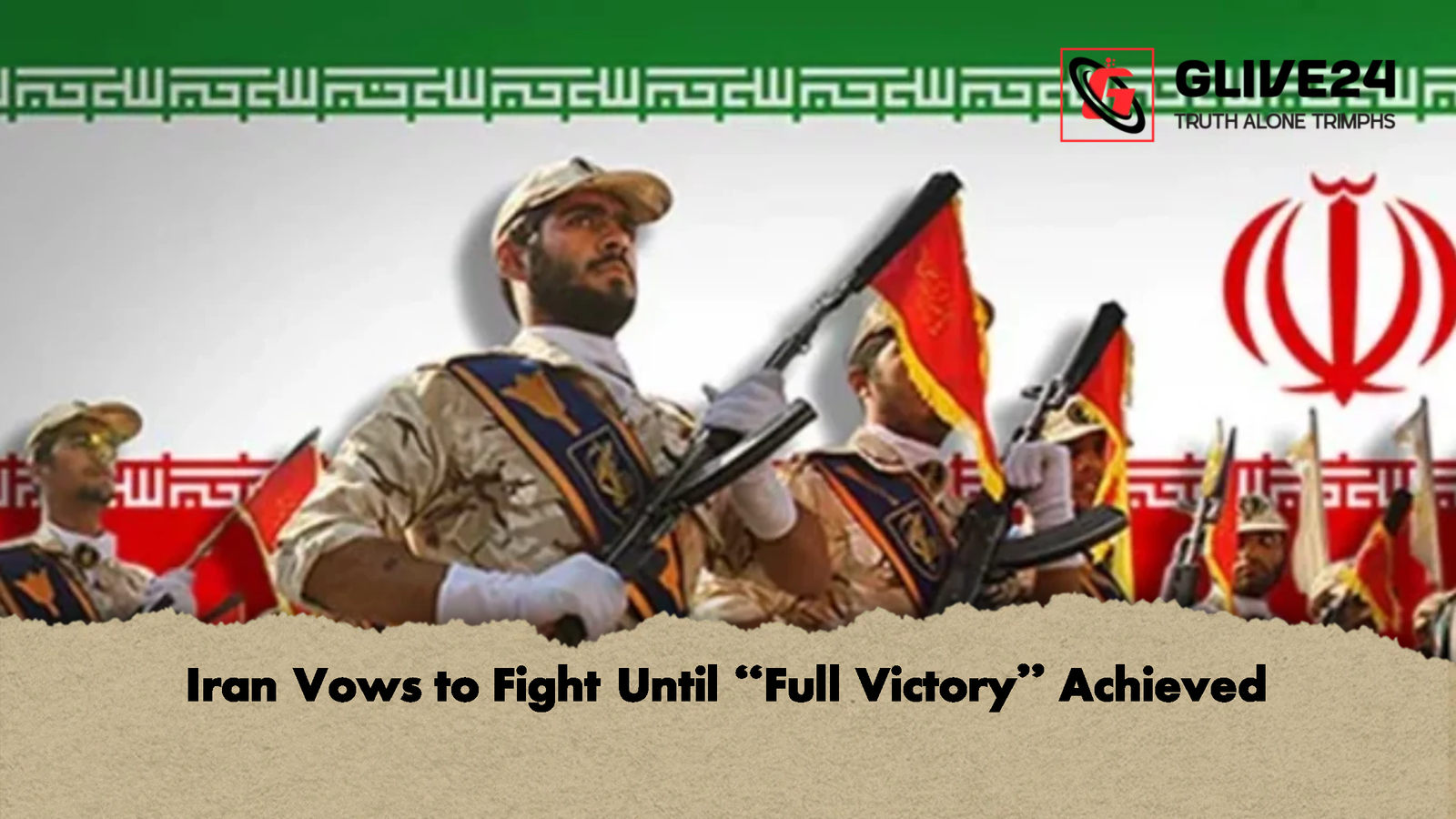
Tehran, Iran – Iran’s armed forces have formally declared their intent to continue military operations in the ongoing conflict with the United States and Israel until what they describe as “full victory” is secured. The announcement, made on Tuesday, 24 March, by a senior military spokesperson, underscores Tehran’s determination amid escalating regional tensions and growing international scrutiny.
The statement was delivered by Ali Abdollahi Aliabadi, an official at Iran’s Khatam al-Anbiya Central Headquarters, in a video broadcast on state television. Addressing the nation, he emphasised the Iranian military’s unwavering commitment to defending national sovereignty, territorial integrity, and the broader interests of the Islamic Republic.
“The Islamic Republic of Iran takes pride in its strong, victorious, and steadfast armed forces. This journey will continue until full victory is secured,” Aliabadi said.
While the general did not clarify what constitutes “full victory,” analysts suggest that the statement is intended as both a domestic morale booster and an international warning. It signals Iran’s unwillingness to make concessions in any potential negotiations with the United States or other actors involved in the ongoing hostilities. The announcement arrives amidst a tense regional backdrop, where multiple military and political actors are engaged in heightened operations.
Strategic and Regional Context
Iran’s declaration reflects a broader pattern of military signalling seen in previous conflicts involving the United States and Israel. By emphasising an indefinite continuation of combat operations, Tehran aims to consolidate domestic support while projecting deterrence internationally. Security analysts note that such statements often serve dual purposes:
- Domestic mobilisation – Reassuring citizens and military personnel of the armed forces’ strength and readiness.
- International signalling – Warning adversaries of a resolute stance and discouraging unilateral military action against Iranian interests.
Regional security experts caution that the ambiguous nature of “full victory” leaves room for varied interpretations, potentially complicating diplomatic efforts and raising the risk of prolonged hostilities. The term could refer to military, political, or strategic objectives that Iran has yet to define publicly.
Key Details of Iran’s Statement
| Date | Source | Spokesperson | Statement Summary | Context | Implications |
|---|---|---|---|---|---|
| 24 Mar 2026 | Iran State Television | Ali Abdollahi Aliabadi, Khatam al-Anbiya HQ | Armed forces to continue fighting until “full victory” | Ongoing conflict with US and Israel | Signals firm stance in negotiations; projects continued military readiness |
| – | Al Jazeera report | – | Statement broadcast nationally | Heightened regional tensions | May affect US-Iran diplomatic and military calculations |
International observers have noted that Tehran’s message may be designed to influence not only adversaries but also neutral actors and regional allies. By projecting resolve, Iran aims to strengthen its negotiating position and reinforce alliances within the Middle East.
Analysts also warn that such rhetoric, while bolstering domestic confidence, carries risks of misinterpretation abroad. The lack of a precise definition for “full victory” may heighten tensions, especially if opposing forces perceive it as a call for continued escalation rather than a defensive posture.
As the situation evolves, policymakers, diplomats, and security experts worldwide will closely monitor Tehran’s public statements and military movements to evaluate potential implications for regional stability, global energy markets, and ongoing diplomatic initiatives.
The announcement marks yet another chapter in the increasingly complex Middle Eastern conflict, demonstrating how military rhetoric and strategic signalling continue to shape regional dynamics.