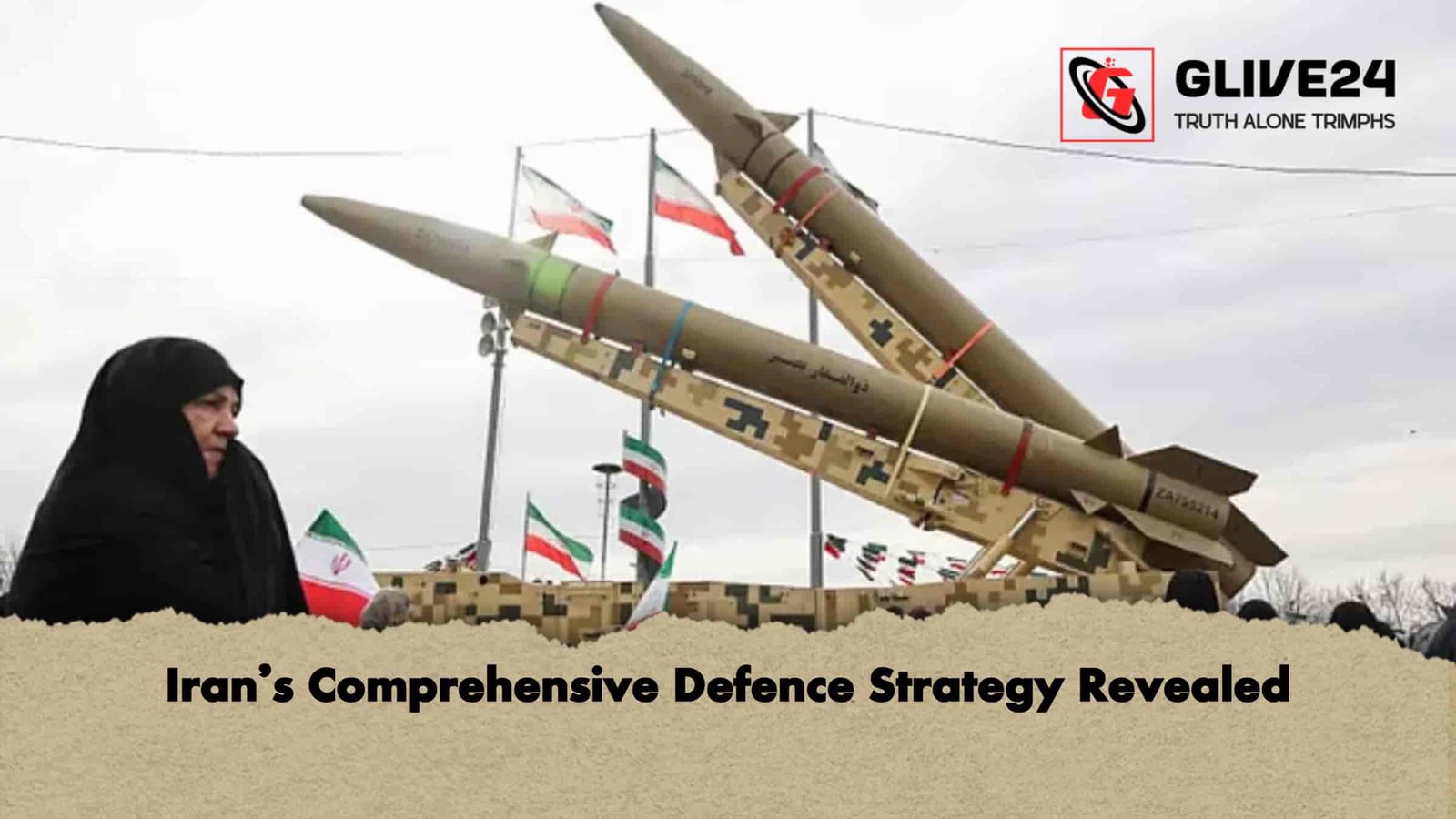
In the wake of a coordinated attack by the United States and Israel, Iran has exhibited a rapid and highly organised retaliatory response. On Saturday, Tehran announced immediate countermeasures following an alleged assassination attempt on the country’s Supreme Leader, Ayatollah Ali Khamenei. Iranian authorities stated that the reprisal would not only target Israel and select Gulf states but could also strike American military installations across the region. An analysis of Iran’s military capabilities and strategic doctrines highlights the potential scale and scope of its response.
Table of Contents
Missile Capabilities
Central to Iran’s defence strategy is its extensive missile programme. Boasting one of the Middle East’s largest and most varied missile arsenals, Iran can strike distant targets without relying on conventional air power. This arsenal enables rapid regional strikes and signals strength both within the Gulf and beyond.
| Missile Type | Range (km) | Examples | Purpose and Use |
|---|---|---|---|
| Short-range ballistic | 150–800 | Zolfaghar, Qiam-1, Shahab-1/2 | Swift regional strikes, coordinated attacks, sudden assaults on nearby adversaries |
| Medium-range ballistic | 1,500–2,000 | Shahab-3, Emad, Ghadr-1, Khorramshahr, Sejjil | Regional retaliatory strikes; distant targets including Israel, Qatar, Saudi Arabia |
| Long-range ballistic | 2,000–2,500 | Khaibar Shekan, Hoj Qasem | Targeting U.S. military bases and Israel |
| Cruise missiles | Up to 2,500 | Soumar, Ya-Ali, Quds, Hoveyzeh, Paveh, Ra’ad | Land and maritime targets; capable of evading air defences |
Cruise missiles, often following low-altitude trajectories, are difficult to detect and can be combined with drones or ballistic missiles to overwhelm enemy air defences.
Drone and Hypersonic Capabilities
Iranian drones, though slower than missiles, are cost-effective and suitable for large-scale deployment. They can target airports, ports, and energy infrastructure, maintaining prolonged pressure on critical sites. Tehran has also showcased hypersonic technologies, such as the Fattah series, capable of striking targets at extremely high speeds, challenging conventional defence systems.
Underground Launch Sites and the Strait of Hormuz
To ensure operational resilience, Iran has developed subterranean tunnels, concealed bases, and fortified launch facilities. These structures complicate attempts to neutralise its missile capabilities swiftly. Additionally, Iran can leverage the strategic Strait of Hormuz to disrupt global maritime trade, threatening commercial and military vessels with missiles, naval drones, mines, and fast-attack craft.
Tehran’s Strategic Message
Iran has warned that any U.S. or Israeli attack will not be treated as a limited engagement but as an initiation of full-scale conflict. The Islamic Revolutionary Guard Corps has vowed retaliation, signalling ongoing operations, while Iran-aligned militias are reportedly participating in coordinated military actions.
In summary, Iran’s defence doctrine is multi-layered and comprehensive. By integrating ballistic and cruise missiles, drones, underground facilities, and maritime strategies, Tehran can exert both regional and global pressure. Its approach prioritises sustained, multidimensional operations over isolated retaliatory strikes.