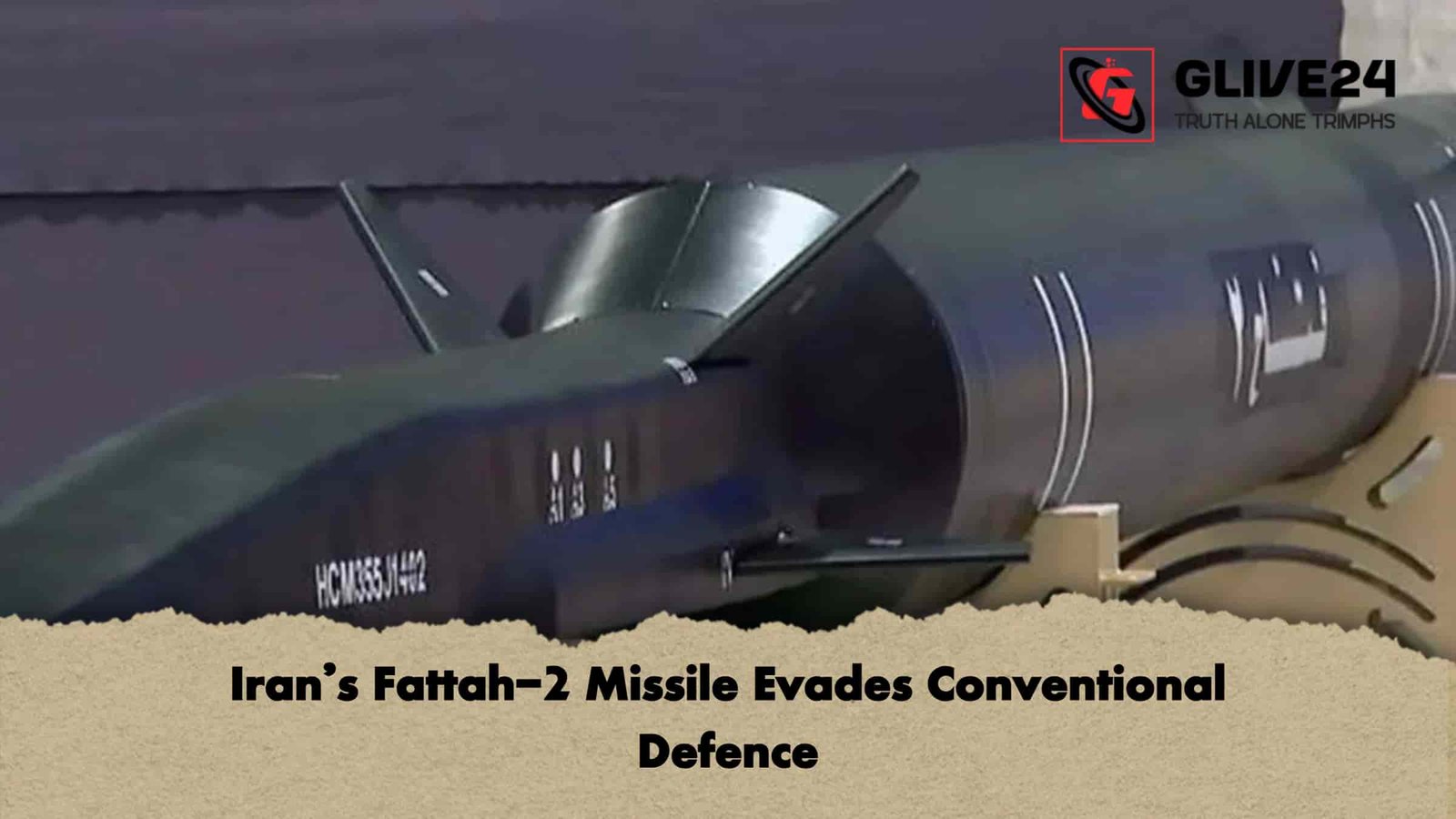
Iran’s Fattah-2 hypersonic missile has been described as virtually unstoppable by current air defence systems, according to Military Watch Magazine. The publication notes that, since 1 March, the missile has successfully struck at least three high-value Israeli targets during ongoing military operations, demonstrating both its precision and speed.
The Fattah-2 is based on hypersonic glide vehicle (HGV) technology, which allows it to manoeuvre at extreme velocities in the upper atmosphere. Its ability to change course unpredictably renders conventional radar and interceptor systems largely ineffective. Unlike traditional ballistic missiles, the Fattah-2 does not follow a fixed trajectory, making it exceedingly difficult to detect and neutralise.
Yuval Baseski, Vice President of Israel’s leading missile defence company Rafael, highlighted in a previous statement that existing systems are designed to destroy targets moving at predictable speeds along ballistic paths. The Fattah-2, travelling at Mach 10—ten times the speed of sound—would require defensive measures capable of reacting at roughly thirty times the speed of sound. Atmospheric friction at these velocities currently makes such rapid response impossible.
Military analysts warn that while Israel and the United States have previously contended with Iranian ballistic missiles, the introduction of hypersonic technology has fundamentally escalated the threat. Although Israel has announced plans to develop specialised “zone defence” systems, experts caution that deployment could take decades and demand multibillion-dollar investments.
A comparison of the Fattah-2’s key characteristics and the limitations of conventional Israeli defences is presented below:
| Feature | Fattah-2 Missile | Conventional Israeli Defence |
|---|---|---|
| Maximum Speed | Mach 10 (~12,300 km/h) | 1–2 times the speed of sound |
| Technology | Hypersonic Glide Vehicle | Ballistic tracking & interceptors |
| Manoeuvrability | High-altitude strategic course changes | Limited, predetermined paths only |
| Likelihood of Interception | Extremely low | Effective only against traditional ballistic missiles |
| Cost of Countermeasures | – | Special zone defence: billions of dollars, decades of development |
Experts now believe that the Fattah-2 can breach Israel’s missile defence shield with little resistance. The missile’s capabilities represent a significant strategic challenge, intensifying regional insecurity in the Middle East. Analysts emphasise that nations must accelerate the development of advanced air defence technologies to counter the growing threat of hypersonic weapons, which may redefine modern warfare in the coming decades.