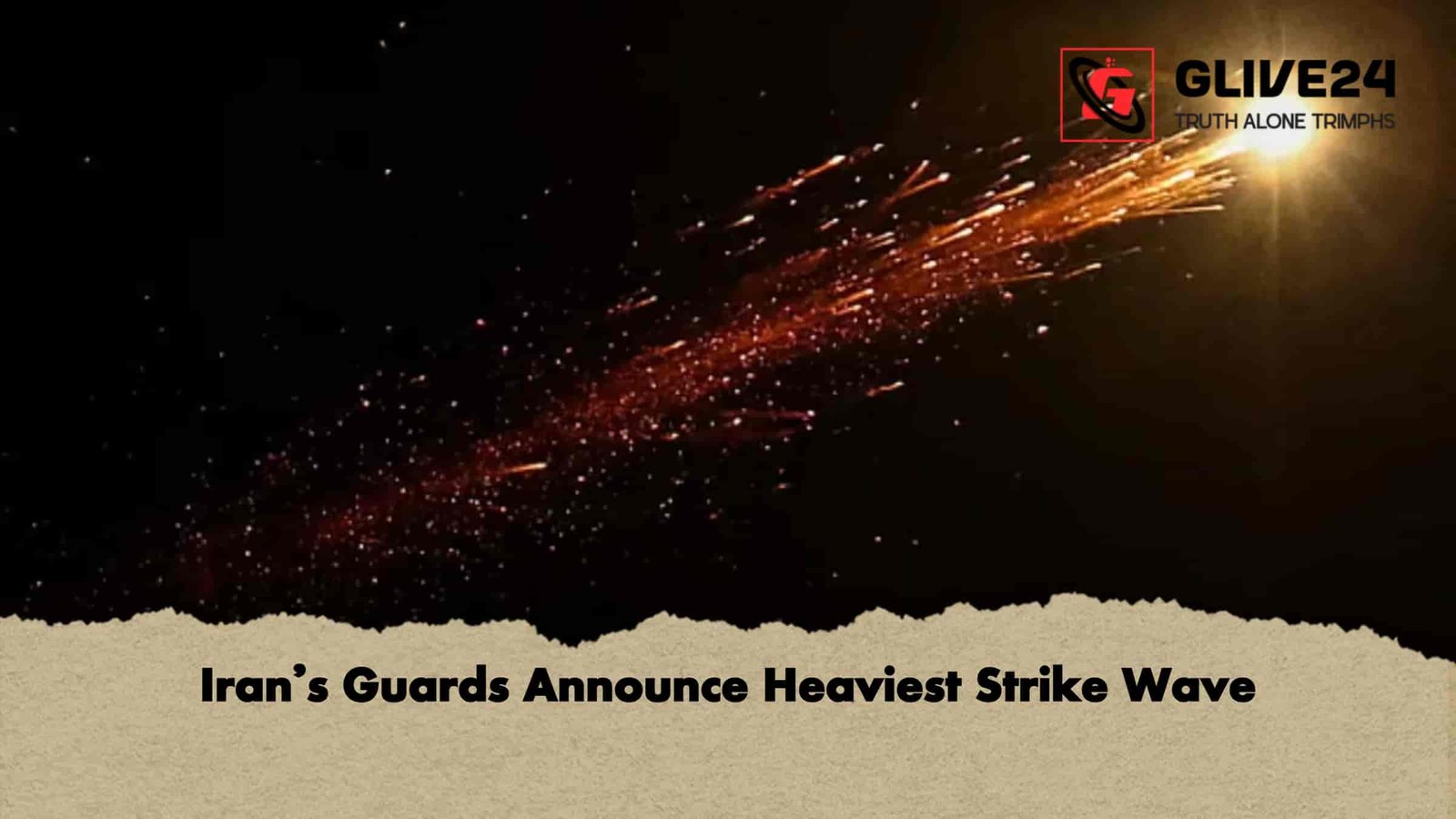
Iran’s Islamic Revolutionary Guard Corps (IRGC) has announced that it has launched what state media described as the most intense and formidable barrage of missiles since the outbreak of the current war with the United States and its allies. Iranian state broadcaster reports said the offensive, on Wednesday 11 March 2026, lasted for several hours and was directed at multiple U.S. and Israeli military targets across the Middle East.
According to the IRGC statement, the latest assault – part of what Tehran has termed Wave 37 – involved sustained missile fire against cities in Israel, including Tel Aviv, Jerusalem and Haifa, as well as strikes on U.S. positions in Gulf states and Iraq’s Kurdistan region. These operations reportedly involved “heavy” ballistic missile types, reflecting a significant escalation in Tehran’s combat posture.
Officials in Tehran framed the offensive as retaliation for earlier Western strikes that targeted Iranian infrastructure and leadership figures. The conflict ignited on 28 February 2026, when a coordinated U.S.–Israeli air campaign struck multiple Iranian strategic sites, prompting a series of counter‑attacks by Iranian forces.
Broader Military Context
The escalation has attracted global attention as hostilities expand across multiple fronts. The United States has simultaneously intensified its own campaign against Iranian military capabilities, with senior U.S. defence leaders describing recent strikes as the most powerful yet in the ongoing “Operation Epic Fury” campaign.
Below is an overview of recent battlefield developments:
| Aspect | Recent Activity |
|---|---|
| Iranian “most intense” strike | Iran claims its heaviest missile barrage targeting U.S. and Israeli sites since conflict began. |
| Wave numbering | Operations described as “Wave 37” by Iran’s military. |
| U.S. operations | Pentagon labels latest strikes as most intensive day against Iran. |
| Targets affected | Israeli cities and U.S. bases in Bahrain, Kuwait, Iraq, UAE and Saudi Arabia. |
Regional and Global Repercussions
The expanding conflict has already impacted civilian populations and strategic infrastructure. Cities across the region have experienced air-raid alerts and missile interceptions, while oil markets have reacted to persistent threats around the Strait of Hormuz – a critical artery for global energy supplies.
Diplomatic responses vary. Some nations have evacuated personnel from the Gulf, while others call for urgent de‑escalation. International observers continue to warn that without restraint, the hostilities risk drawing in additional regional actors, further destabilising an already volatile security environment.
The evolving conflict landscape suggests that the current confrontation between Iran and Western forces will remain a key focus of international security efforts in the weeks ahead.