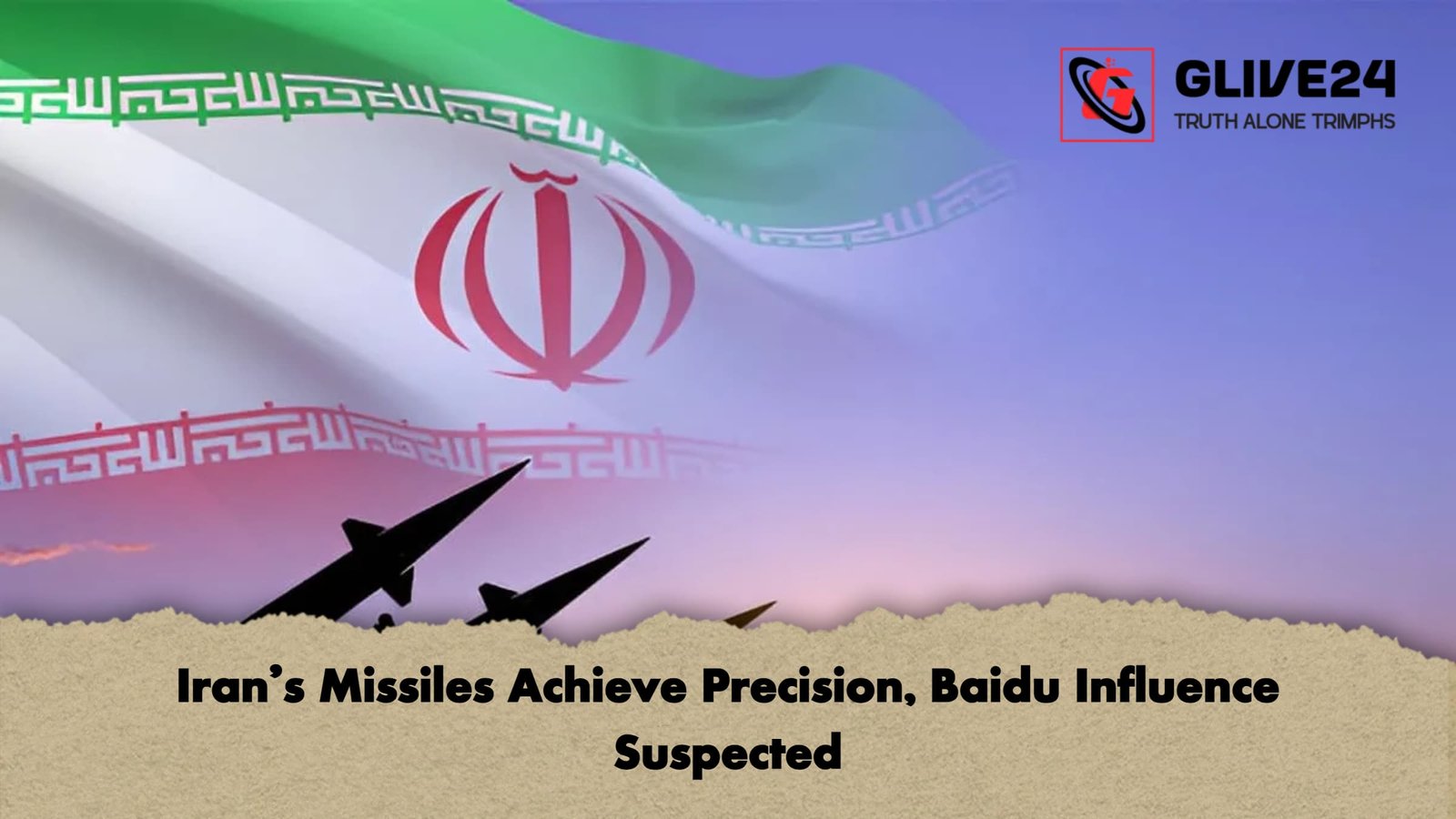
Intelligence analysts suggest that Iran may be employing China’s satellite navigation system in its missile strikes against United States and Israeli military installations in the Middle East. Reports indicate that the use of China’s Baidu Navigation Satellite System (BDS) has enabled Iran to achieve far greater accuracy in targeting than in previous operations.
According to Al Jazeera, former French foreign intelligence chief Alain Juillet stated in a podcast that “Iran’s missile targeting capabilities have improved significantly compared with last year’s conflicts.” He added that the adoption of Chinese navigation technology could be a key factor behind this enhanced precision.
Since 28 February, following military operations by the United States and Israel, Iran has launched hundreds of ballistic missiles and drones. Targets have included U.S. military bases in Israel and the Gulf region. While many missiles were intercepted by defence systems, several successfully hit their targets, causing considerable damage and casualties.
Experts note that historically, Iran relied heavily on the U.S. Global Positioning System (GPS) for missile guidance. However, in wartime scenarios, GPS signals can be blocked or jammed by the United States, prompting Tehran to seek alternative navigation technologies. China launched its next-generation satellite navigation system in 2020, which is considered a rival to GPS. The system was formally inaugurated by Chinese President Xi Jinping during a ceremony in Beijing.
A key advantage of BDS is its extensive satellite network. While GPS operates with 24 satellites, BDS utilises nearly 45, providing enhanced coverage and redundancy. Other global navigation systems include Russia’s GLONASS and the European Union’s Galileo, each offering strategic and civilian applications.
Specialists explain that satellite-guided systems dramatically improve missile accuracy. Typically, a missile initially follows a planned trajectory using onboard navigation and subsequently relies on satellite signals to refine its course, achieving precise target alignment.
China–Iran relations analyst Theo Nenchini notes that Iran signed a memorandum of understanding in 2015 to integrate Baidu technology into its military infrastructure. Following the 2021 China–Iran strategic partnership agreement, the deployment of this technology expanded rapidly, gradually shifting Iran from GPS to BDS for missile and drone operations.
Analysts estimate that Baidu’s system offers accuracy within one metre, enabling not only precise targeting but also mid-flight trajectory adjustments for drones and missiles. The system also supports long-range communication, allowing command and control over assets up to 2,000 kilometres away, and facilitates target re-designation if necessary.
The following table summarises key global satellite navigation systems and their features:
| Navigation System | Country/Organisation | Number of Satellites | Key Features |
|---|---|---|---|
| GPS | United States | 24 | Global coverage; signal can be jammed in wartime |
| BDS (Baidu) | China | ~45 | High precision; mid-flight adjustments; long-range communication |
| GLONASS | Russia | 24 | Comparable to GPS; stable coverage |
| Galileo | European Union | 30 | Civil and military signals; high accuracy |
The adoption of BDS has effectively reduced Iran’s reliance on GPS, providing Tehran with greater strategic autonomy. Analysts warn that this technological shift could have significant implications for the security dynamics of the Middle East, as Iran now possesses the capability to strike with unprecedented precision and maintain robust command over its long-range systems.