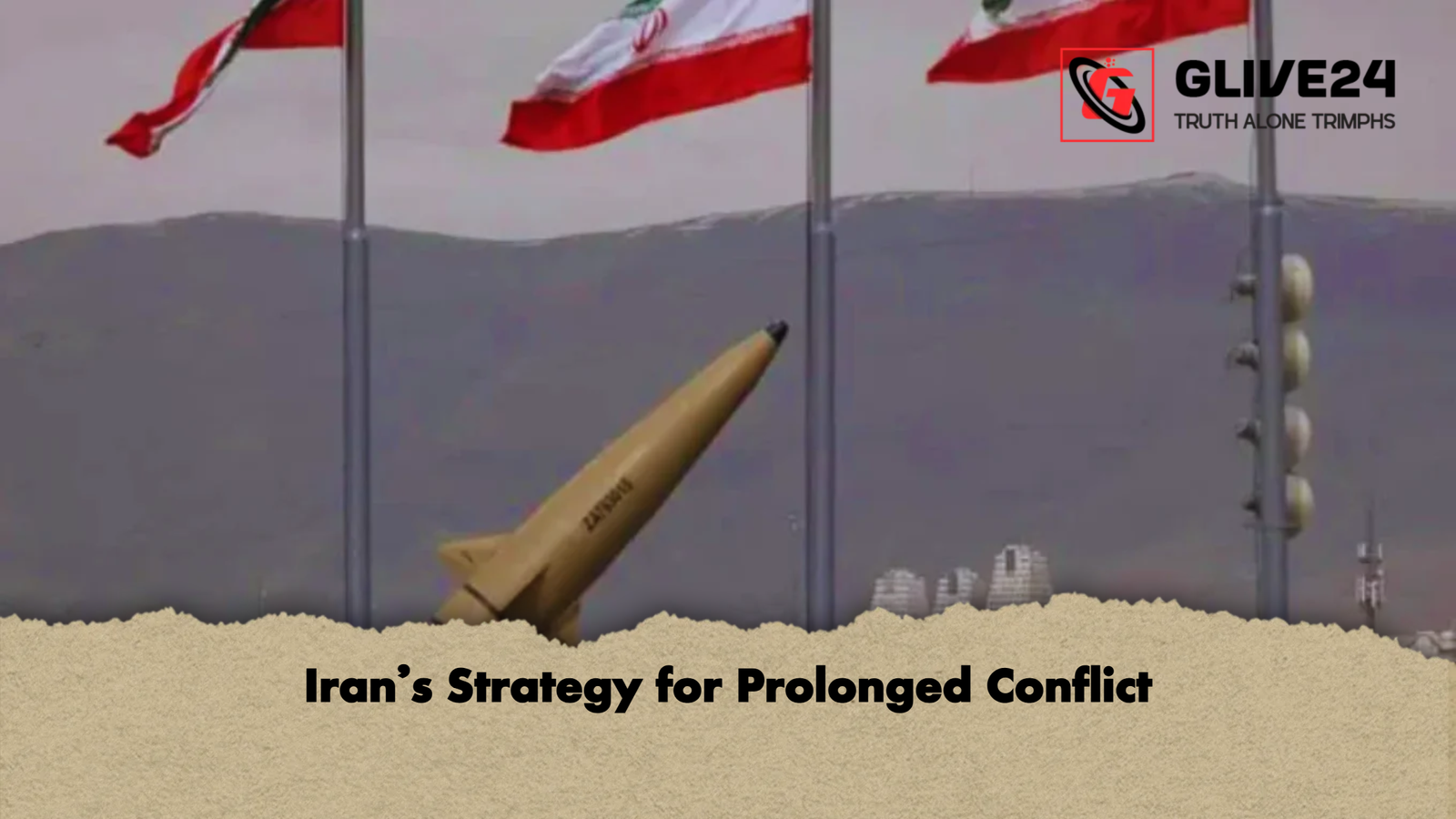
The United States and Israel claim that recent joint air strikes have significantly weakened Iran’s military capabilities. In a post on his social media platform Truth, US President Donald Trump asserted that Iran’s “air defences, air force, navy and leadership are effectively gone.” Writing on Tuesday, 3 March, he added that Tehran had attempted to seek negotiations, but he refused, stating: “They wanted talks. I said it’s too late.”
Iran, however, has responded with retaliatory strikes targeting Israeli assets and American military bases across the Middle East. Tehran insists that these attacks are acts of self-defence. Despite the rhetoric, analysts broadly agree that in a conventional military confrontation Iran remains considerably weaker than the combined power of the United States and Israel. As a result, Tehran appears to be pursuing an alternative strategy designed not to win outright, but to prolong the conflict and raise its cost.
Table of Contents
A War of Attrition
Security specialists suggest that Iran is now adopting a classic strategy of attrition warfare. Dr H.A. Hellyer, a Middle East security expert at the Royal United Services Institute, argues that Tehran is no longer seeking victory through traditional battlefield dominance. Instead, it aims to stretch the conflict across multiple fronts and impose heavy economic and military burdens on its adversaries.
“Iran understands it cannot win a conventional war against the United States and Israel,” Hellyer explained. “Its strategy is to make victory extremely costly and uncertain for its opponents.”
Nicole Grajewski, Assistant Professor at Sciences Po’s Centre for International Studies, shares this assessment. She notes that attrition warfare focuses on gradually exhausting the enemy’s resources—military equipment, ammunition and manpower—while maintaining one’s own ability to continue fighting.
The approach also carries a psychological dimension. During a 12-day confrontation with Israel last year, Iran frequently redirected its missile strikes towards civilian areas. According to Grajewski, the objective was not necessarily precision targeting but the creation of fear and psychological pressure among the population.
Missile and Drone Capabilities
Despite suffering losses during recent clashes, Iran still retains a substantial arsenal of missiles and unmanned aerial vehicles. Israeli estimates suggest that by February this year Iran possessed around 2,500 ballistic missiles, ranging from short-range systems with a reach of roughly 1,000 kilometres to medium-range missiles capable of travelling up to 3,000 kilometres.
Iranian officials claim that several advanced systems have already been used in combat, including the Sejjil missile, with an estimated range of about 2,000 kilometres, and the hypersonic-capable Fattah missile.
| Military Capability | Estimated Figures | Notes |
|---|---|---|
| Ballistic missiles | ~2,500 | Mix of short and medium range |
| Active military personnel | ~610,000 | Among the largest forces in the Middle East |
| Regular army | ~350,000 | Conventional land, air and naval forces |
| Islamic Revolutionary Guard Corps | ~190,000 | Oversees missile and drone operations |
| Attack drones | Thousands (Shahed series) | One-way strike drones used in swarm attacks |
Iran also maintains what it calls “missile cities”—vast underground storage complexes designed to protect missiles from aerial bombardment. The precise scale of these facilities remains unclear.
Nevertheless, US officials report a sharp decline in Iran’s missile launches since the conflict began. According to General Dan Caine, ballistic missile launches dropped by 86 per cent after the first day of fighting on 28 February. US Central Command later said the figure had fallen a further 23 per cent by 4 March.
Strategic Pressure Points
Even with reduced launch activity, Iran retains the ability to threaten regional infrastructure, US military bases and allied facilities across the Gulf. Analysts also warn that Tehran’s most powerful leverage may lie in its control over the Strait of Hormuz.
Approximately 20 per cent of the world’s oil supply passes through the narrow waterway. Even minor disruptions could send shockwaves through global energy markets. Iran has already warned that vessels transiting the strait could face attacks if hostilities intensify.
Drones and Economic Warfare
Another crucial element of Iran’s strategy is its extensive fleet of Shahed drones. Thousands are believed to have been manufactured prior to the conflict. These relatively inexpensive systems are often deployed in large numbers to overwhelm air defence networks.
The tactic forces opposing forces to use costly interceptor missiles, gradually draining their defensive stockpiles. Grajewski notes that similar methods have been employed by Russia during the war in Ukraine.
However, US officials claim that Iranian drone launches have declined by about 73 per cent since the early days of the conflict.
Regional Allies and Internal Stability
Iran also benefits from a network of allied groups across the Middle East, including the Houthi movement in Yemen, armed factions in Iraq, Hezbollah in Lebanon and Hamas in Gaza. These groups have historically formed what Tehran calls the “Axis of Resistance”.
Yet this network has suffered significant setbacks since the escalation of regional tensions following Hamas’s attack on Israel in October 2023.
Despite these challenges, Iran has long experience in prolonged warfare, particularly from the eight-year Iran-Iraq war of the 1980s. Experts say the success of its current strategy will depend heavily on internal political unity.
“If the security and political leadership remain cohesive, the strategy may continue,” Grajewski said. “But internal divisions could quickly lead to disorganisation on the battlefield.”
Risk of Wider Escalation
There are also signs that the conflict could widen. Turkish officials recently reported that NATO air-defence systems intercepted an Iranian ballistic missile that had crossed into Turkish airspace.
Ankara had earlier attempted to mediate between Washington and Tehran, urging both sides to avoid escalation. However, Iran’s broader aim may be to pressure neighbouring states into pushing the United States towards negotiations.
Whether that strategy succeeds remains uncertain. As Hellyer warns, Gulf states that initially opposed American military action might reconsider their stance if they begin to view Iran itself as a direct threat.
“They have not made that decision yet,” he said. “But time is running out.”