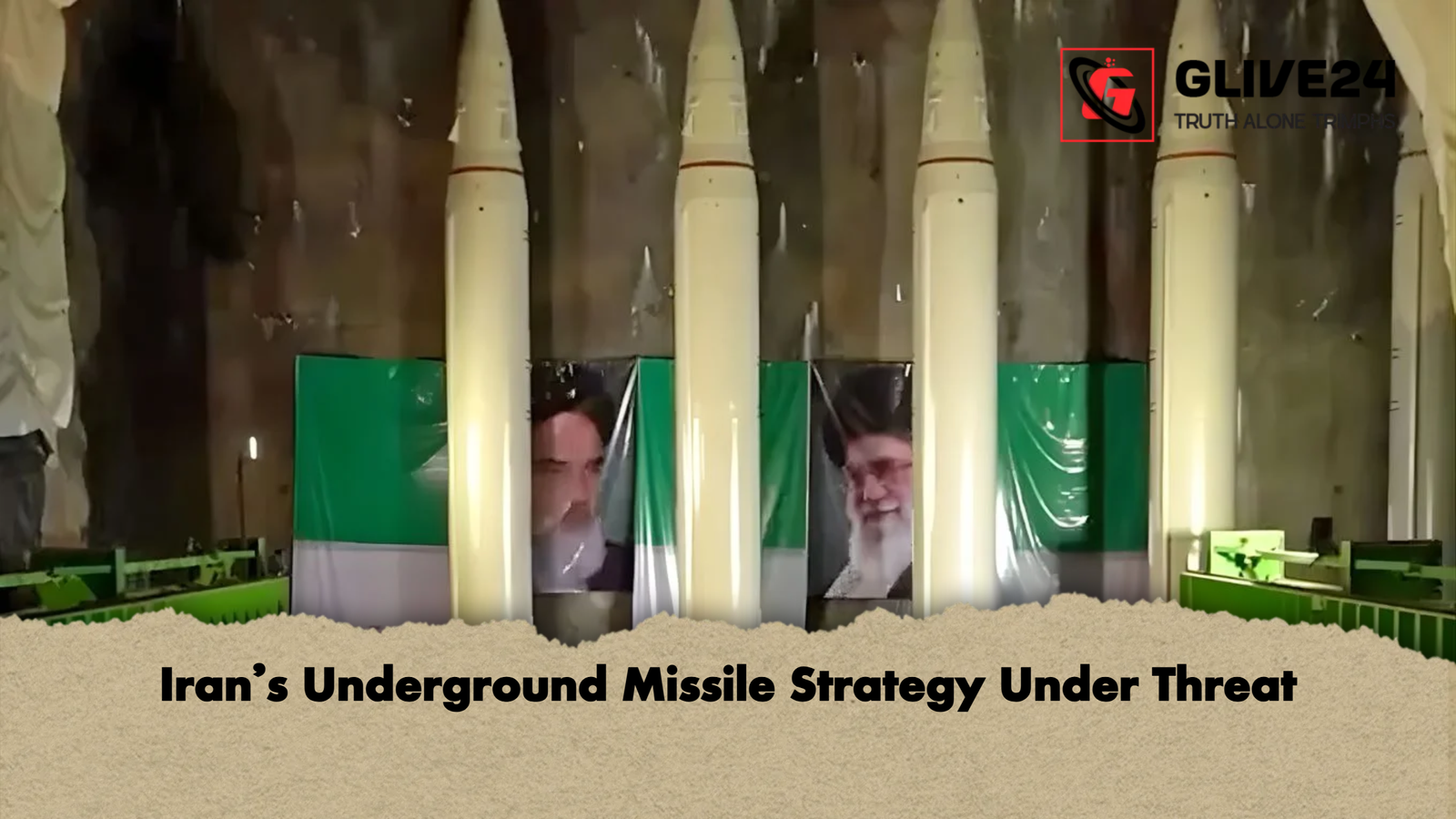
For more than a decade, Iran has been constructing extensive underground “missile cities” designed to shield its advanced arsenal from foreign air strikes and drone attacks. These subterranean complexes were considered a cornerstone of Tehran’s defensive strategy, offering protection against surveillance and preemptive strikes. However, escalating tensions with the United States and Israel have now exposed these facilities to significant vulnerability, according to military analysts.
Analysis of intelligence reports and satellite imagery reveals that the entrances to these tunnels have emerged as the weakest points in Iran’s network. U.S. and Israeli drones, alongside warplanes, are reportedly maintaining constant surveillance over these access points. Any attempt to move missile-equipped trucks or launchers outside is met with immediate aerial destruction, severely compromising the operational effectiveness of the underground bases.
Experts further note that direct strikes on tunnel entrances have trapped large quantities of missiles and equipment underground. This development has rendered the previously reliable strategy of subterranean storage far less effective.
International media reports indicate that underground facilities near Shiraz, Isfahan, Tabriz, and Kermanshah have already been targeted multiple times. In March 2025, Iran publicised footage of one of its major underground facilities to demonstrate its strategic capabilities, yet the current operational environment has diminished its deterrent value.
Military specialists emphasise that missile launches from underground locations are technically complex, and concentrating large stockpiles in a single location increases risk. Consequently, Iran has begun adapting its deployment strategy, dispersing truck-mounted launchers and missiles in open locations to mitigate potential losses.
Officials from the Pentagon and Israeli defence forces report a slight decrease in missile and drone attacks from Iran in recent days. They attribute this decline to damaged facilities and Iran’s reliance on a stockpile of 2,500 to 6,000 missiles.
The following table summarises key underground sites, recent strikes, and changes in operational tactics:
| City/Region | Status of Main Underground Facility | Recent Strikes | Operational Adjustments |
|---|---|---|---|
| Shiraz | Underground bunkers | Multiple hits | Missiles deployed in open areas |
| Isfahan | Secret tunnels | Targeted | Stockpiled missiles relocated |
| Tabriz | Underground complex | Partially damaged | Missiles dispersed across sites |
| Kermanshah | Tunnels and caves | Multiple attacks | Open-area missile deployment |
The evolving circumstances have reshaped military calculations in the Middle East. Reducing reliance on underground bases and dispersing missile assets has now become a central component of Tehran’s strategic doctrine, reflecting the growing challenges of defending fixed installations in an era of advanced surveillance and precision strikes.