
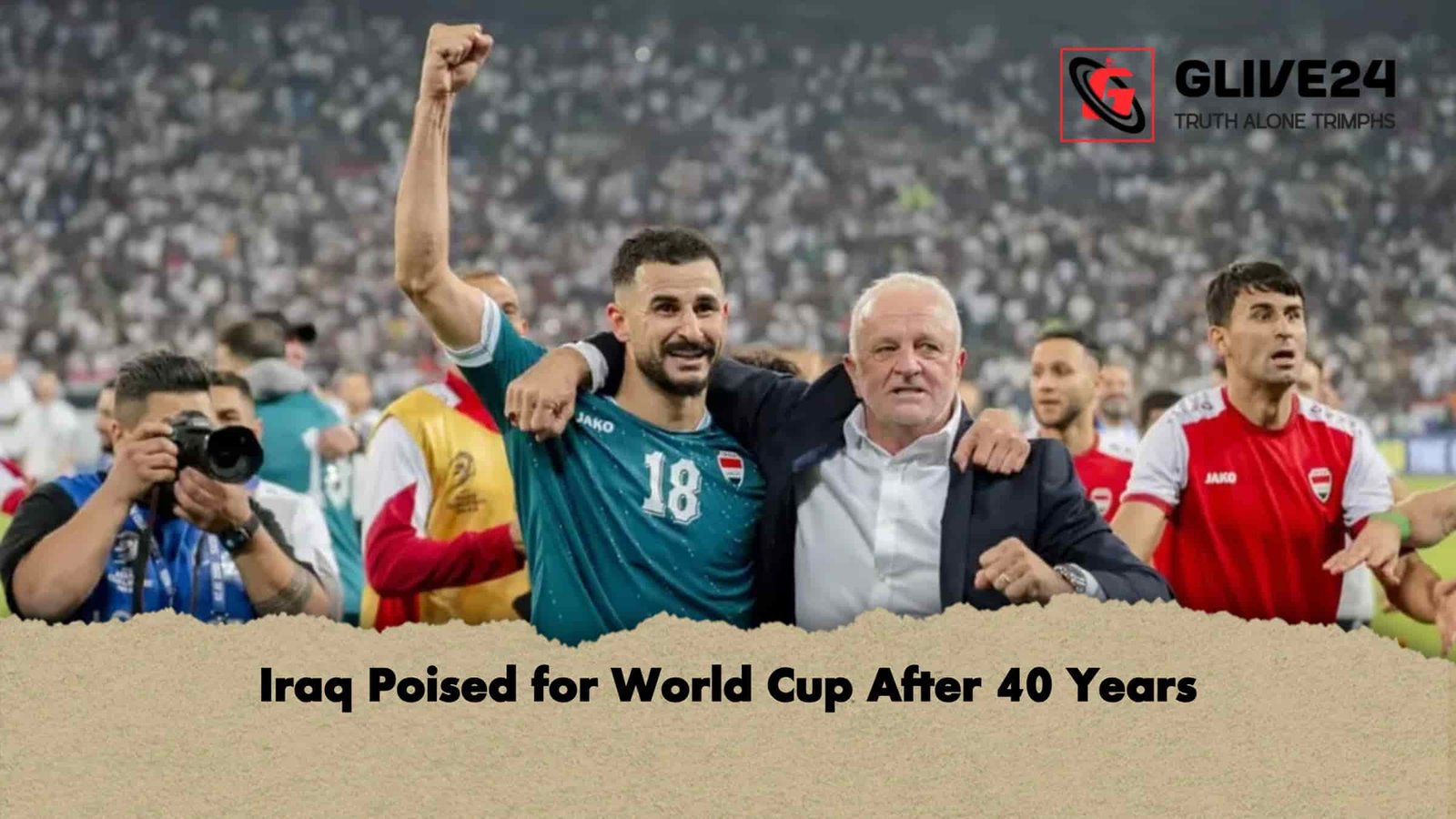
Iraq, a country long scarred by political upheaval, armed conflicts, economic fragility, pervasive corruption, and the effects of severe climate change, is experiencing an extraordinary surge of football passion. Even Australian coach Graham Arnold, who took charge of the national team under immense pressure, admits he was unprepared for the intensity of the enthusiasm.
When Arnold assumed the role, many described guiding Iraq to the World Cup as “one of the most difficult tasks in global football.” Yet, against all odds, the Iraqi team now finds itself just one match away from ending a 40-year absence from football’s greatest stage.
The team has already secured its place in the intercontinental play-off final, with their opponent confirmed as Bolivia. A victory over the South American side on 31 March in Monterrey, Mexico, would see Iraq return to the World Cup for the first time since 1986. If successful, Arnold would make history as the first Australian coach to lead two different nations to the World Cup, having previously guided Australia to the tournament in 2005.
“Before accepting this role, I was told it could be the hardest job in football,” Arnold said. “For 40 years, Iraq has not qualified for the World Cup, and with 46 million passionate fans, managing that pressure is a unique challenge.”
Iraq’s World Cup Timeline
| Year | Event | Outcome / Note |
|---|---|---|
| 1986 | World Cup, Mexico | Iraq’s last appearance before a 40-year hiatus |
| 2007 | AFC Asian Cup | Champions, marking a rare period of success amid turmoil |
| 2025 | World Cup Qualifiers | Beat UAE with stoppage-time goal to reach intercontinental play-off |
| 2026 | Intercontinental Play-off | Scheduled vs Bolivia, 31 March, Monterrey, Mexico |
Arnold recalls his experience leading Australia to the 2005 World Cup, noting the nationwide excitement and emotional impact. “The passion in Iraq mirrors that intensity. The people live and breathe football. I have faced Iraqi teams as a coach for many years—they have always been strong opponents. To think this team has been absent from the World Cup for four decades underlines what is at stake.”
Political instability has repeatedly hindered Iraqi football. Years of foreign intervention, the execution of former President Saddam Hussein, and domestic unrest interrupted the team’s development. Even after their 2007 Asian Cup triumph, progress remained fragile.
To maintain focus, Arnold has restricted players’ access to social media and external distractions. “Most of my first ten months here—seven spent in Baghdad—have been about understanding the culture. Wherever I go, fans surround me, taking photos. There is no ordinary social life here,” he explained.
Following Iraq’s dramatic last-minute victory over the United Arab Emirates in November, Baghdad’s streets erupted in celebrations. “The dedication and emotion of the players are incredible. They are committed not just to winning, but to lifting the nation,” Arnold added.
With just one match standing between them and history, Iraq is on the brink of a World Cup return that could unite a country long accustomed to adversity.