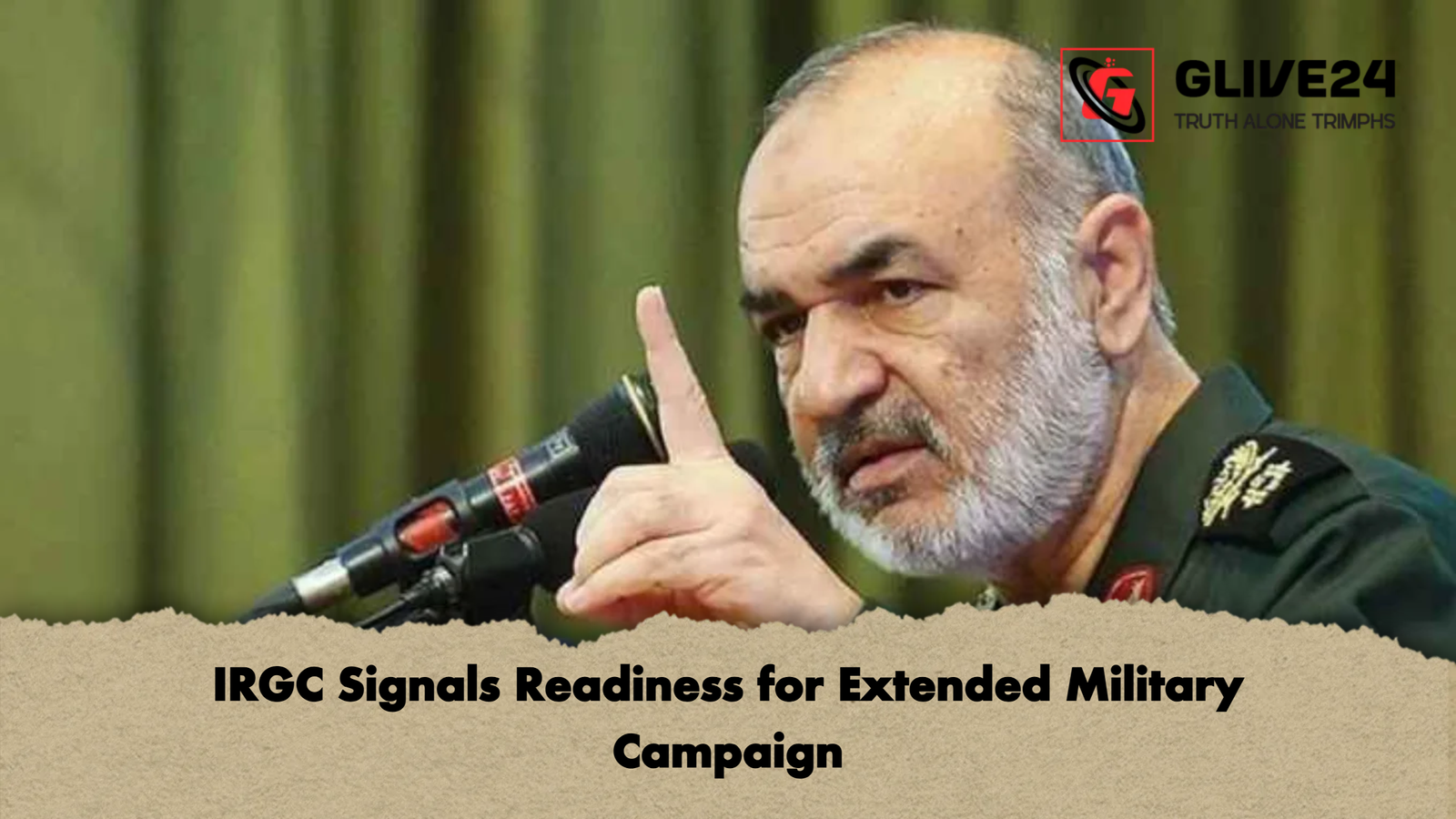
Iran has declared that it is fully prepared to sustain its current military operations for at least six months, signalling Tehran’s determination to maintain a high-intensity stance in the ongoing Middle East conflict. The statement came from Ali Mohammad Naeini, spokesperson for the Islamic Revolutionary Guard Corps (IRGC), one of Iran’s most powerful and strategically influential military bodies.
IRGC Statement
According to Iran’s semi-official Fars News Agency, Naeini said:
“The armed forces of the Islamic Republic of Iran have the capability to continue this intense level of conflict for at least six months.”
This assertion underscores Iran’s commitment to a prolonged confrontation, despite recent US and Israeli strikes and mounting international pressure.
Contrasting Perspectives
The IRGC’s message stands in direct contrast to repeated claims by former US President Donald Trump, who has portrayed American and Israeli operations as overwhelmingly successful. Speaking earlier this week, Trump stated:
“We are winning this war by a large margin. We have crushed their entire ‘evil empire’.”
These conflicting narratives highlight the information war surrounding the conflict: Tehran emphasises resilience and endurance, while Washington projects dominance and operational success.
| Parameter | IRGC Statement | US/Trump Statement |
|---|---|---|
| Conflict Duration Capability | At least 6 months | Implied Iran is weakening |
| Current Intensity | Sustained high-intensity conflict | US/Israel operations highly effective |
| Source | IRGC Spokesperson Ali Mohammad Naeini | Former US President Donald Trump |
| Strategic Implication | Signals readiness for prolonged engagement | Signals US/Israeli dominance |
Strategic Implications
Analysts suggest Iran’s public emphasis on endurance serves multiple purposes:
Domestically – reinforcing morale and national resolve among Iranian forces.
Internationally – signalling operational capacity to strike strategic targets and maintain military posture over extended periods.
The IRGC, responsible for both conventional and asymmetric operations, plays a central role in Iran’s defence and regional strategy. Its demonstrated ability to sustain conflict could influence regional security dynamics, energy shipping routes, and diplomatic calculations across the Middle East.
Experts note that statements such as Naeini’s form part of a broader strategic communication effort: deterring adversaries, reassuring allies, and asserting Tehran’s capacity to withstand prolonged military pressure. With both Tehran and Washington issuing competing claims, the fog of information complicates independent assessment and potential diplomatic resolutions.
As the situation develops, analysts emphasise that the IRGC’s message reflects Iran’s preparedness for sustained, high-intensity operations, signalling that any attempt to quickly conclude hostilities may encounter prolonged resistance, potentially extending the regional conflict and its global ramifications.