The late Marlon Brando, one of Hollywood’s most revered actors, was once asked how he felt about being described as the greatest performer of all time. His famously indifferent reply — “What difference does it make?” — revealed a philosophy he lived by. Brando disliked comparisons, believing that every individual works within their own limitations and strengths, and that success cannot always be measured by direct comparison. Yet, whether in cinema or sport, comparisons are inevitable. Football, in particular, thrives on them.
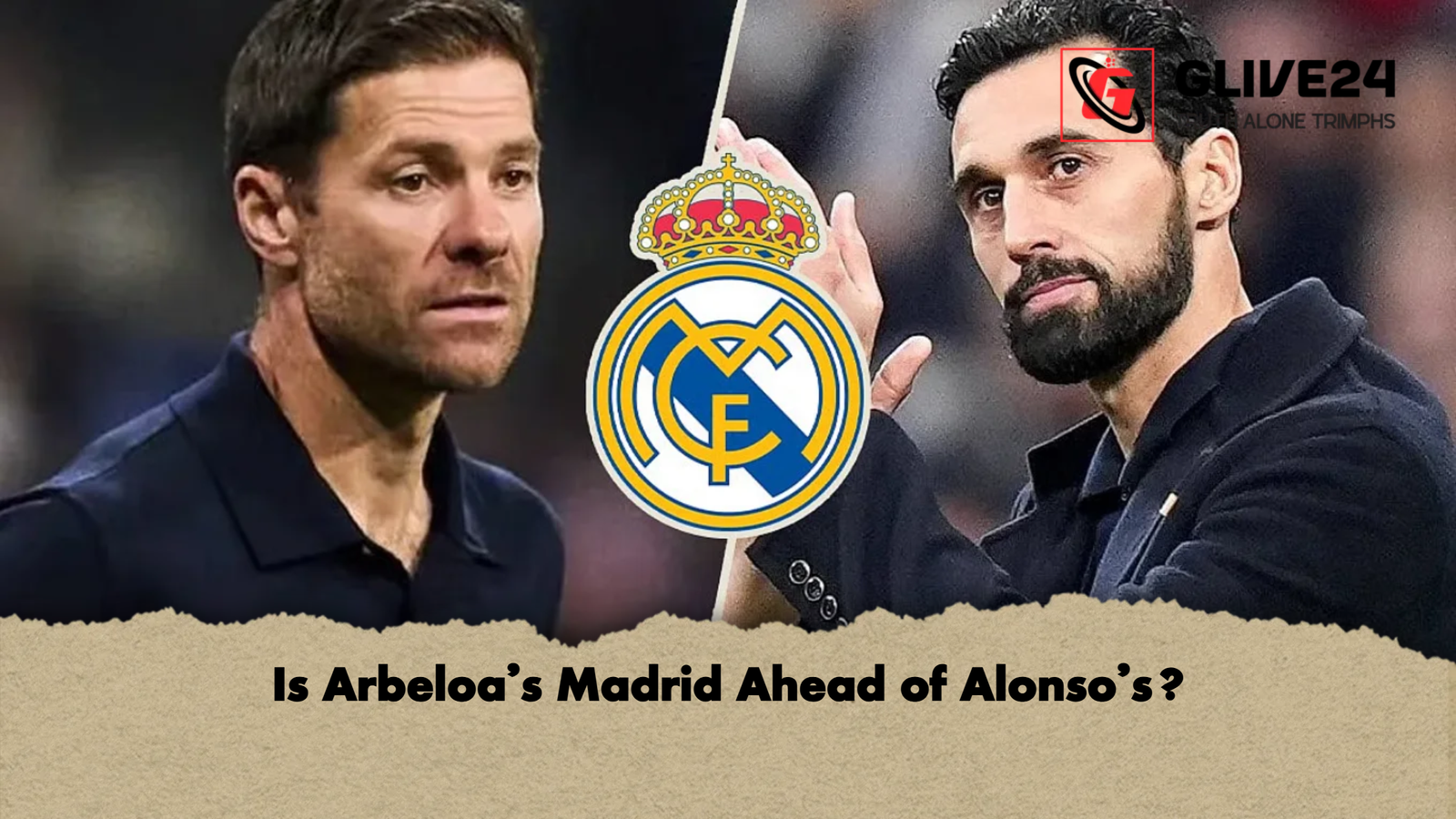
Such a debate has now emerged at Real Madrid, where the early performances of new head coach Álvaro Arbeloa are being weighed against those of his predecessor, Xabi Alonso. After just four matches in charge, Arbeloa’s Madrid is already being scrutinised: has his start been better than Alonso’s?
Alonso’s tenure, though short-lived, is still fresh in memory. After only seven months at the helm, he was dismissed on 12 January following a 3–2 defeat to arch-rivals Barcelona in the Spanish Super Cup final. Under Alonso, Real Madrid played 34 matches across all competitions, winning 24, drawing four and losing six. The team scored 72 goals, averaging 2.11 goals per match — a respectable return, though perhaps not spectacular by Madrid’s demanding standards.
Following Alonso’s departure, responsibility for the first team was handed to Álvaro Arbeloa, a former Real Madrid full-back and a long-serving figure within the club’s structure. After retiring from playing in 2017, Arbeloa began his coaching career in 2020 and worked extensively within Madrid’s youth academy. He later took charge of Castilla, the club’s reserve side, in June last year before being promoted to the senior role.
Arbeloa’s reign did not begin smoothly. His first match ended in disappointment, as Madrid were eliminated from the Copa del Rey at the round-of-16 stage after a 3–2 defeat to Albacete. However, the response was emphatic. Madrid won their next three matches consecutively — two 2–0 victories in La Liga against Levante and Villarreal, followed by a crushing 6–1 triumph over Monaco in the Champions League.
Spanish daily Marca has argued that Arbeloa has made a stronger start than Alonso, despite working with essentially the same squad. The early statistics lend weight to this claim.
Key Performance Comparison
| Metric | Xabi Alonso | Álvaro Arbeloa |
|---|---|---|
| Matches analysed | First 4 | First 4 |
| Goals scored | 8 | 12 |
| Goals conceded | 2 | 4 |
| Goals per match | 2.11 (overall) | 3.00 |
| Shots per match | 18.8 | 21.5 |
| Possession average | 57.3% | 63.9% |
| Passes per match | 553 | 618 |
| Successful passes | 490 | 555 |
| Shots conceded | 4.3 | 3.0 |
Beyond raw numbers, Arbeloa’s Madrid appears more assertive in possession and more committed to a passing-based approach. His side averages over 618 passes per match, significantly higher than Alonso’s 553, while also maintaining a higher success rate in the opposition half. Defensively, Arbeloa’s team has conceded fewer shots per match, indicating a more compact structure despite the occasional lapse.
Notably, Madrid’s biggest win of the season — the 6–1 demolition of Monaco — came under Arbeloa, a margin of victory the club failed to achieve even last season under Carlo Ancelotti. This improvement has arrived without any major squad changes, though Arbeloa has redistributed responsibility among players. Vinícius Júnior has become central to the attacking plan, Arda Güler has been reintegrated after a period of irregular involvement, and Eduardo Camavinga has been used creatively across positions. Franco Mastantuono, too, remains a key figure.
It is also worth remembering that Alonso and Arbeloa share a close personal bond, having once been team-mates at Real Madrid. Arbeloa has described Alonso as “like a brother”. Judging either man too hastily would therefore be unfair. Arbeloa’s journey as head coach has only just begun, while Alonso was arguably not afforded sufficient time to fully prove himself.
In that sense, Brando’s words resonate once more. Whether one coach is “better” than the other may matter less than the fact that both have contributed, in their own ways, to Real Madrid’s evolving identity.