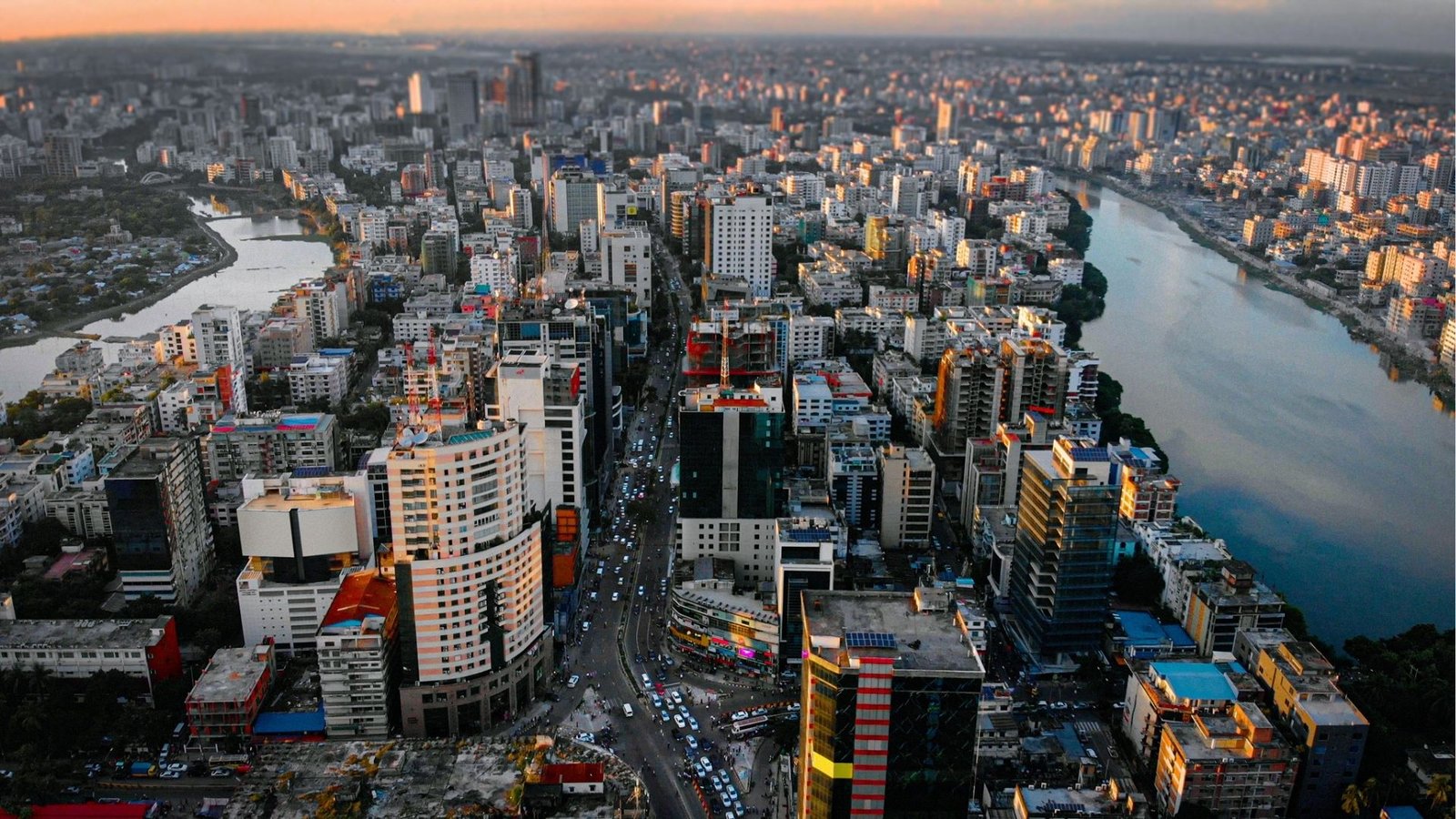
Dhaka may be sitting on a disaster waiting to happen. According to the Dhaka Development Authority (RAJUK), a 6.9-magnitude earthquake along the Madhupur Fault in Tangail could result in the collapse of roughly 40 per cent of the city’s buildings, potentially endangering more than 200,000 lives.
RAJUK presented these alarming projections during a seminar at the Engineers’ Institution, Bangladesh (IEB), entitled “Preparedness and Measures for Reducing Earthquake Risk”. The event, held in the aftermath of four minor tremors over the previous weekend, included government advisers, RAJUK officials, emergency responders, professional organisations, and disaster management experts.
Environmental adviser Syeda Rizwana Hasan urged immediate risk assessments for all capital buildings, calling for independent third-party evaluations and stressing that no concessions should be made for structurally unsound structures. She also suggested granting RAJUK special powers to enforce compliance where necessary. Industry adviser Adilur Rahman Khan confirmed that amendments to the Town Improvement Act are imminent to enhance RAJUK’s authority.
RAJUK’s executive engineer Khandakar Md. Wahid Sadik revealed that, in the event of a 6.9-magnitude quake along the Madhupur Fault, 864,619 buildings—over 40 per cent of Dhaka’s structures—could collapse. Estimated financial losses could reach $2.5 billion, with reconstruction and repair costs projected at $4,370 crore (over 5 lakh crore taka). The survey was conducted under the 2015–2024 Urban Resilience Project, funded with 568 crore taka. Historically, the last major quake in Bangladesh occurred in 1885, registering 7.5 magnitude along the same fault line, but the city has not experienced such a threat in the past 140 years.
Experts warn that without urgent action to assess and retrofit vulnerable buildings, Dhaka could face unprecedented human and economic losses in the event of a significant earthquake.