
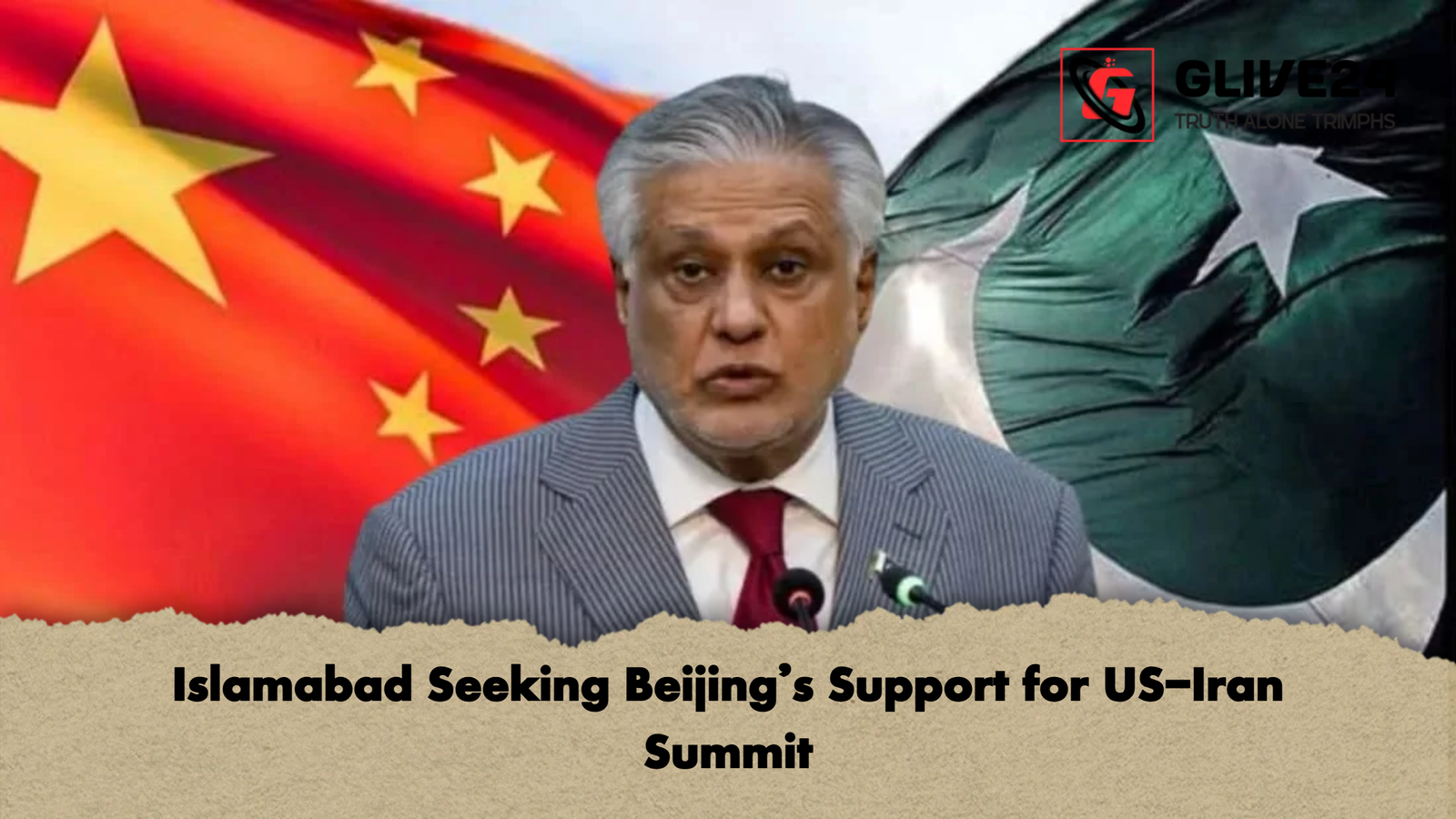
The Pakistani Foreign Minister, Ishaq Dar, is set to arrive in Beijing on Tuesday, 31 March, for high-level consultations aimed at de-escalating the long-standing friction between Washington and Tehran. This diplomatic mission marks a pivotal moment in Pakistan’s ambitious “four-party diplomatic initiative,” a strategy designed to transform Islamabad into a neutral ground for direct negotiations between the United States and Iran.
A High-Stakes Diplomatic Gambit
The timing of Minister Dar’s visit is particularly significant. As regional tensions continue to simmer, Islamabad has spent the past week engaging in a whirlwind of shuttle diplomacy. By coordinating closely with Saudi Arabia, Turkey, and Egypt, Pakistan is attempting to build a formidable Islamic-led coalition to facilitate a breakthrough in Western-Iranian relations.
The primary objective of the Beijing summit is to secure a definitive endorsement from China, a global superpower that holds substantial economic and political leverage over Tehran. Reports suggest that Beijing has already voiced its preliminary approval for the initiative. Minister Dar’s discussions with his Chinese counterpart will likely focus on the logistical and security frameworks required to host high-ranking American and Iranian officials on Pakistani soil.
Regional Alignment and Strategic Interests
Pakistan’s proactive stance is driven by a desire for regional stability, which is essential for the success of its ongoing economic projects, including the China-Pakistan Economic Corridor (CPEC). A rapprochement between the US and Iran would not only lower the risk of conflict in the Middle East but also alleviate the economic pressures felt by neighbouring nations.
China’s role as a mediator is not new; however, its partnership with Pakistan in this specific context suggests a growing preference for “Global South” led mediation. The following table highlights the key players involved in this diplomatic push:
Following his discussions yesterday, Minister Dar reaffirmed that China’s support is robust. The Pakistani government is hopeful that this collaborative pressure will encourage both Washington and Tehran to move beyond their historical impasse.
While the challenges are immense—ranging from nuclear disagreements to regional proxy concerns—the “four-party” framework offers a fresh alternative to traditional Western-led mediation. If Dar’s trip to Beijing succeeds in synchronising Chinese and Pakistani efforts, the world may soon see an unprecedented diplomatic summit in Islamabad.