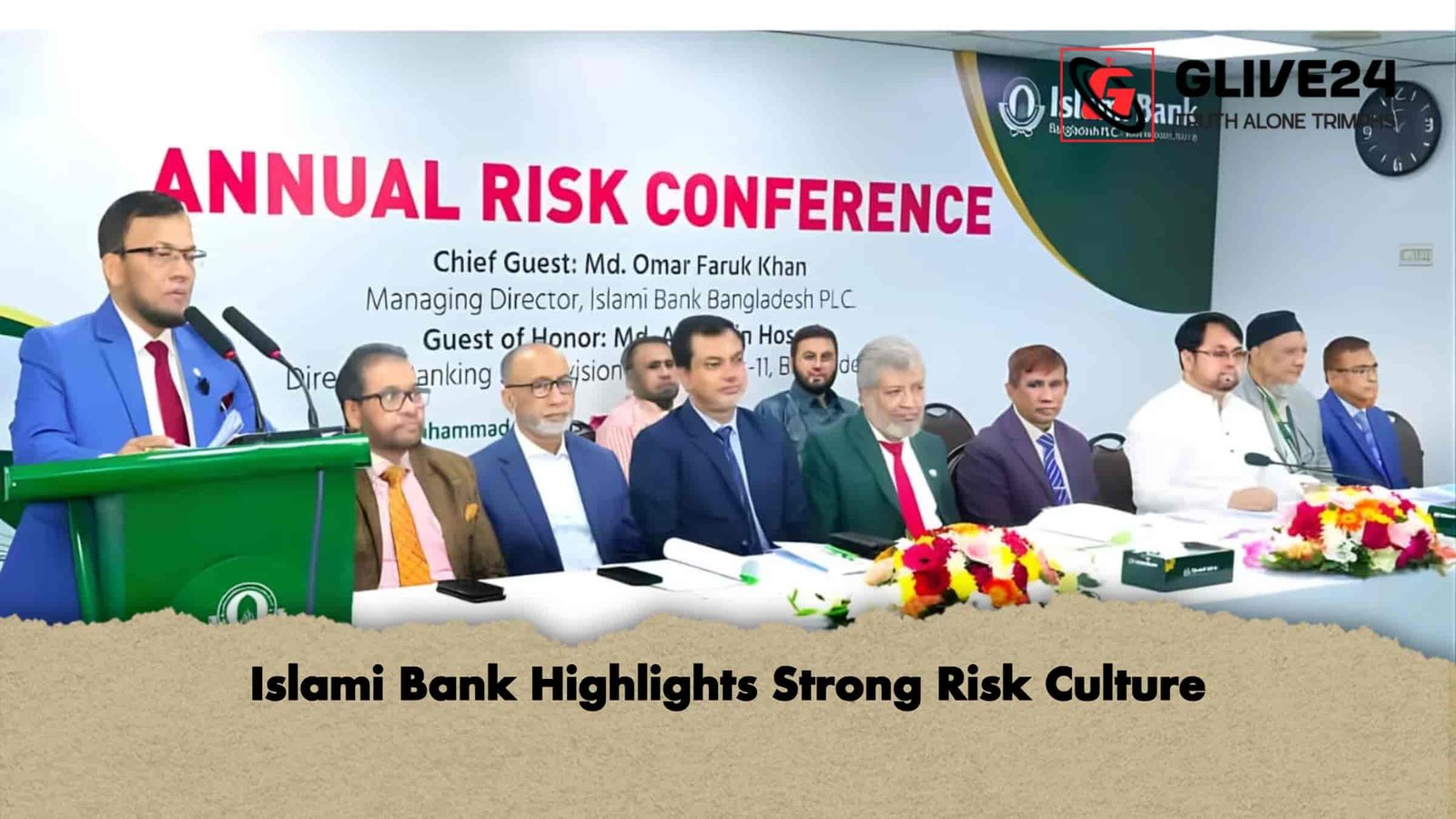
Islami Bank Bangladesh PLC convened its Annual Risk Conference on Saturday at Islami Bank Tower, bringing together senior executives and banking professionals to discuss strategies for strengthening governance, transparency, and risk management across the institution. The conference emphasised the importance of maintaining a strong risk culture as the bank continues to expand its operations and services.
Addressing the gathering as chief guest, Managing Director Md. Omar Faruk Khan underscored that, as the country’s largest Shariah-based banking institution, Islami Bank must uphold the highest standards of governance and accountability at every organisational level. He noted that the enduring confidence of clients has been the bank’s greatest strength and a key factor behind its continued growth and reputation within the financial sector.
Khan explained that while expanding business activities remains important, sustainable progress cannot be achieved without a strong and well-structured risk management framework. According to him, effective risk management enables institutions to anticipate potential threats, evaluate their impact, and implement preventive measures in a timely manner. Such a framework, he added, ensures stability and resilience in an increasingly complex banking environment.
He further stated that the primary objective of risk management is to identify emerging risks before they develop into significant problems. By recognising vulnerabilities at an early stage, management can take appropriate action and prevent operational disruptions or financial losses. He therefore urged all officials to remain vigilant and responsible in their duties, stressing that careful monitoring and proactive measures can significantly reduce institutional risks.
Md. Alauddin Hossain, Director of the central bank, attended the conference as the guest of honour and shared perspectives on regulatory priorities and the importance of strengthening risk governance within financial institutions. He highlighted the need for banks to continuously enhance their internal control systems in line with evolving regulatory expectations.
The conference was presided over by Engineer Mohammad Jamal Uddin Mazumder, Additional Managing Director and Chief Risk Officer of Islami Bank Bangladesh PLC. Several senior executives also addressed different sessions of the programme, including Additional Managing Directors Md. Altaf Hossain and Dr. M Kamal Uddin Jasim, along with K. S. Omar Faruk, Head of the Risk Management Wing.
The welcome address was delivered by A. S. M. Rezaul Karim, Director General of the Islami Bank Training and Research Academy, who emphasised the importance of continuous professional development and knowledge sharing in strengthening institutional risk management practices.
Senior officials from the bank’s head office and branch network in the capital attended the event in person, while zonal and branch heads from other regions joined the conference through a virtual platform. The hybrid format enabled broad participation and facilitated discussions on risk-related challenges faced across different operational areas.
The conference also served as an opportunity to review existing risk management policies and explore ways to improve internal monitoring, compliance, and operational resilience.
| Key Participants | Position | Role at Conference |
|---|---|---|
| Md. Omar Faruk Khan | Managing Director | Chief Guest |
| Md. Alauddin Hossain | Director, Central Bank | Guest of Honour |
| Engineer Mohammad Jamal Uddin Mazumder | Additional Managing Director and Chief Risk Officer | Chair |
| Md. Altaf Hossain | Additional Managing Director | Speaker |
| Dr. M Kamal Uddin Jasim | Additional Managing Director | Speaker |
| K. S. Omar Faruk | Head of Risk Management Wing | Speaker |
| A. S. M. Rezaul Karim | Director General, Training and Research Academy | Welcome Address |
Through initiatives such as the Annual Risk Conference, Islami Bank Bangladesh PLC continues to promote a proactive and disciplined approach to risk management, aiming to ensure sustainable growth while safeguarding the interests of clients and stakeholders.