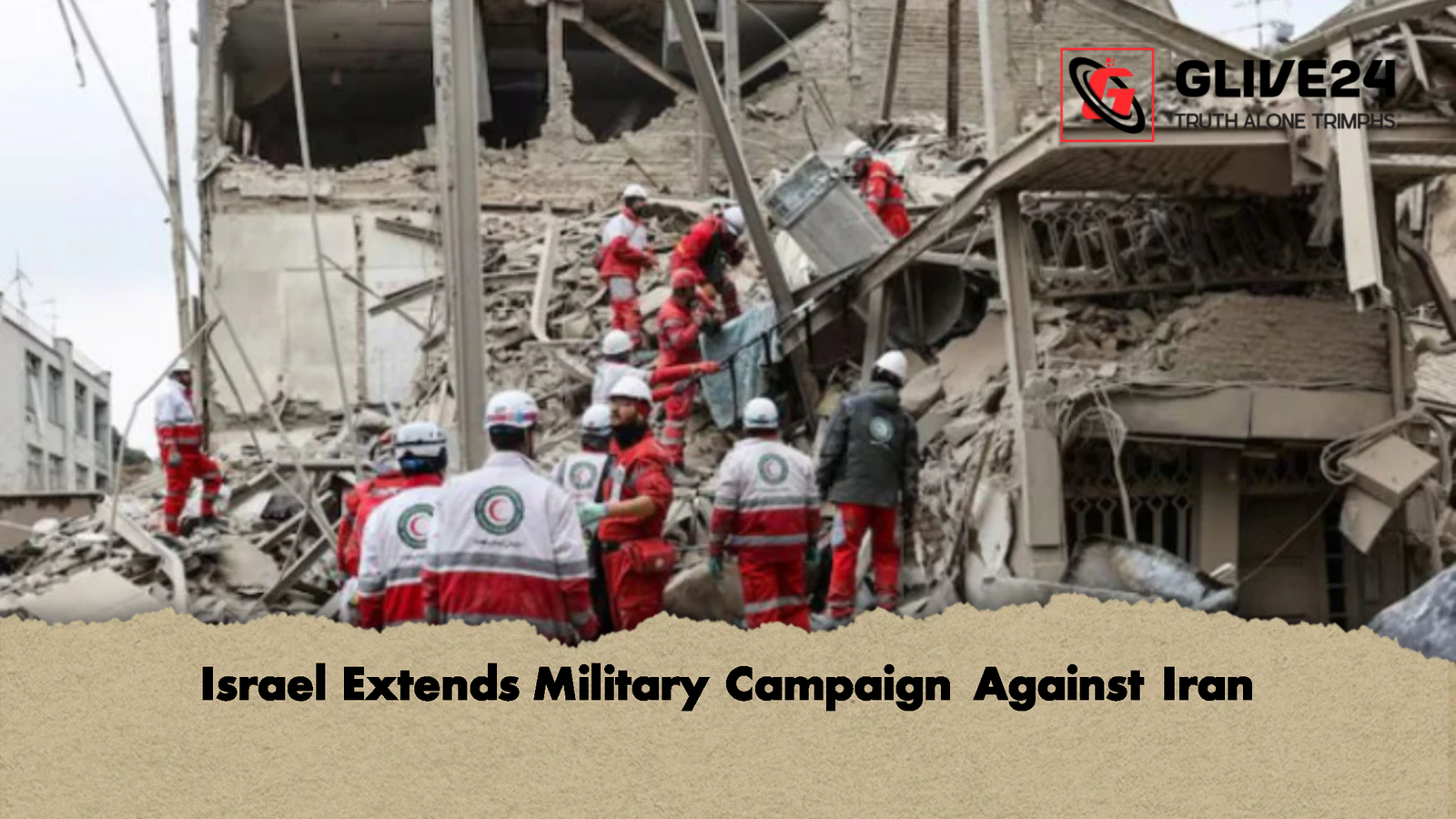
Israel has unveiled detailed plans to continue its military operations against Iran for at least the next three weeks, with longer-term strategies also in development, a senior Israeli Defence Forces (IDF) spokesperson confirmed. The announcement comes amid escalating regional tensions, ongoing airstrikes, and widespread concern over energy security.
Table of Contents
Military Objectives
Lieutenant Colonel Nadav Shoshani, IDF spokesperson, stated that Israel’s campaign is focused on Iranian ballistic missile facilities, nuclear installations, and key security infrastructure. The strategic aim is to systematically degrade Iran’s capability to threaten Israeli security.
“Our objective is to weaken this government as much as possible and diminish the capabilities of its security apparatus,” Shoshani said. He emphasised that thousands of potential targets remain inside Iran, reflecting the campaign’s extensive scope.
Israeli air raids were reported throughout Monday night across multiple Iranian sites, signalling a significant escalation in the conflict.
Regional Consequences
The hostilities have already had immediate regional impacts. Iranian drone attacks led to the temporary closure of Dubai International Airport and inflicted damage on a critical oil facility in the United Arab Emirates, demonstrating the spillover effect of the conflict beyond Israel and Iran.
Approximately 20% of global oil and liquefied natural gas (LNG) shipments traverse the Strait of Hormuz, which has been disrupted by the hostilities, driving oil prices higher and intensifying concerns over rising global inflation.
Former US President Donald Trump has urged allied nations to form a coalition to reopen the strategic shipping lanes, warning that failure to cooperate could jeopardise the initiative. While many nations expressed diplomatic support for stabilising the region, they remained cautious about committing to direct military action.
Strategic Overview
| Aspect | Details |
|---|---|
| Conflict | Israel vs Iran |
| Planned Duration | Minimum 3 weeks; long-term strategies under review |
| Israeli Objectives | Target ballistic missile sites, nuclear facilities, security infrastructure |
| Recent Escalations | Israeli airstrikes in Iran; Iranian drone strikes on UAE facilities and Dubai Airport |
| Regional Economic Impact | Disruption of ~20% of global oil/LNG shipments; rising oil prices; inflation concerns |
| International Response | Calls for coalition to secure maritime routes; cautious diplomatic reactions from allies |
Broader Implications
Experts warn that the conflict threatens regional stability and global energy security, with disruptions in the Strait of Hormuz potentially escalating fuel costs worldwide and increasing economic uncertainty. Analysts emphasise the intertwined nature of military strategy, international trade, and diplomacy, noting that ripple effects could extend far beyond the immediate warzones.
As Israel implements its short-term operational plan, governments and international organisations are monitoring developments closely, considering options for conflict resolution, humanitarian support, and safeguarding critical trade routes. The situation remains highly fluid, with both strategic and economic ramifications likely to unfold in the coming weeks.