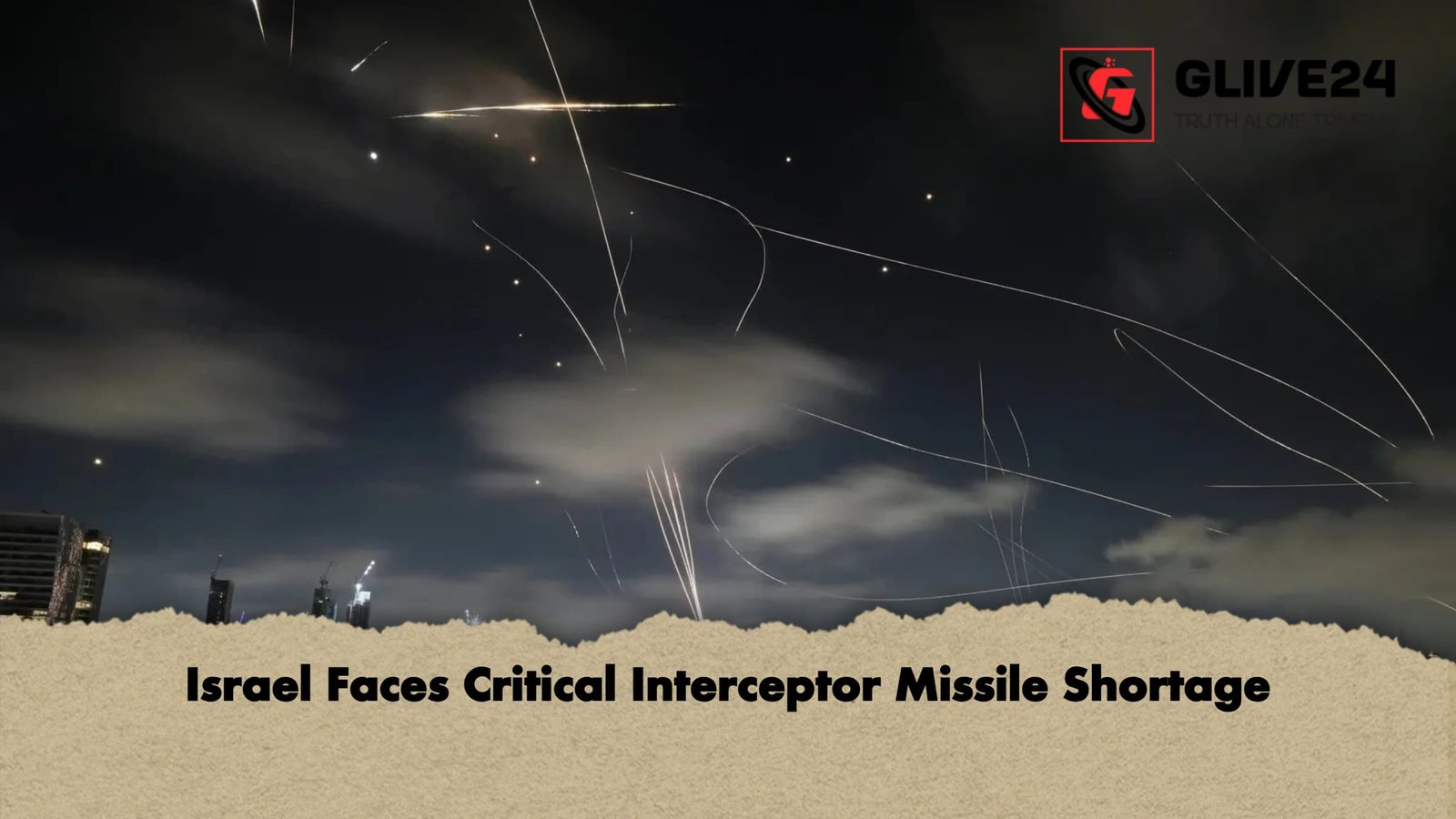
Israel is confronting a growing shortage of interceptor missiles designed to counter ballistic threats amid its ongoing confrontation with Iran, according to reports citing United States officials. The development has raised concerns among defence analysts and allied governments about the sustainability of Israel’s air defence systems if the conflict continues for an extended period.
A report by the United States-based outlet Semafor, quoting American officials familiar with the situation, indicates that Israeli authorities had warned Washington about the issue several days before the current escalation began. The warning came as Israel’s stockpiles of missile interceptors had already been strained by heavy use during previous military operations.
According to defence officials, Israel’s reserves had been significantly reduced during a brief but intense twelve-day conflict in 2025, during which the country reportedly fired a large number of interceptor missiles to repel incoming attacks. Since then, replenishing those stocks has remained a challenge due to the high cost and complex manufacturing process associated with advanced air defence systems.
One American official stated that the United States had been aware of the situation for months and had been monitoring Israel’s defensive capacity closely. While Washington currently maintains sufficient reserves for its own defence requirements, officials acknowledge that a prolonged regional conflict could eventually place pressure on American stockpiles as well, particularly if the United States continues to provide support to allied forces.
The situation has been further complicated by Iran’s sustained missile and drone attacks targeting Israeli territory and facilities linked to the United States in the region. Military sources report that Iran has launched more than fifty waves of combined missile and drone strikes since the escalation began. Although many of these attacks have been intercepted, the sheer frequency of the launches has forced Israeli defence systems to operate at an unusually high tempo.
Another factor increasing the strain on Israel’s defences is the reported use of cluster munitions in certain Iranian missiles. These weapons disperse multiple smaller explosives over a wide area upon detonation, making interception more complex and increasing the likelihood that additional defensive missiles must be fired to neutralise a single incoming threat.
Israel operates a multi-layered air defence network designed to counter threats at different ranges and altitudes. While some systems are effective against short-range rockets, others are specifically designed to intercept long-range ballistic missiles. However, these sophisticated interceptors are costly and limited in supply, meaning sustained attacks can rapidly deplete available inventories.
The following table summarises the main components of Israel’s air defence network and their typical operational roles:
| Defence System | Primary Function | Typical Threat Intercepted |
|---|---|---|
| Iron Dome | Short-range rocket defence | Rockets and artillery shells |
| David’s Sling | Medium-range interception | Cruise missiles and medium-range missiles |
| Arrow System | Long-range ballistic missile defence | Long-range ballistic missiles |
While the Iron Dome system has become internationally recognised for its ability to intercept short-range rockets, it is not designed to counter long-range ballistic missiles. Instead, those threats require more advanced interceptor systems, which are significantly more expensive and time-consuming to produce.
Amid the intensifying conflict, Israeli Prime Minister Benjamin Netanyahu has also expressed interest in strengthening international cooperation on defensive technologies. Reports indicate that he has shown willingness to discuss collaboration with Ukrainian President Volodymyr Zelenskyy, particularly in the field of counter-drone strategies. Ukraine has accumulated extensive experience in defending against large-scale drone attacks during its ongoing war.
Security analysts note that Israel’s ability to sustain its defensive operations will depend heavily on resupply efforts and continued cooperation with allies. Should the conflict continue to escalate, ensuring a steady supply of interceptor missiles could become one of the most critical strategic challenges facing the country’s defence establishment.