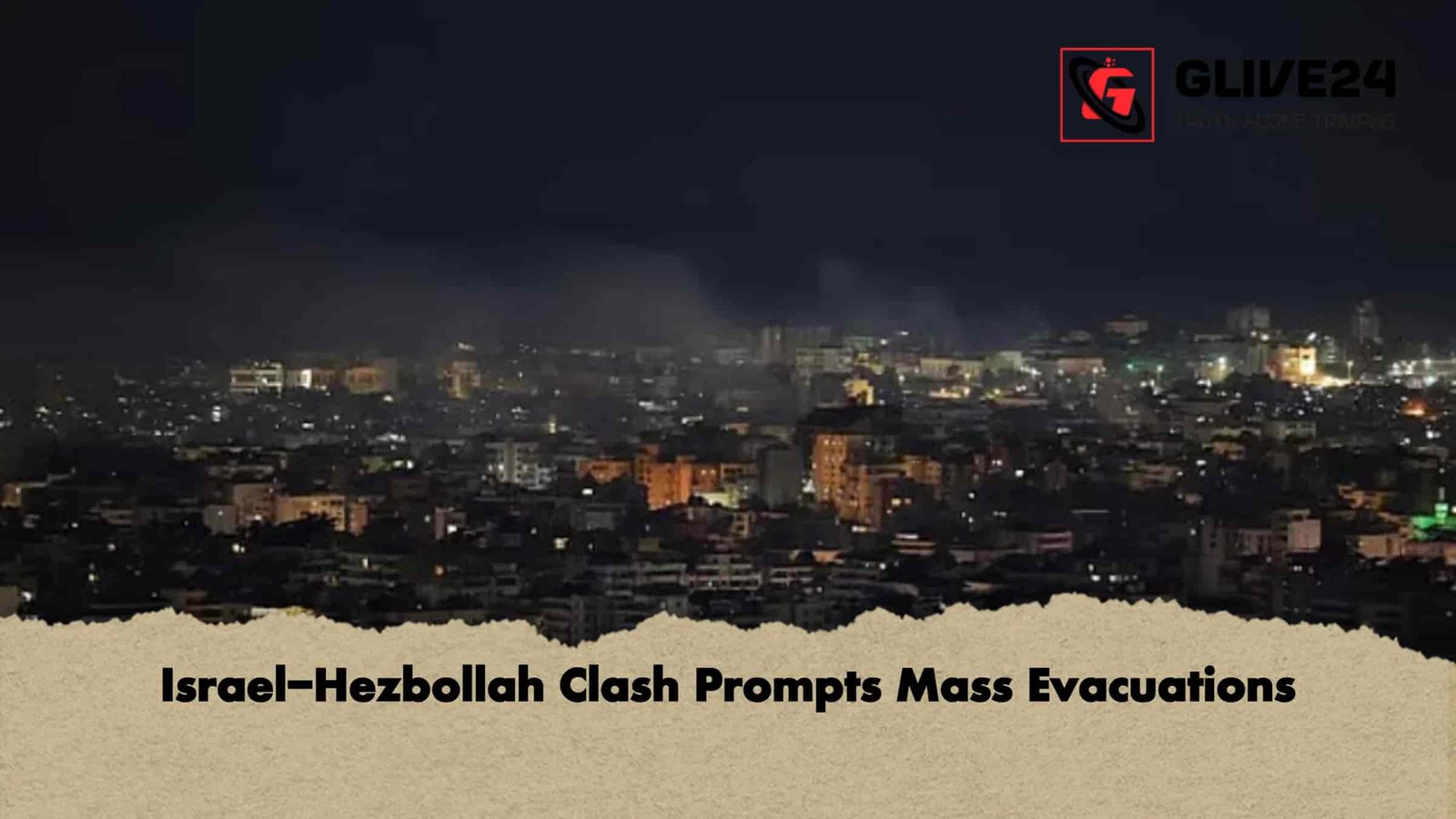
The Israeli military has issued urgent orders for the temporary evacuation of residents from 53 towns and villages in southern Lebanon, a move that has sharply escalated tensions in the region. This directive coincides with a major military campaign targeting the Iran-backed militant group Hezbollah. The operation, which began on Saturday, marks a new and intense phase of violence along the Israel-Lebanon border.
Table of Contents
Background of the Conflict
The recent surge in hostilities was triggered by a series of rocket attacks on northern Israel attributed to Hezbollah. In response, the Israel Defence Forces (IDF) declared that the group would not be permitted to pose any threat to Israeli territory. Since then, the IDF has carried out coordinated aerial and ground strikes on Hezbollah positions across Lebanon.
On Monday, several Hezbollah installations in the Lebanese capital Beirut were targeted in air raids. Reports from Al Jazeera indicate that explosions were clearly audible in the Dahieh district in southern Beirut, where Israeli warplanes conducted sustained bombing runs.
Key Facts
| Topic | Details |
|---|---|
| Trigger of Conflict | Rocket attacks on northern Israel by Hezbollah |
| Israeli Response | Coordinated air and ground strikes on Hezbollah positions in Lebanon |
| Affected Areas | Southern Lebanon, Beirut, Dahieh district |
| Evacuation Orders | Temporary relocation of civilians from 53 towns and villages |
| Threat | Iran-backed Hezbollah military activities |
| Counterattack Claims | Hezbollah alleges attacks on military facilities in Haifa |
| Humanitarian Impact | Daily life disrupted, civilians facing severe hardship |
Analysis
Regional analysts warn that a direct confrontation between Israel and Hezbollah could further destabilise the security landscape of the Middle East. Previous cycles of targeted killings and retaliatory threats have already complicated local security, raising fears of a rapid escalation in violence.
The IDF has emphasised that its current operations are defensive in nature and aimed solely at neutralising threats. Nevertheless, ordinary residents of southern Lebanon are enduring severe disruption. Daily routines are largely suspended, and temporary shelters are experiencing an increase in occupancy as families seek safety.
Humanitarian Concerns
The mass evacuation of southern Lebanese civilians, ongoing air raids over Beirut, and the potential for retaliatory Hezbollah attacks underscore a sharp escalation in the conflict. Rising tensions are exerting a mounting humanitarian toll on local populations and regional security alike. International observers are closely monitoring developments, but continued aerial and ground operations are intensifying fear and uncertainty among residents. Rapid international attention and intervention are considered crucial to prevent the conflict from expanding further.