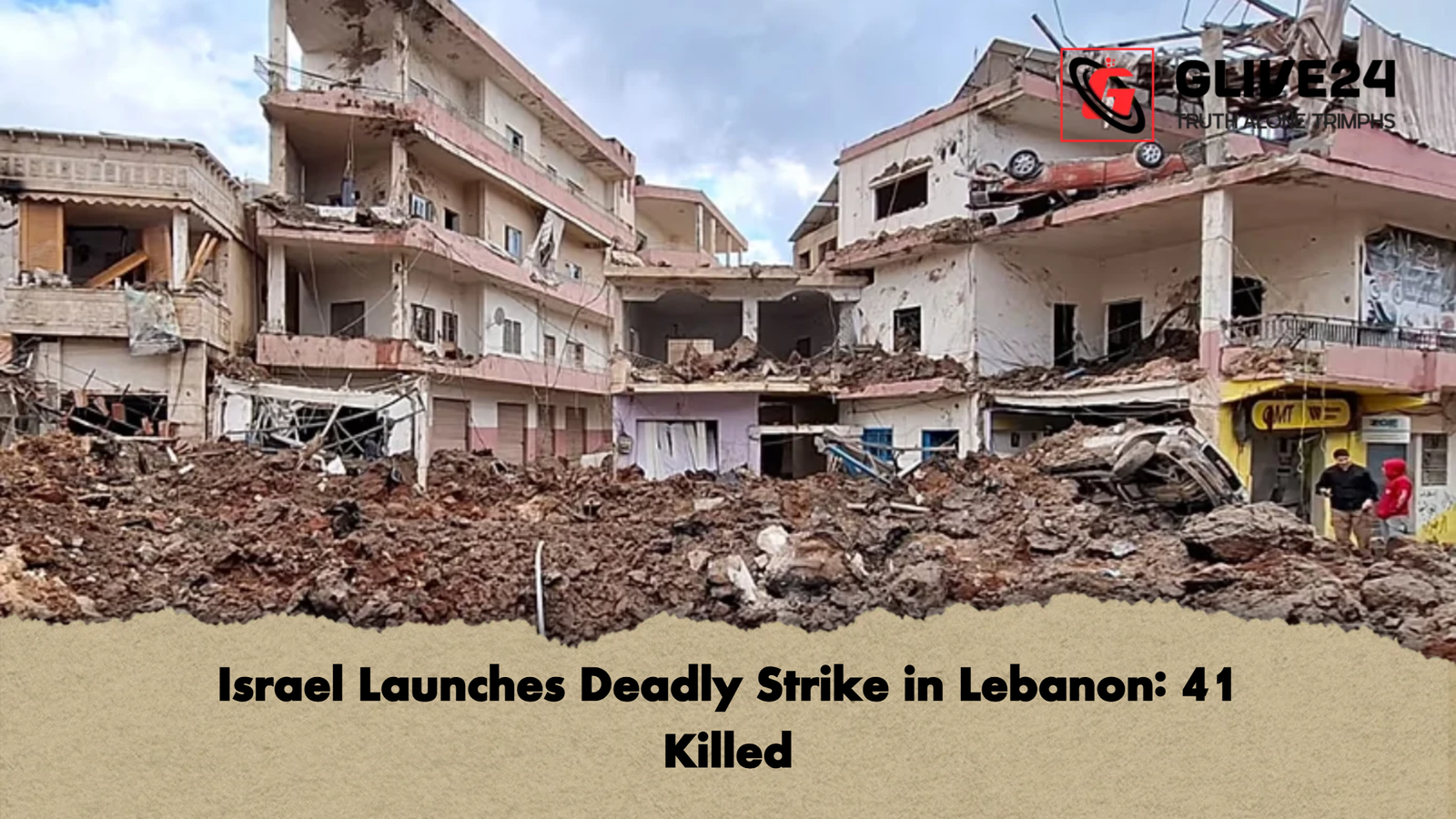
A large-scale Israeli military operation in eastern Lebanon has resulted in at least 41 fatalities and 40 injuries, the Lebanese Ministry of Health confirmed. Conducted through a combination of airstrikes and ground assaults, the attack targeted a village in the Bekaa Valley, which has become a central flashpoint in the ongoing Hezbollah–Israel conflict.
Details of the Operation
The offensive reportedly occurred overnight on Saturday, 7 March 2026, with Israeli forces executing air raids followed by ground incursions. Among the dead are three Lebanese army personnel, while the remainder are civilians, including children, according to local accounts.
| Parameter | Details |
|---|---|
| Location | Village in Bekaa Valley, eastern Lebanon |
| Date of Attack | Saturday, 7 March 2026 |
| Fatalities | 41 (including 3 Lebanese soldiers) |
| Injuries | 40 |
| Targets | Alleged Hezbollah positions; search for missing Israeli pilot |
| Civilian Impact | Multiple civilians killed, including children |
Eyewitnesses reported that sections of the village cemetery were disturbed during the raid. Israeli forces reportedly dug up graves, allegedly searching for the remains of an Israeli military pilot who disappeared in Lebanon four decades ago, but the search yielded no results.
Context and Strategic Significance
The Bekaa Valley has historically been a volatile area, bordering Hezbollah strongholds and frequently involved in cross-border tensions. Analysts suggest that the strike reflects Israel’s focus on precision intelligence operations targeting long-standing military objectives, while underscoring the risk posed to civilians in populated regions.
Lebanese authorities have condemned the attack, highlighting the death of non-combatants and calling for international intervention to prevent further escalation. Observers note that such strikes amplify regional insecurity, with the potential to trigger retaliatory attacks and intensify the broader Hezbollah–Israel confrontation.
Although Israel maintains that the operation was targeted and intelligence-driven, the civilian toll has drawn global media and humanitarian scrutiny, raising concerns about proportionality and adherence to international humanitarian law.
Eyewitness Testimony
A local resident, pointing to a disturbed grave, said:
“The Israelis believed the missing pilot’s remains were here. They dug the grave, but there was nothing.”
Accounts like these illustrate the human cost of military operations and the complexities of conducting strikes in densely populated rural areas.
With tensions in eastern Lebanon remaining high, analysts warn that further escalation could widen the conflict, drawing in neighbouring regions and creating lasting instability. The strike underscores the delicate balance between military objectives and civilian protection in modern conflict zones.