
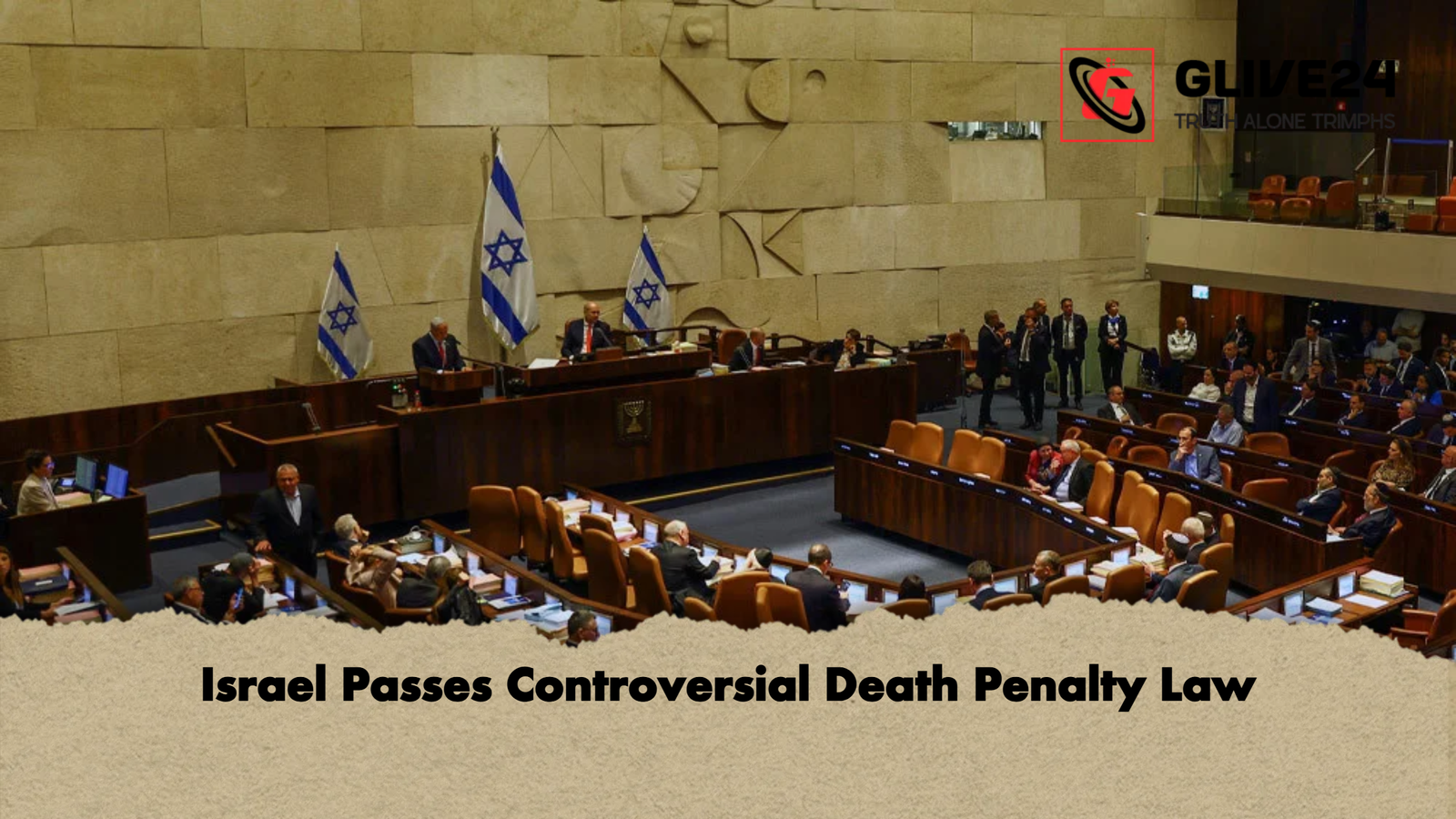
Israel’s parliament, the Knesset, has approved a contentious new law permitting the death penalty for Palestinians accused of “terrorist activities”, prompting strong condemnation from human rights organisations. According to the report, critics argue that the legislation introduces discriminatory legal standards and risks undermining fundamental principles of justice and equality.
Passed on Monday, the law establishes two distinct legal pathways for imposing capital punishment, effectively differentiating between individuals based on national identity. Observers note that this dual-track approach has raised serious concerns regarding equal protection under the law.
One of the most controversial aspects of the legislation is its application in the occupied West Bank. Palestinians tried in Israeli military courts—already widely criticised for lacking procedural safeguards comparable to civilian courts—could now face the death penalty as a default sentence upon conviction. Legal experts warn that this provision may significantly reduce judicial discretion and heighten the risk of irreversible miscarriages of justice.
Suhad Bishara, Legal Director of the Palestinian rights organisation Adalah, strongly criticised the move, describing it as the institutionalisation of “state-sanctioned, cold-blooded killing”. She argued that the law deliberately targets Palestinians and violates core principles of equality and anti-discrimination. Adalah has announced plans to challenge the legislation before the Israeli Supreme Court.
Similarly, the Association for Civil Rights in Israel (ACRI) has filed a petition opposing the law. The organisation contends that the Knesset lacks jurisdiction to legislate for the West Bank, as the territory is not internationally recognised as part of Israel’s sovereign domain. Furthermore, ACRI maintains that the law is unconstitutional, as it infringes upon rights protected under Israel’s Basic Laws, including human dignity, fair trial guarantees, and equality before the law.
Another deeply contentious provision permits executions to be carried out in secrecy. The law allows for condemned prisoners to be held in near-total isolation, with executions—reportedly by hanging—conducted without public disclosure. Human rights advocates argue that such measures could obscure accountability and increase the likelihood of abuse.
The law stipulates that individuals convicted of terrorism-related offences may be sentenced to death. However, critics highlight that Israeli citizens accused of similar crimes are unlikely to face equivalent punishment, thereby reinforcing claims of systemic discrimination.
Below is a summary of the law’s key features:
| Aspect | Details |
|---|---|
| Legislative Body | Israeli Knesset |
| Target Group | Palestinians in occupied territories |
| Applicable Courts | Military courts (West Bank) |
| Primary Punishment | Death penalty |
| Execution Method | Secretive hanging |
| Key Concerns | Discrimination, lack of due process, secrecy |
Under international law, occupying powers are generally prohibited from imposing their domestic legal systems on occupied populations. Israel has controlled the West Bank since 1967, following the Six-Day War with Jordan, and the territory is widely regarded as occupied under international legal frameworks.
Analysts suggest that this legislative step may carry broader political implications. Some interpret it as part of a gradual move towards the de facto annexation of the West Bank, further complicating an already volatile geopolitical landscape. The law is therefore not only a legal development but also a significant indicator of shifting policy directions in the Israeli-Palestinian conflict.