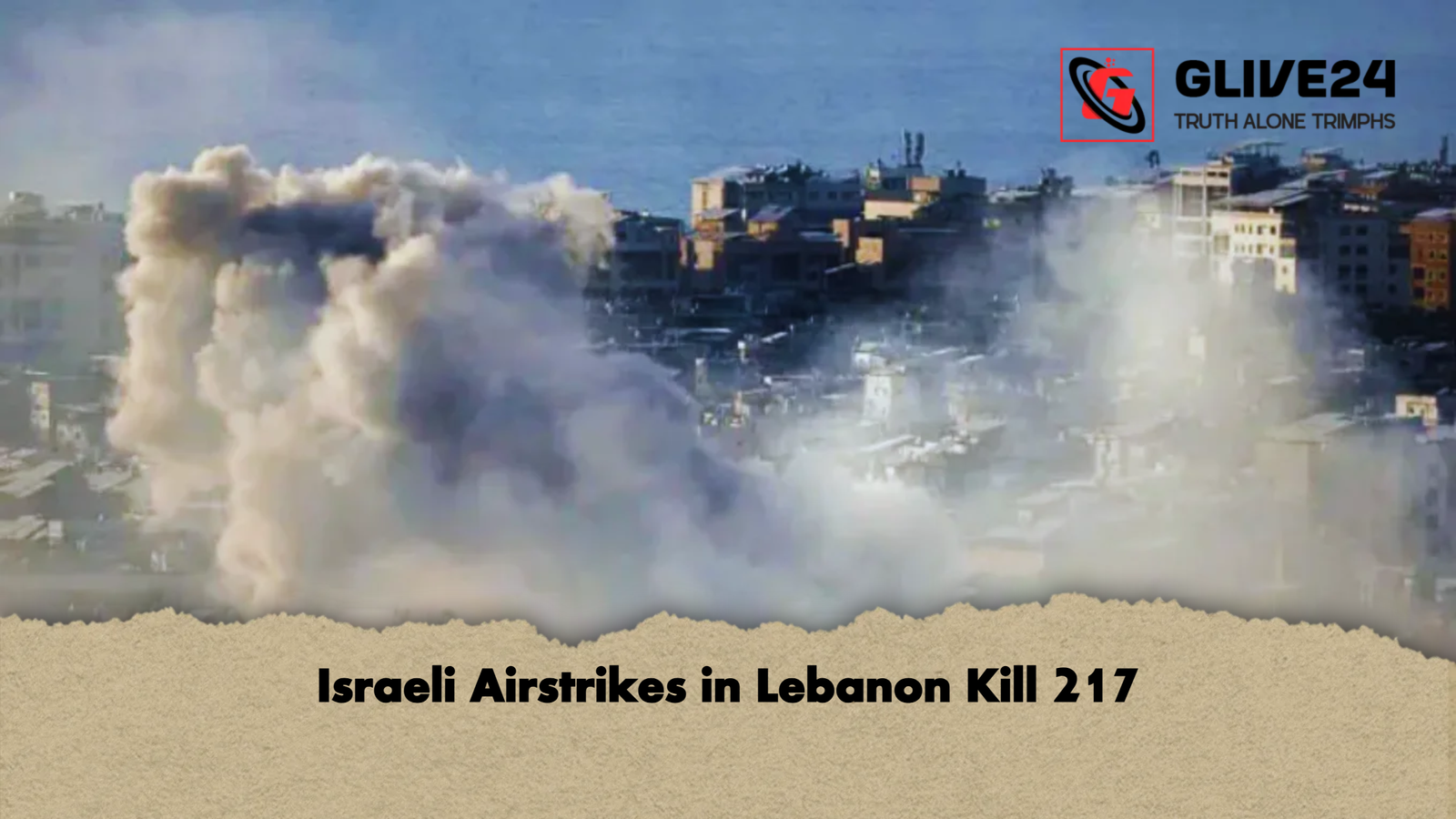
The death toll in Lebanon from Israeli airstrikes has risen sharply to 217, with a further 798 people reported injured, according to the country’s official news agency. The Lebanese Ministry of Health confirmed that the casualties occurred following a series of air raids that began early on Monday morning.
Initially, the Ministry reported 123 fatalities, but as the attacks continued and rescue efforts reached more affected areas, the number of deaths climbed substantially. Hospitals in several regions are now struggling to cope with the influx of injured civilians, many of whom are in critical condition. Emergency medical teams are working under intense pressure, and supplies of essential medicines and equipment are reportedly running low.
The airstrikes targeted multiple locations, including residential districts, schools, and local infrastructure, intensifying the humanitarian crisis. Authorities have also reported significant damage to shelters and temporary relief centres, leaving many displaced families in urgent need of assistance.
Casualty and Damage Summary
| Category | Number | Notes |
|---|---|---|
| Fatalities | 217 | Includes civilians and local defence personnel |
| Injured | 798 | Many in serious condition; hospitals overwhelmed |
| Damaged shelters | 5 | Temporary relief and community centres affected |
| Schools/Hospitals damaged | 3 | Essential civic infrastructure impacted |
The Ministry highlighted that women and children comprise a significant portion of the casualties. Many injured individuals are receiving urgent care at overstretched medical facilities, while volunteers and local NGOs are working to provide immediate relief. Despite these efforts, the continuing risk of further airstrikes has left large parts of the population in a state of fear and uncertainty.
International human rights organisations have condemned the attacks, calling for restraint and urging both sides to engage in dialogue to prevent further loss of civilian life. Analysts warn that the ongoing military actions could have long-term political and social repercussions for Lebanon, complicating reconstruction and humanitarian relief efforts in the coming months.
Local authorities, together with international aid agencies, are coordinating emergency responses, including evacuation of high-risk areas and distribution of medical aid. Security experts have cautioned that several regions remain vulnerable to renewed strikes, making the provision of protection and rapid humanitarian intervention a priority.
The situation remains volatile, and Lebanon continues to appeal for international support to mitigate the humanitarian impact and restore stability across the affected regions.