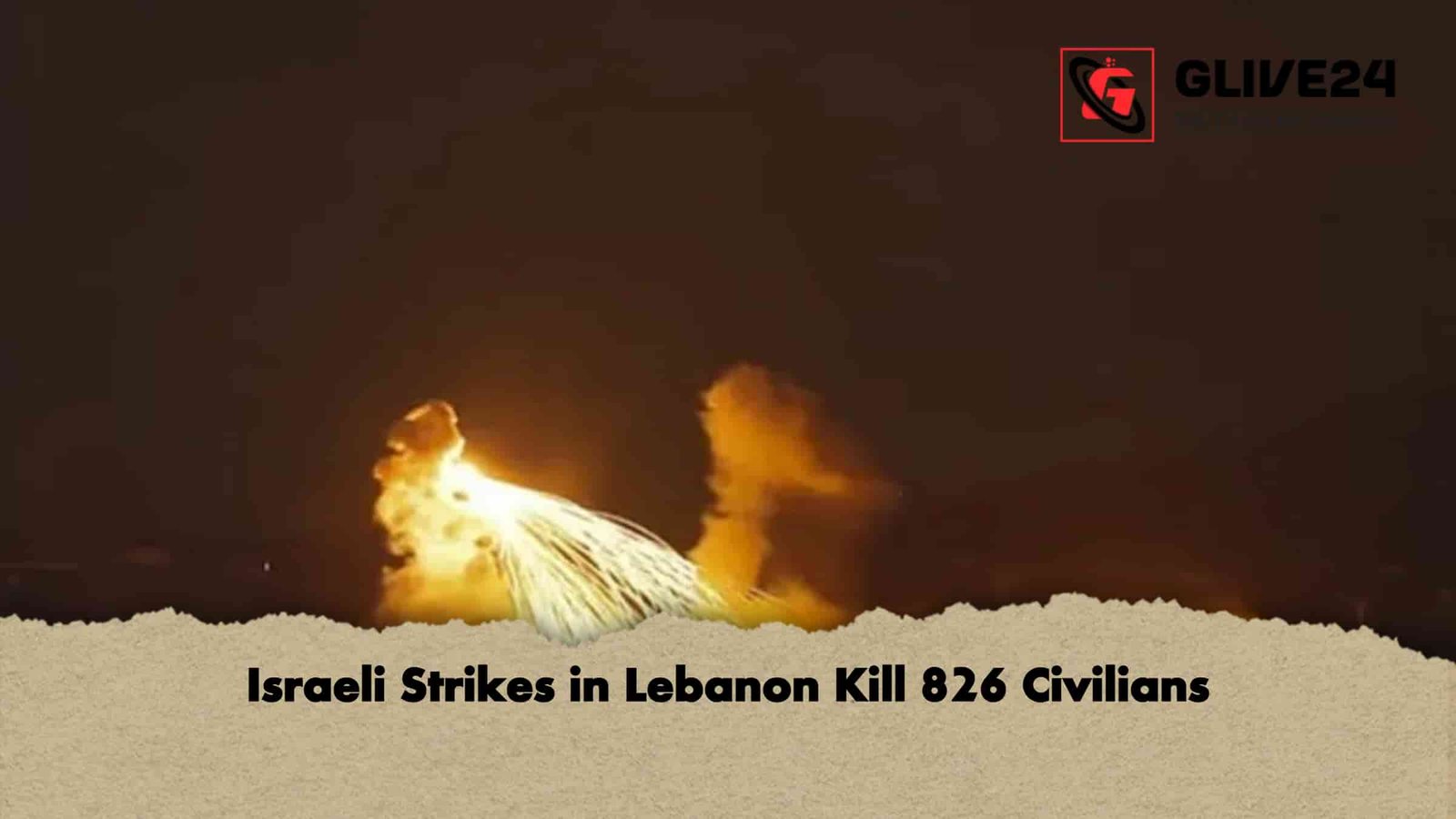
The recent Israeli military offensive in Lebanon has resulted in the deaths of at least 826 people, according to the Lebanese Ministry of Health. Among the casualties are 106 children and 65 women, while 31 paramedics and medical staff lost their lives while providing assistance to civilians.
In the southern town of Burj Kalawiya, a local clinic was struck, leading to the deaths of at least 12 healthcare workers. Authorities have confirmed that both ordinary civilians and medical personnel were directly targeted during the attacks.
Casualties Breakdown
| Category | Number | Details |
|---|---|---|
| Children (under 18) | 106 | Most aged between 5 and 15 years |
| Women | 65 | Various age groups included |
| Paramedics / Medical Staff | 31 | Hospital and clinic staff on duty |
| Other Civilians | 624 | Men and general population |
| Total | 826 |
Health authorities have expressed deep concern over the high number of child casualties. Eyewitnesses report that residential buildings, schools, and medical facilities in the affected areas have suffered extensive damage. Hospitals are overwhelmed, and many injured civilians remain in critical condition, struggling to receive urgent care.
Experts warn that the strikes are severely impacting Lebanon’s healthcare and social infrastructure. The physical safety and mental health of children are particularly at risk, with long-term trauma likely for those who survived.
Humanitarian organisations, together with the Ministry of Health, are striving to provide emergency medical care, safe shelters, and basic necessities. However, escalating violence and insecurity are severely constraining relief operations. Thousands of residents, particularly women and children, have been forced to abandon their homes.
International observers and human rights organisations have strongly condemned the attacks and called for immediate measures to protect civilians. There are growing concerns that without adequate humanitarian aid, the situation could deteriorate further, threatening the wellbeing of tens of thousands of vulnerable people.
The Lebanese Ministry of Health continues to warn that casualty figures are rising rapidly and the situation is approaching a critical tipping point. Urgent intervention is needed to prevent a full-scale humanitarian catastrophe.