
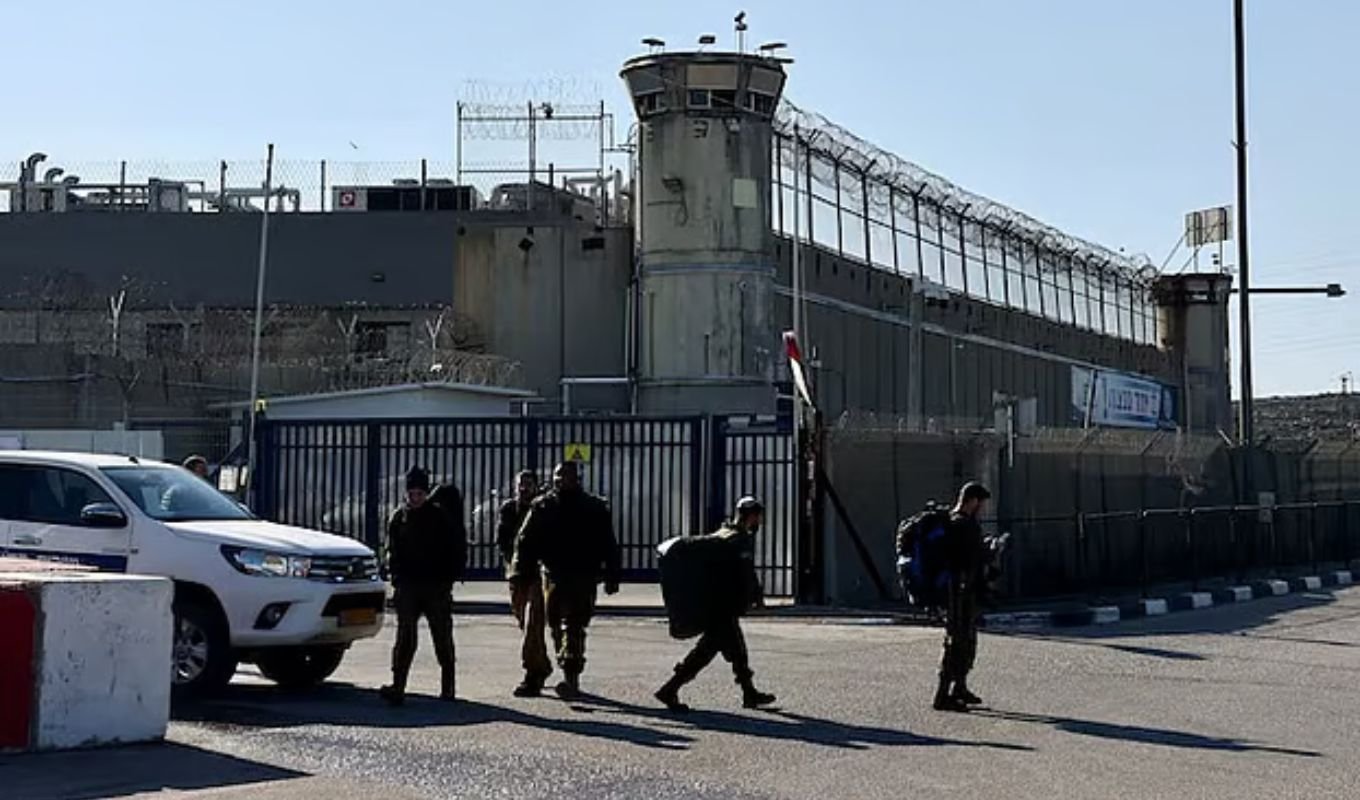
Israel is detaining dozens of Palestinians in an underground secret prison known as Rakefet, where detainees reportedly never see daylight, receive insufficient food, and remain cut off from their families and the outside world. Human rights lawyers and the organisation PCATI have expressed deep concern over these conditions.
Among the detainees are two civilians—a male nurse arrested while at work in December 2023, and a young food vendor detained at a checkpoint in October 2024. Both men were transferred to Rakefet in January 2024. No formal charges or trial procedures have been disclosed, and PCATI lawyers report that the individuals were held for months without information on their whereabouts.
Originally opened in the early 1980s for high-risk offenders, Rakefet was shut down in 1985 due to allegations of inhumane conditions. Following the Hamas attack on 7 October 2023, Israel’s National Security Minister Itamar Ben-Gvir ordered the facility to be reopened. Authorities claim it is intended for members of Hamas or Hezbollah’s special units, but human rights groups say many detainees are ordinary civilians held without charge.
All parts of the facility—including cells, exercise yards, and meeting rooms—are located underground, leaving prisoners completely deprived of natural light. While the prison once housed 15 inmates, recent months have seen the number rise to around 100. Although Israel released 250 convicted Palestinians and 1,700 Gaza detainees after the ceasefire, at least 1,000 Palestinians remain in Israeli prisons.
Lawyers describe the cells as filthy, windowless, and infested with insects, with non-functional toilets. Many detainees are kept shackled and report humiliation and beatings. They are shown daylight for only a few minutes every two days through a narrow opening at ground level. Beds are removed at 4 a.m. and returned only at night.
Medical care is irregular, food supplies reportedly inadequate, and detainees are intimidated with dogs. Legal representatives say hearings are rushed, legal access is tightly restricted, and conversations about family are often cut short by guards.
PCATI’s Executive Director Tal Steiner states that the treatment of detainees—many of whom are civilians—amounts to inhumane and degrading behaviour with long-term mental and physical consequences, contradicting international human rights norms.
Human rights organisations have urged the international community to conduct a thorough investigation into Rakefet’s operations and to ensure an immediate end to abusive practices.
GLIVE/TSN