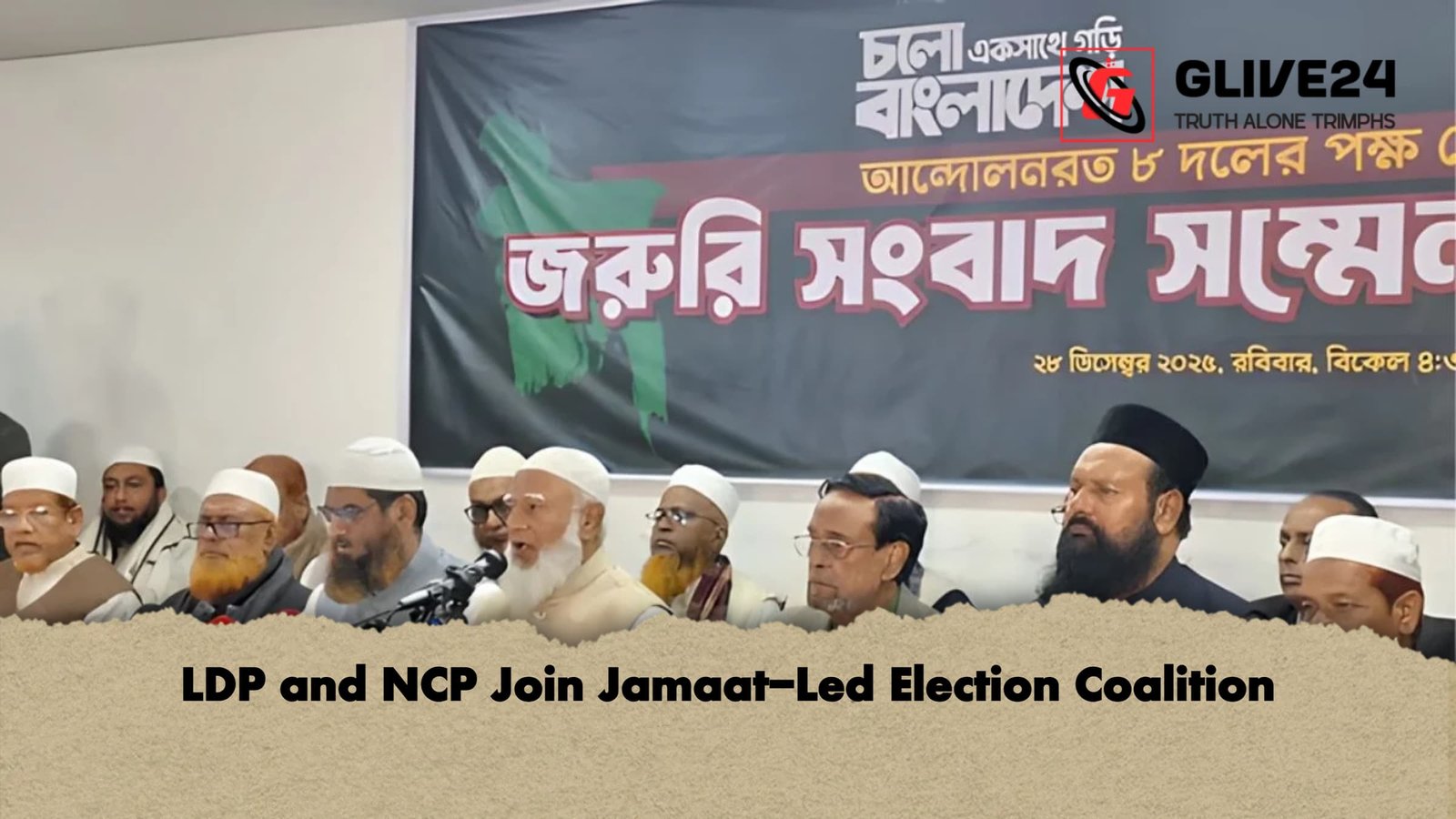
The political landscape of Bangladesh underwent a significant realignment on Sunday, 28 December 2025, as the Liberal Democratic Party (LDP) formally entered into a seat-sharing agreement with Bangladesh Jamaat-e-Islami.1 During an emergency press conference at the National Press Club in Dhaka, Jamaat Ameer Dr Shafiqur Rahman announced that the LDP, led by the decorated war veteran Colonel (Retd) Oli Ahmad Bir Bikram, and the student-led National Citizen Party (NCP) have joined their existing coalition. This strategic move expands the Jamaat-led platform to a ten-party alliance, aiming to present a unified front in the upcoming general elections scheduled for February 2026.
The inclusion of the LDP is particularly noteworthy given the personal history of its chairman. Colonel Oli Ahmad is a distinguished ‘Bir Bikram’ gallantry awardee and a former sub-sector commander who played a pivotal role in the 1971 Liberation War.4 Having served as a senior minister in previous administrations, his decision to align with Jamaat marks a departure from his long-term cooperation with the Bangladesh Nationalist Party (BNP). While Colonel Oli was present at the National Press Club during the announcement, he remained notably silent, allowing the Jamaat leadership to outline the coalition’s vision for a “one seat, one candidate” policy across the nation’s 300 constituencies.
The Expanded Ten-Party Electoral Alliance
| Political Party | Primary Leadership | Ideological Foundation |
| Bangladesh Jamaat-e-Islami | Dr Shafiqur Rahman | Islamist / Senior Partner |
| Liberal Democratic Party (LDP) | Col (Retd) Oli Ahmad | Nationalist / Conservative |
| National Citizen Party (NCP) | Nahid Islam | Youth-led / Reformist |
| Islami Andolan Bangladesh | Mufti Syed Muhammad Rezaul Karim | Islamist |
| Khelafat Majlis | Maulana Abdul Basit Azad | Islamist |
| Bangladesh Development Party | (Affiliated with former Jamaat figures) | Pro-Development / Islamist |
| Jatiya Ganotantrik Party (JAGPA) | Rashed Pradhan | Nationalist |
This consolidation of right-wing and Islamist forces has triggered immediate ripples across the political spectrum. The LDP itself faced internal tremors just days before the pact was finalised, as its Secretary General, Redwan Ahmed, resigned from the party to rejoin the BNP. He has since been confirmed as the BNP’s candidate for the Cumilla-7 seat, highlighting the fractures within the LDP caused by this shift in alliance. Similarly, the National Citizen Party is currently grappling with high-profile resignations and social media backlash from student leaders who view the alliance with Jamaat as a contradiction of their revolutionary goals for a “Second Republic.”
Despite these internal challenges, the alliance partners have pledged to continue their movement for comprehensive electoral reforms, including the demand for a proportional representation system. By combining the veteran political experience of Colonel Oli Ahmad with the street power of the youth-led NCP and the organised grassroots network of Jamaat, the ten-party bloc seeks to challenge the dominance of the BNP. As the election clock ticks down to February, observers believe this alliance will be the primary vehicle for those seeking a governance model rooted in religious values and nationalist identity, distinct from the traditional two-party system that has historically defined Bangladeshi politics.