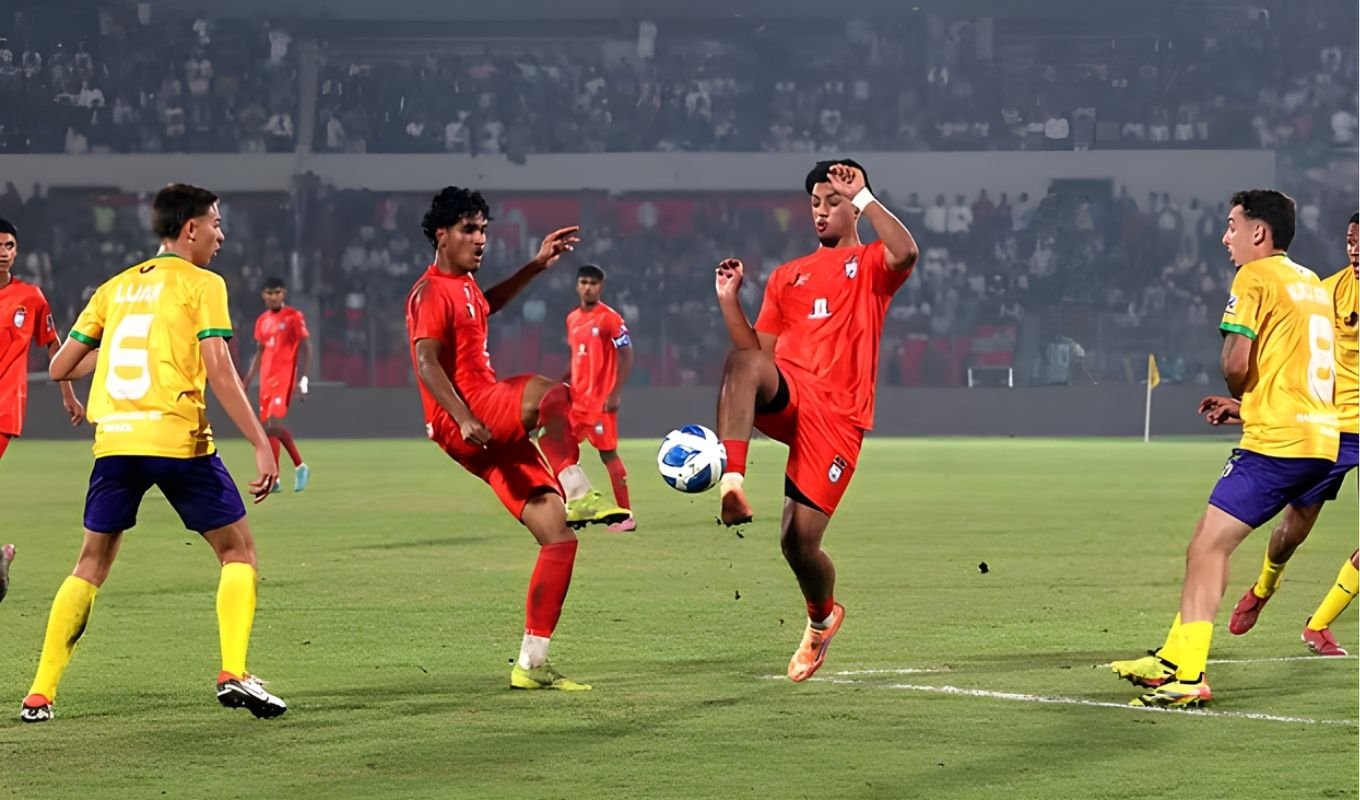
A shocking incident at the National Stadium has thrown the Latin Bangla Super Cup into turmoil, as journalists reported being physically assaulted during a match between youth clubs from Brazil and Argentina on 8 December. The violent altercation is now at the centre of the Ministry of Youth and Sports’ decision to suspend the event.
The tournament, featuring the Under-20 sides of Brazil’s São Bernardo and Argentina’s Atlético Charlone, was supposed to be a celebration of international youth football in Bangladesh. Instead, it became a scene of disgrace, highlighting a lack of preparation, unprofessional security arrangements and a dangerous breakdown of management.
According to eyewitness accounts, several journalists were obstructed from entering designated media zones. Some were reportedly prohibited from taking photographs and collecting match details. The situation escalated when one sports reporter confronted the organisers’ private security personnel about the restrictions. Minutes later, multiple guards allegedly attacked him, pushing him to the ground and attempting to seize his equipment.
Videos of the confrontation, secretly recorded by other journalists, show uniformed guards shouting, grabbing media personnel and attempting to block cameras. The victim, according to reporters present, suffered bruises and required treatment shortly after the incident.
The reaction from sports media across Bangladesh was immediate and fierce. Not only did journalists condemn the attack, but several demanded that criminal charges be filed against those responsible. The Bangladesh Sports Writers Association expressed “deep anger and protest”, demanding that organisers be held accountable for hiring untrained, aggressive private security.
The government responded promptly. In its official letter suspending the tournament, the Youth and Sports Ministry condemned the assault, labelling it “a humiliation of journalism and a violation of basic standards of sporting management”. The ministry emphasised that safety must be guaranteed for media workers, spectators and athletes alike.
Behind the violence lies a broader crisis. Sources indicate that the event lacked professional planning, financial transparency and credible supervision. The organisers allegedly failed to coordinate properly with stadium authorities and brought in private security forces who had little training in handling crowds or media personnel. The incident has exposed how poorly prepared the organisers were to host an international match.
The journalist assault has turned public opinion sharply against AFB Boxing Promotion, raising serious questions about whether an organisation with no known experience in football was qualified to handle a high-profile international tournament. The scandal may have a lasting impact on the willingness of global clubs to visit Bangladesh in the future.
What should have been a showcase of South American talent has instead become a case study in how mismanagement can ruin sports development. While the government works to restore order and investigate wrongdoing, journalists remain shaken, insisting they will not tolerate negligence or violence in the name of football.