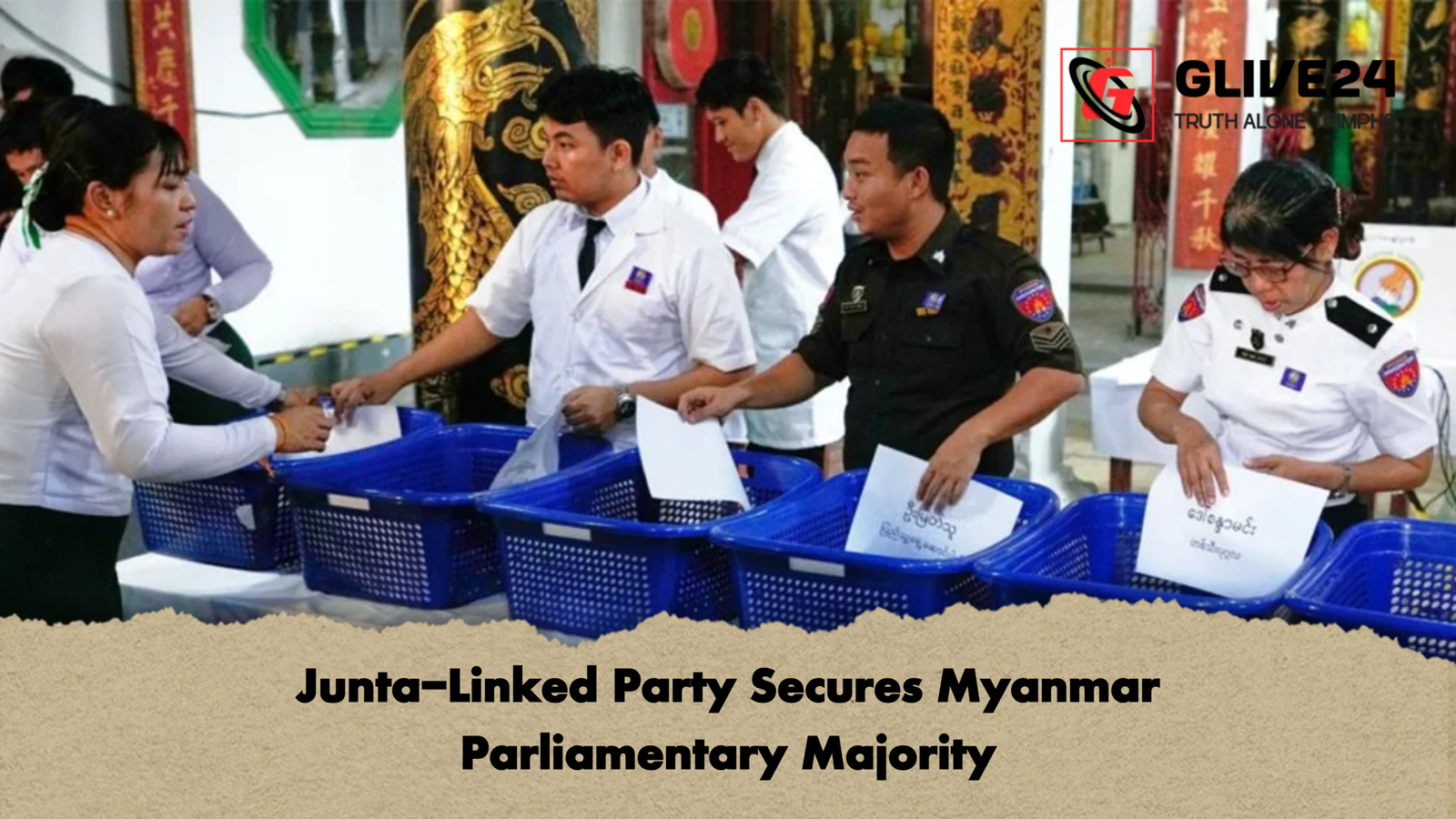
Myanmar’s military-backed political party, the Union Solidarity and Development Party (USDP), has claimed victory in the lower house of parliament, asserting that it has secured a majority of seats in the country’s ongoing election. The claim was made on Tuesday by a senior party official, according to a report by AFP.
Global observers have expressed concern over the credibility of the election, arguing that it is likely to extend the military’s grip on power. Many analysts have described the vote as orchestrated to maintain the junta’s dominance, undermining the democratic process.
Since gaining independence, Myanmar has spent most of its history under military rule. While a brief democratic transition occurred under the leadership of pro-democracy icon Aung San Suu Kyi, it was short-lived. In 2021, the military staged a coup, seizing control of the government, detaining Aung San Suu Kyi, and plunging the nation into renewed conflict.
Over the past four years, the junta has conducted several rounds of national elections. The third and final phase of the current vote is scheduled for 25 January, with officials asserting that the process is intended to return power to the people.
In the second phase of voting held last Sunday, the USDP claimed it won 87 of 100 contested seats. Combined with a landslide victory in the first phase, the party now reportedly holds 176 seats in the lower house, slightly more than half of the 330 elected seats. The results of the final phase are yet to be announced.
| Election Phase | Total Contested Seats | USDP Claimed Wins | Remarks |
|---|---|---|---|
| Phase 1 | 100 | 89 | Strong initial victory |
| Phase 2 | 100 | 87 | Announced by senior official |
| Total so far | 330 | 176 | Over half of elected seats |
Myanmar’s lower house comprises 440 seats, of which 110 are constitutionally reserved for the military, highlighting the continued influence of the armed forces. Analysts note that many USDP politicians are retired military officers, cementing the party’s role as the primary political representative of the junta.
UN Special Rapporteur on human rights in Myanmar, Tom Andrews, said last week that the election had been strategically designed to ensure the military’s dominance while creating a veneer of legitimacy.
The new parliamentary session is scheduled to begin in March, during which members of both houses will jointly elect the president. Junta leader Min Aung Hlaing has not ruled out resigning his top military post to assume a civilian role, a move that could have far-reaching political implications for the nation’s fragile governance structure.