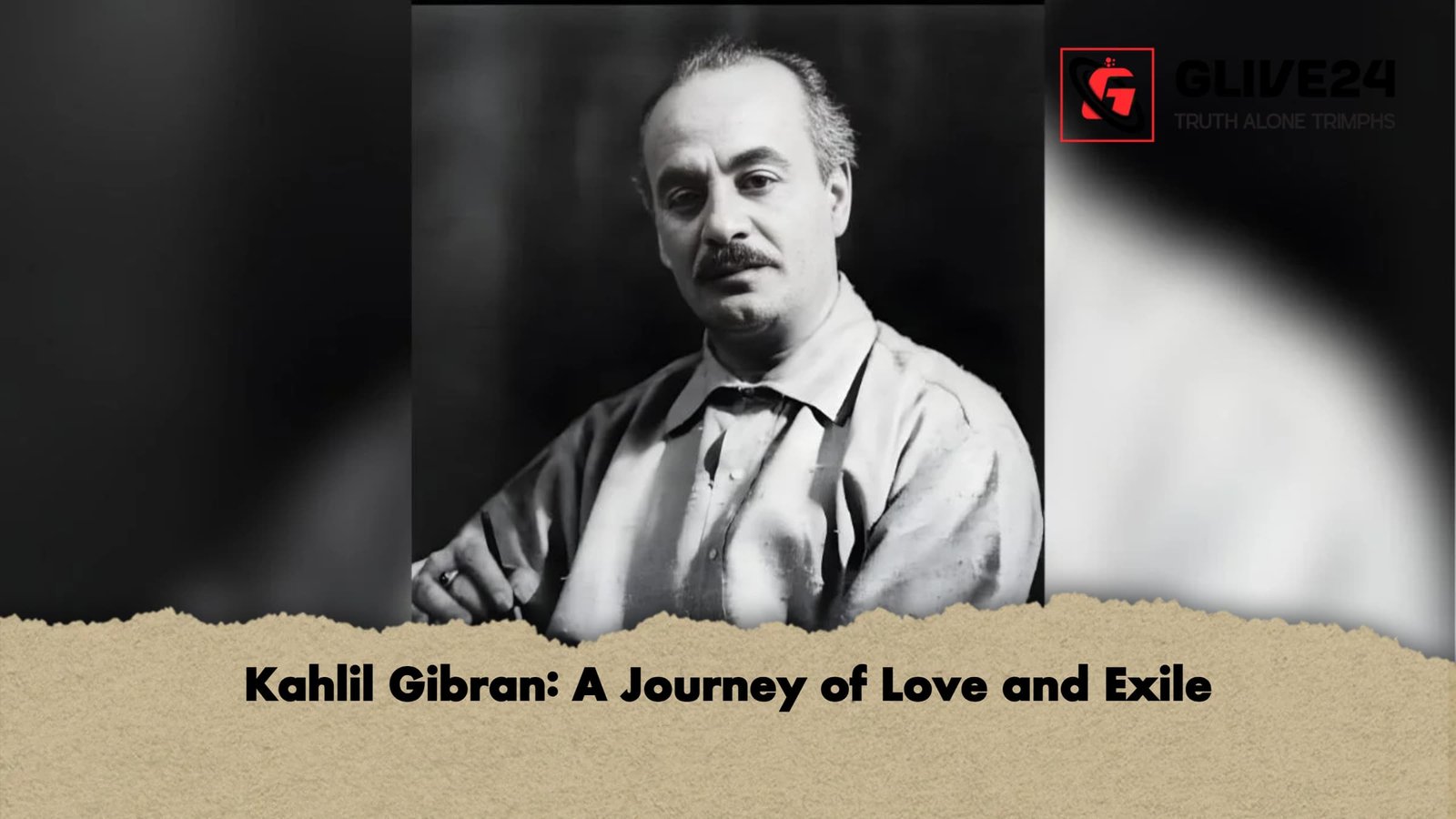
Poverty, exile, sorrow, and love: these four pillars define the extraordinary journey of Kahlil Gibran. A literary bridge between the Orient and the Occident, Gibran transformed his personal grief into a universal philosophy, giving humanity a voice that resonates across time and geography. He was not merely a poet; he was a painter, a philosopher, and a visionary who saw the soul’s liberation as life’s ultimate purpose.
Table of Contents
From the Holy Valley to the West
Kahlil Gibran was born on 6 January 1883, in the village of Bsharri, perched on the edge of the sacred Kadisha Valley in Northern Lebanon. Born into a Maronite Christian family, his childhood was a landscape of hardship and uncertainty. With an absent, irresponsible father, the burden of the household fell entirely on his mother, Kamila, a woman of immense resilience who would later become her son’s greatest muse.
In 1895, driven by the search for a livelihood, the family emigrated to Boston. This transition from the spiritual mysticism of the East to the pragmatic rationalism of the West forged a new Gibran—one capable of synthesising ancient wisdom with modern humanism.
The Artistic Rebel and the Mahjar Movement
While in Boston, Gibran’s artistic genius began to flourish. He later moved to Paris to study fine arts, where his sketches became a silent testament to his philosophical depth. In the literary world, he became the leading light of Al-Mahjar (The Emigrant Arabic Literature Movement). Gibran and his contemporaries revolted against the rigid structures of traditional Arabic literature, introducing a new era of individualism and emotional honesty.
A Global Literary Legacy
In 1923, Gibran published his magnum opus, The Prophet. This spiritual masterpiece remains one of the most beloved books in history, exploring the fundamental chapters of human existence—love, marriage, work, and death—using language that is simultaneously simple and profound.
The Literary Significance of Kahlil Gibran
| Category | Detail | Contextual Importance |
| Global Rank | Third Best-Selling Poet | Follows only Shakespeare and Laozi in worldwide readership. |
| Masterpiece | The Prophet (1923) | Translated into over 100 languages; a staple of spiritual literature. |
| Philosophy | Universal Humanism | Transcends religious and national boundaries to focus on the soul. |
| Movement | Al-Mahjar | Pioneered the modern, free-verse movement in Arabic literature. |
| Key English Work | Jesus, the Son of Man | A historical and spiritual reimagining of Christ’s life (1928). |
Philosophy: The Divinity of Love
Gibran’s philosophy placed the “Universal Human” above the constraints of religion or state. He viewed love not as a sentiment, but as a path to spiritual freedom, and sorrow as the tool that carves the soul’s capacity for joy. In his world, God was not a distant judge, but the deep, echoing love within the human heart.
Death and the Return to Lebanon
Kahlil Gibran died on 10 April 1931, in a New York hospital at the age of 48. In accordance with his final request, his body was returned with state honours to Lebanon. He was interred in a secluded mountain monastery in his birthplace, Bsharri, which has since become a place of pilgrimage for those seeking solace in his words. Gibran remains more than a poet; he is a global institution and an eternal voice.