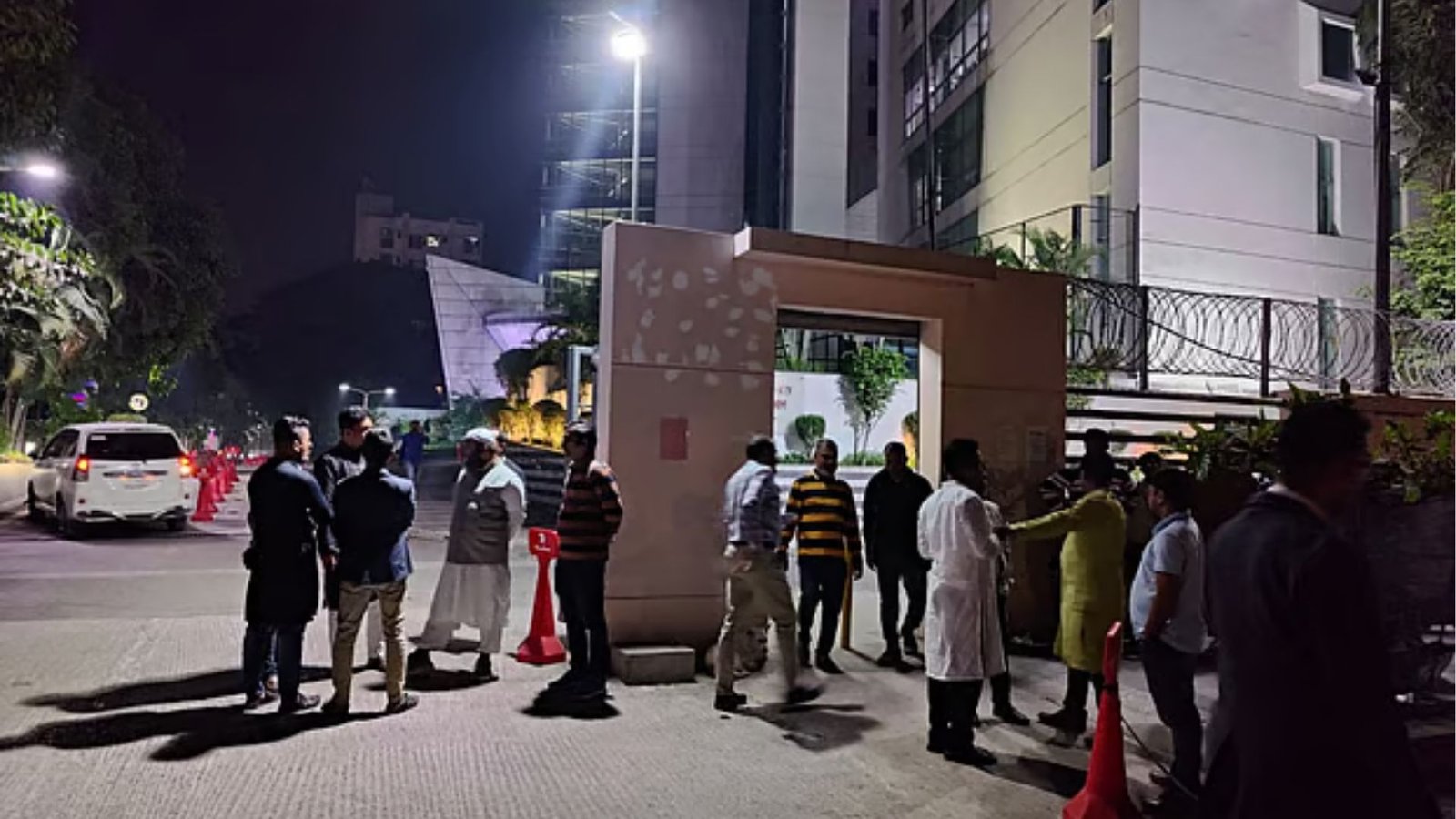
BNP Chairperson and former Bangladeshi Prime Minister Khaleda Zia is undergoing intensive treatment at Dhaka’s Evercare Hospital after serious infections were detected in her lungs and heart. Her deteriorating condition has prompted senior BNP figures and grassroots activists to gather outside the hospital, reflecting the deep anxiety within the party over the health of its most prominent leader.
Late on Friday night, at approximately 11:15 pm, Abdul Moyeen Khan, a senior member of the BNP’s Standing Committee, arrived at the hospital to enquire about her condition. Shortly afterwards, vehicles carrying several other senior BNP officials were also seen entering the premises. Observers noted a subdued yet visibly emotional atmosphere among party members standing outside, many of whom said they had come simply to “stand by their leader” during this difficult phase. Media personnel remained stationed throughout the evening as well, monitoring every update from the hospital.
Khaleda Zia’s treatment is being supervised by a medical board comprising both local and foreign experts, who are evaluating her condition around the clock. BNP Secretary General Mirza Fakhrul Islam Alamgir informed journalists earlier in the day that doctors considered her situation “highly precarious”. Professor Muhammad Yunus, the party’s Chief Adviser, publicly expressed his alarm and appealed to the nation for prayers.
At nearly 80, Khaleda Zia has been grappling with multiple long-term ailments, including cardiac complications, diabetes, liver cirrhosis, arthritis, and kidney-related issues. Her current crisis began last Sunday when she developed acute shortness of breath, prompting her immediate transfer to Evercare Hospital. Following diagnostic tests, doctors confirmed infections affecting vital organs, significantly heightening the risks associated with her existing conditions.
Khaleda Zia had travelled to London on 7 January for advanced treatment, spending 117 days abroad before returning to Dhaka on 6 May. Since her return, her health has remained fragile, resulting in several hospital admissions. Her latest deterioration has once again intensified political and public concern.