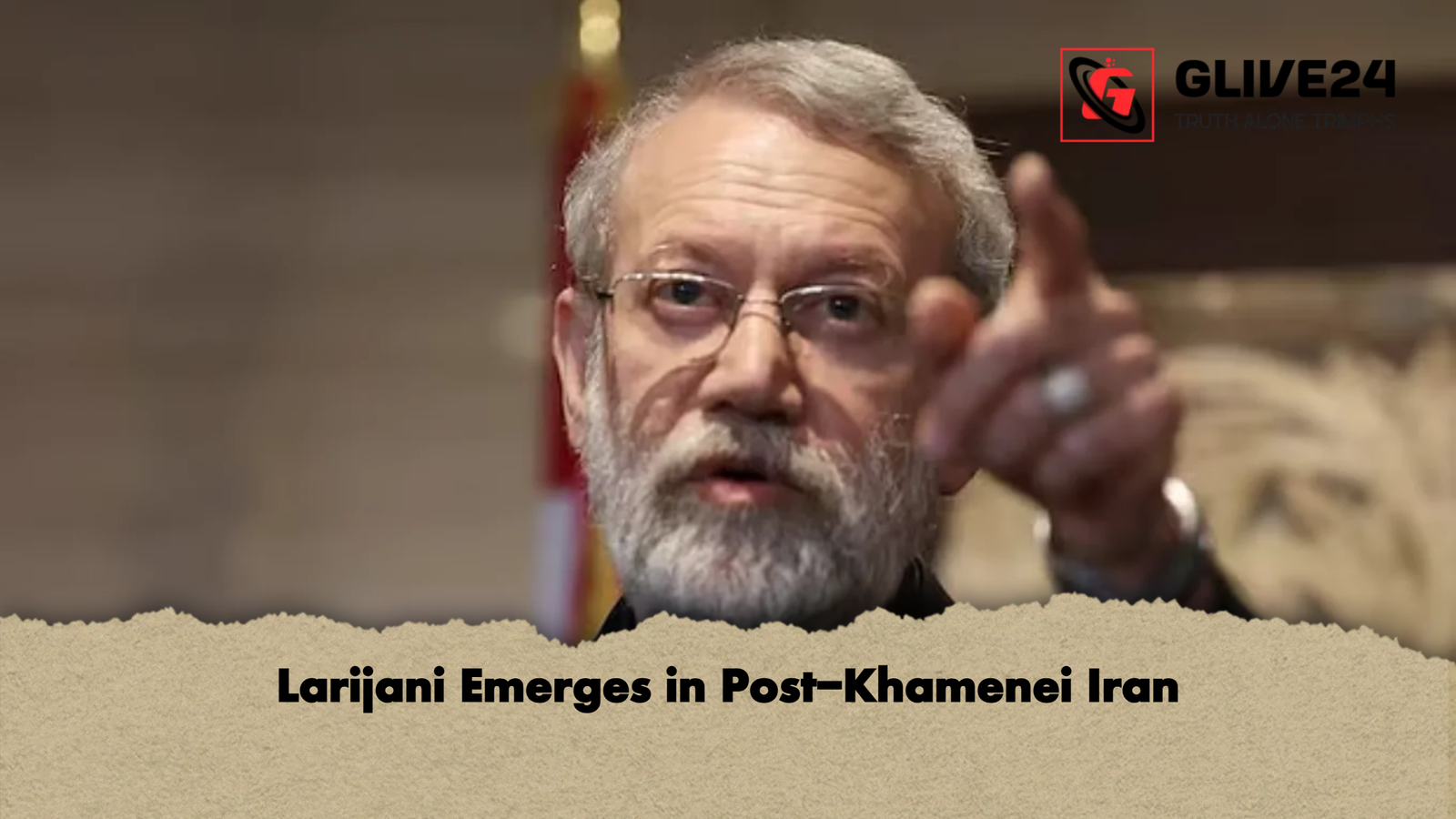
The reported killing of Iran’s Supreme Leader, Ali Khamenei, in an air strike has created a profound leadership vacuum in the Islamic Republic, thrusting veteran politician Ali Larijani into the centre of power. In a televised address on Sunday, Larijani announced plans to establish an “interim governing council” to steer the country through what is rapidly becoming one of the most volatile periods in its recent history.
Over the past year, Larijani has consolidated his position as one of the most influential figures within Iran’s security and political architecture. His involvement spans critical domains, including nuclear negotiations, regional diplomacy, and the management of internal unrest. This breadth of influence has positioned him as a key power broker at a time when continuity of governance is paramount.
Born into one of Iran’s most prominent clerical families, Larijani has long been embedded within the country’s ruling establishment. His career reflects both ideological commitment and political pragmatism. Despite being sanctioned by the United States in January over allegations related to the suppression of anti-government protests, he continued to oversee indirect nuclear discussions involving Washington, demonstrating his enduring relevance in strategic policymaking.
In his latest remarks, Larijani accused the United States and Israel of attempting to destabilise Iran through coordinated attacks. He also issued a stern warning to separatist groups, stating that any attempt to exploit the current instability would be met with decisive force. The situation has been further complicated by the reported death of Iran’s armed forces Chief of Staff, Abdolrahim Mousavi, in the same wave of strikes.
Larijani’s close association with Khamenei has been instrumental in his rise. Since his appointment as Secretary of the Supreme National Security Council in August, he has been regarded as a trusted strategist. He recently travelled to Oman to participate in indirect nuclear negotiations and has made multiple visits to Moscow to strengthen security ties with Russia.
Notably, Larijani has displayed a degree of pragmatism on the nuclear issue. In a televised interview in Oman, he suggested that a resolution might be achievable if international concerns were limited to Iran’s potential development of nuclear weapons. Such statements have led some analysts to characterise him as a moderate within an otherwise hardline establishment.
However, this image is tempered by his controversial role in suppressing widespread protests earlier this year. Western governments and human rights organisations have accused him of endorsing the use of force against demonstrators, with reports alleging significant casualties. While Larijani acknowledged the protests as expressions of public grievance driven by economic hardship, he simultaneously labelled armed participants as “urban semi-terrorists”.
Profile of Ali Larijani
| Category | Details |
|---|---|
| Full Name | Ali Larijani |
| Year of Birth | 1958 |
| Place of Birth | Najaf, Iraq |
| Political Background | Influential clerical family |
| Former Roles | Parliament Speaker (2008–2020), Nuclear Negotiator (2005–2007) |
| Current Position | Key security strategist, SNSC Secretary |
| International Role | Nuclear diplomacy, regional engagement |
| Controversies | Sanctions, role in protest suppression |
Larijani’s political career is both extensive and complex. A former member of the Revolutionary Guard, he later became Iran’s chief nuclear negotiator between 2005 and 2007, staunchly defending the country’s uranium enrichment programme. From 2008 to 2020, he served as Speaker of Parliament, during which time Iran signed the landmark 2015 nuclear agreement with world powers.
Despite his experience, Larijani has faced political setbacks. He was disqualified by Iran’s Guardian Council from running in the presidential elections of 2021 and 2024. Yet the current crisis has provided an unexpected opportunity for his re-emergence.
As Iran confronts an uncertain future, Larijani’s ability to balance internal stability with external pressures will be crucial. Whether he can successfully navigate factional divisions, international scrutiny, and security challenges remains to be seen. What is clear, however, is that he now stands at the heart of Iran’s evolving power structure.