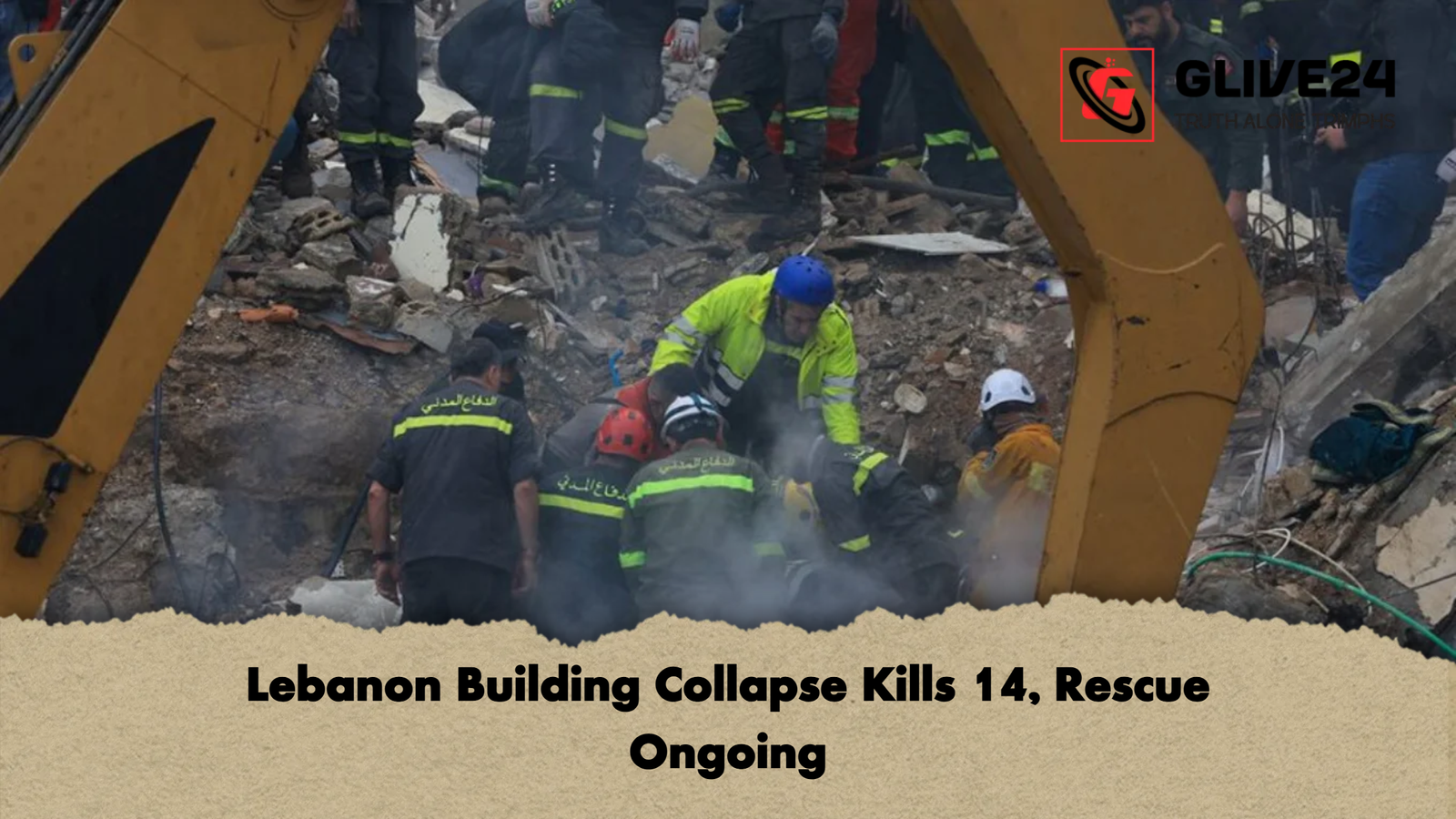
The death toll from a residential building collapse in Tripoli, Lebanon, has risen to 14, officials confirmed on Monday. Rescue teams retrieved the bodies from the rubble after two ageing buildings gave way in the northern city on Sunday, 8 February.
The incident occurred in the Bab al-Tabbaneh neighbourhood, a densely populated area of Tripoli, Lebanon’s second-largest city. So far, rescue personnel have managed to pull eight people alive from the debris. However, the total number of occupants at the time of the collapse remains uncertain. The Lebanese Civil Defence reported that at least 22 residents were believed to live in the two buildings, and efforts continue to locate those still missing.
Local authorities have expressed deep concern over the safety of old structures in the city. In recent weeks, Tripoli has witnessed multiple instances of buildings collapsing, raising alarms about the deteriorating state of its urban infrastructure. Experts suggest that years of neglect, inadequate maintenance, and the frailty of older buildings contributed significantly to this catastrophic event.
Rescue operations have involved cranes, specialised search-and-rescue dogs, and heavy machinery to clear the rubble. Emergency services continue to work around the clock, often under challenging conditions, as the search for survivors and victims continues.
The Civil Defence provided an update on the current status of the rescue operation:
| Category | Number |
|---|---|
| Confirmed fatalities | 14 |
| People rescued alive | 8 |
| Estimated missing | At least 8 |
| Buildings collapsed | 2 |
| Approximate total residents | 22 |
Officials have issued urgent warnings to the public regarding the dangers of older buildings, urging residents to evacuate structures showing signs of severe deterioration. Municipal authorities have also called for immediate inspections and reinforcement of high-risk buildings to prevent further tragedies.
Local residents reported noticing cracks and structural weaknesses in the buildings in the weeks preceding the collapse. Many have criticised the authorities for not acting sooner, highlighting the city’s chronic problem of neglected maintenance in older residential areas.
Urban planning and safety experts in Lebanon warn that the country’s economic crisis has exacerbated the risks, leaving many historic and older buildings in precarious conditions. Without swift intervention and comprehensive structural assessments, similar disasters could recur.
The Lebanese government has pledged to accelerate rescue efforts and to implement stricter safety protocols for old buildings in Tripoli. Meanwhile, emergency responders and volunteers continue their painstaking work to recover those trapped under the rubble, as families anxiously await news of missing loved ones.