
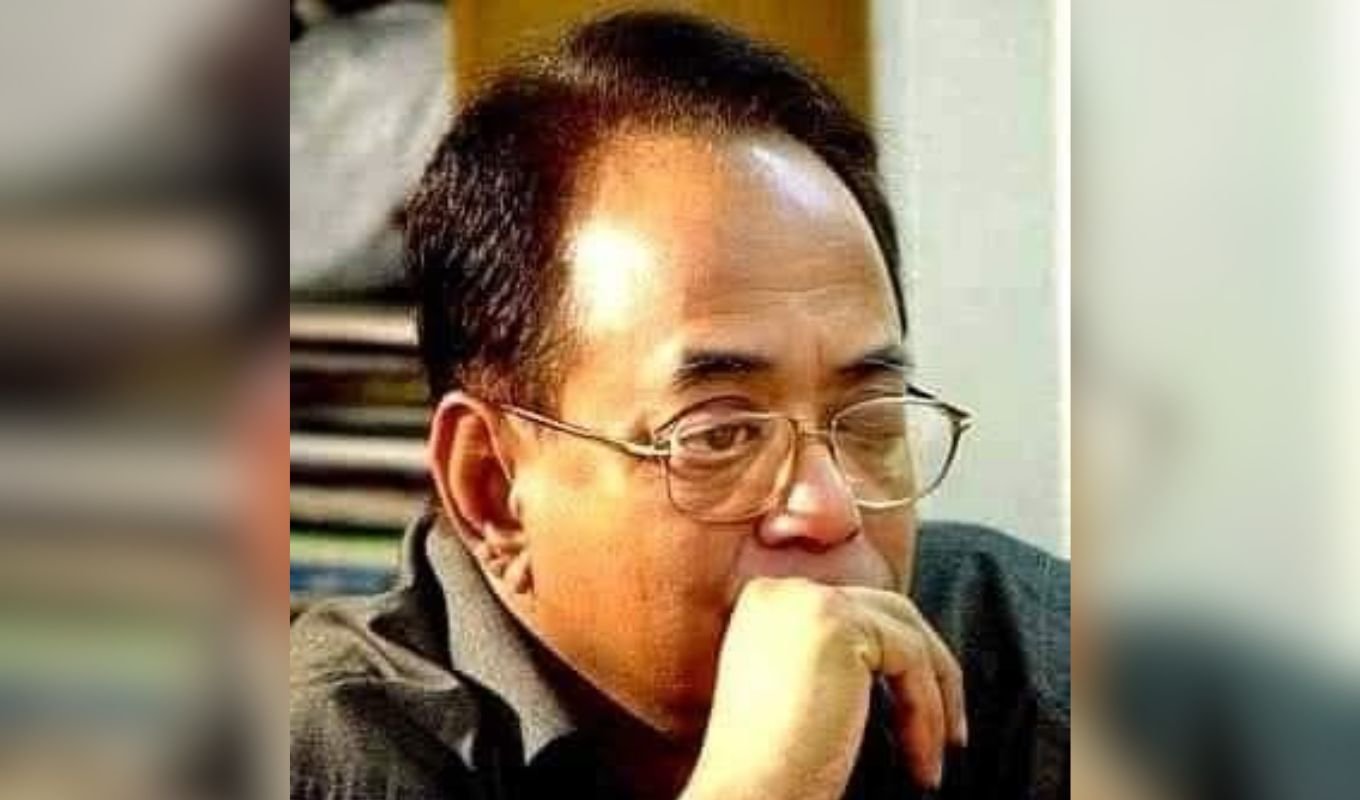
Shahadat Chowdhury remains a luminary in the history of Bengali journalism and the Bangladesh Liberation War. An accomplished editor, artist, and a decorated freedom fighter, his career spanned over six decades, leaving an indelible mark on the nation’s media landscape. On the anniversary of his passing, he is being remembered with profound respect and admiration. Born on 28 July 1943 in Khulna, Chowdhury was an alumnus of the Dhaka Institute of Fine Arts, yet his true calling was the pursuit of truth through the power of the pen.
During the 1971 Liberation War, Shahadat Chowdhury played a pivotal role as a member of the legendary ‘Crack Platoon’, a guerrilla unit that operated under Sector 2. Under the leadership of Commander Khaled Mosharraf, he participated in several high-risk operations against the Pakistani occupation forces. His family home in Hatkhola, Old Dhaka, served as a vital safe house and armoury for the guerrillas during the conflict. His bravery on the battlefield was matched by his commitment to documenting the struggles of the people, making him a true soldier of both the sword and the word.
Following the independence of Bangladesh, Chowdhury returned to his journalistic roots, joining the weekly Bichitra as an Assistant Editor in 1972. Under his visionary editorship for 25 years, Bichitra became the most prestigious publication in the country, reflecting the aspirations, politics, and culture of the middle class. He introduced a new era of investigative and bold journalism that challenged the status quo. When Bichitra was shut down in 1997 due to government policy, he showed remarkable resilience by launching Weekly 2000 and the fortnightly Anandadhara in 1998. These publications quickly became landmarks in the Bangladeshi media industry.
Shahadat Chowdhury breathed his last on 29 November 2005. His innovative approaches to journalism, his artistic sensibilities, and his unwavering patriotism continue to serve as a source of inspiration for the contemporary generation of journalists. He is remembered not only as a formidable editor but also as a cultural icon who shaped the intellectual discourse of a newly independent nation. His legacy remains a testament to the fact that principled journalism is essential for a thriving democracy.
GLIVE/TSN