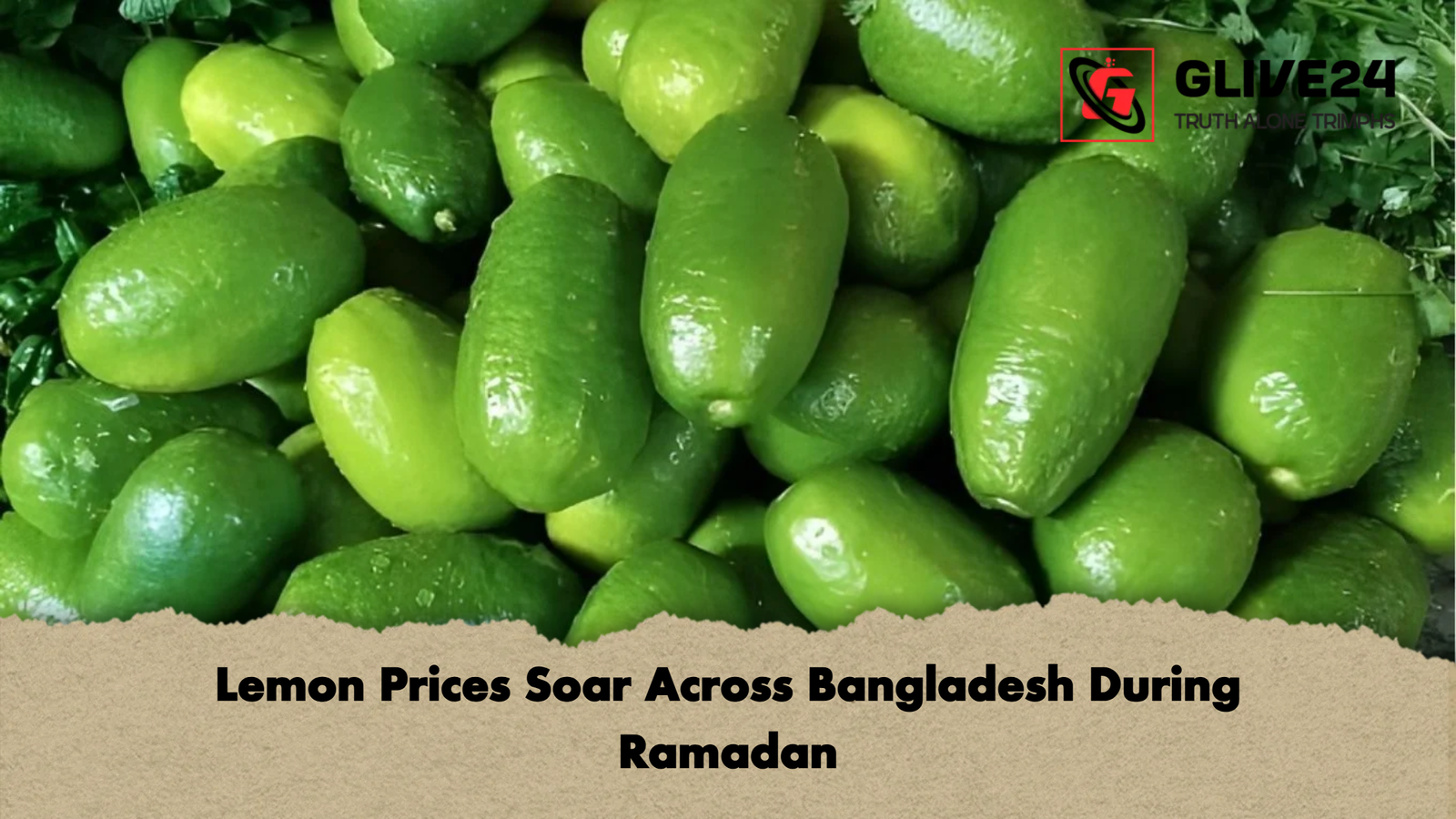
On the first day of Ramadan, consumers across Dhaka and other major markets in Bangladesh were met with an unprecedented surge in lemon prices. Social media was abuzz with posts lamenting, “How much is a hali of lemons?” — a reflection of the frustration of buyers as the citrus fruit’s price climbed to levels comparable with gold.
For many households, lemon juice mixed with sugar or jaggery is a favourite iftar beverage. However, in the days leading up to the first day of fasting, rising demand has pushed lemon prices to unexpectedly high levels.
Dhaka Markets Experience Steep Price Hike
In Dhaka’s Karwan Bazar, lemons were sold at up to Tk 200 per hali (approximately 40 lemons). Fozal Haque, who has been selling lemons at the market for 42 years, explained that lemons are now sold in three categories:
| Lemon Type | Quality | Price per Hali (Tk) |
|---|---|---|
| Selected Lemons | High | 150–200 |
| Medium Quality | Medium | 100–120 |
| Small Kagzi Lemons | Small | 60–80 |
Harun Mia, another vendor at Karwan Bazar, said he sources lemons from Tangail and Sylhet, while Dharmrai is known for producing Colombo lemons in particular. “Round Colombo lemons are slightly cheaper than the long variety, but they are now selling for Tk 100 per hali,” he added.
Regional Markets Mirror the Trend
The price surge is not limited to the capital. In Rajshahi’s Saheb Bazar, lemons that sold for Tk 20–25 per hali just a few days ago are now priced at Tk 50–60. Similarly, in Shariatpur, lemons that were sold for Tk 20–50 per hali a month ago are now fetching double the price.
Wholesale and retail prices differ significantly. Fozal Haque noted that 100 pieces of Colombo lemons are sold in wholesale markets for Tk 1,000–1,200, equating to a hali price of around Tk 48. Long lemons are sold at Tk 1,600–1,700 per 100 pieces, or Tk 68 per hali, meaning retail prices are nearly double.
Mohammad Salman, a retailer in Shariatpur, said, “A month ago, lemons sold for Tk 20–30. Now we have to sell them at Tk 60–100. Due to the price increase, customer numbers have fallen.” Local resident Sabuj Talukdar criticised authorities for inadequate oversight, saying, “Those who cannot afford these prices have no options. Market monitoring must increase.”
Harun Mia explained that the peak season for lemons is actually during the rainy months. “During Ramadan, demand rises tenfold, but suppliers cannot increase supply proportionately, so prices spike,” he noted.
Jannatul Ferdous, Assistant Director of Consumer Rights in Shariatpur, added, “Prices rise due to increased demand. Legal action will be taken against anyone making excessive profit, but manpower limitations prevent monitoring every market.”
Price Changes Across Markets
| City/Market | Previous Price (Tk/Hali) | Current Price (Tk/Hali) | Increase (%) |
|---|---|---|---|
| Dhaka, Karwan Bazar | 20–80 | 60–200 | 150–150% |
| Rajshahi, Saheb Bazar | 20–25 | 50–60 | 100–140% |
| Shariatpur | 20–50 | 60–100 | 100–100% |
According to market data, lemon prices have nearly doubled or even tripled across the capital and regional markets.
For lemon enthusiasts, the message is clear: during Ramadan, the spike in demand results in significantly higher prices, and consumers are advised to shop cautiously.