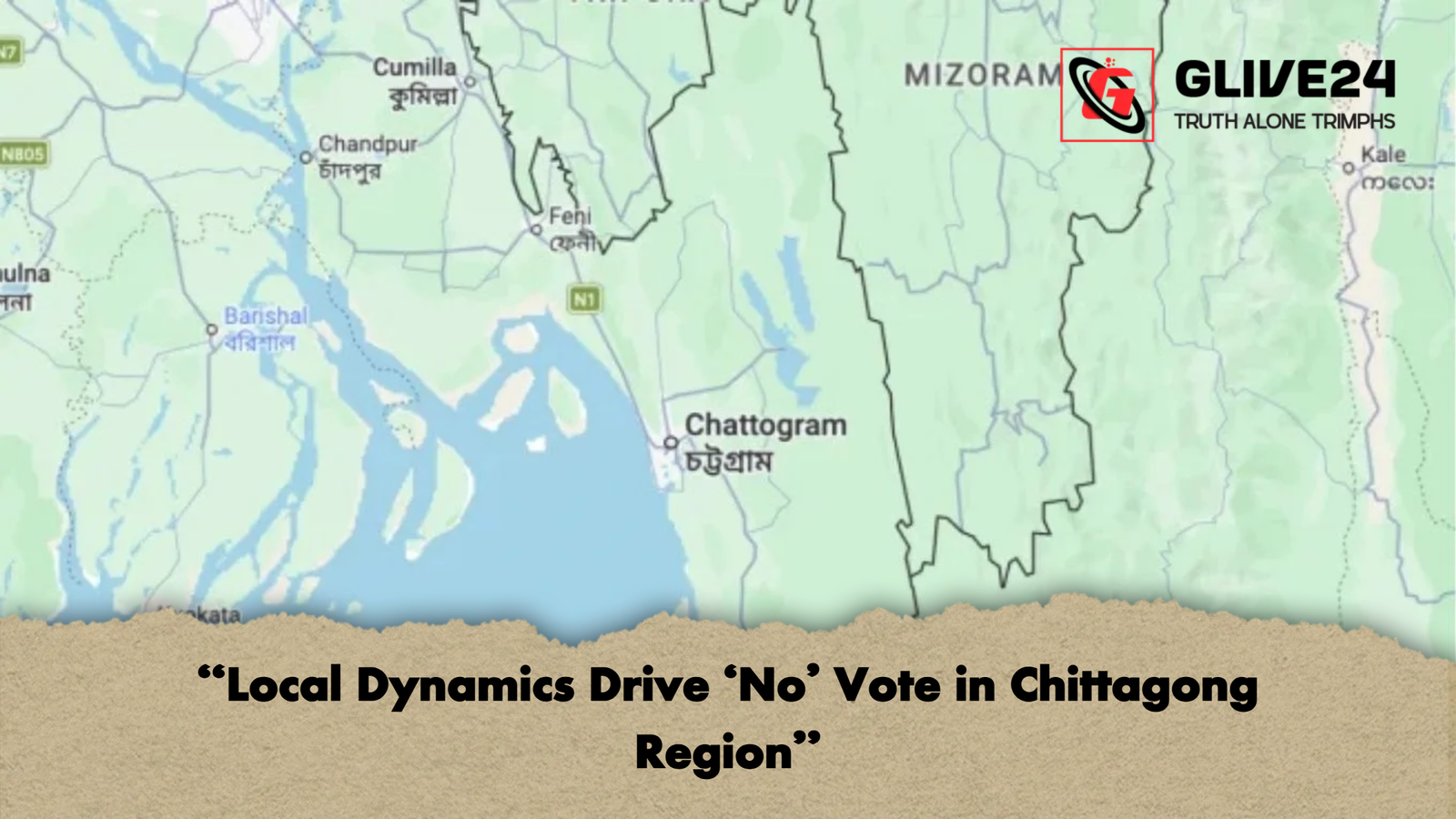
In the recent national referendum held alongside the 13th general parliamentary elections, the country overwhelmingly voted in favour of the ‘Yes’ option. However, the broader Chittagong region exhibited a markedly different pattern. In six constituencies, the ‘No’ vote prevailed by a substantial margin, signalling strong local dissent against the July 2023 certificates. Notably, in the three hill districts of Chittagong—Rangamati, Khagrachhari, and Bandarban—all voters registered opposition. Within Chittagong district itself, the constituencies Chittagong-8, Chittagong-12, and Chittagong-13 also recorded a clear lead for the ‘No’ vote.
According to the latest unofficial data obtained from local sources, the breakdown of votes in these constituencies is as follows:
| District / Constituency | Total Voters | ‘No’ Votes | ‘Yes’ Votes | Key Observation |
|---|---|---|---|---|
| Rangamati | 273,800 | 179,805 | 71,719 | ‘No’ vote ~66% |
| Khagrachhari | 343,314 | 155,942 | Remainder | ‘No’ vote dominates |
| Bandarban | 163,429 | 90,156 | Remainder | Significant ‘No’ margin |
| Chittagong-8 (Boalkhali-Chandgaon) | 261,047 | 131,493 | Remainder | ‘No’ vote ~50%+ |
| Chittagong-12 (Patiya) | 193,493 | 126,814 | Remainder | ‘No’ vote dominant |
| Chittagong-13 (Anwara-Karnaphuli) | 221,035 | 124,629 | Remainder | Substantial ‘No’ lead |
Political analysts suggest that while BNP Chairperson Tarique Rahman publicly urged voters to support the ‘Yes’ option, local BNP leaders actively campaigned for the ‘No’ vote. The participation of Awami League supporters in some constituencies also contributed to this unexpected outcome.
Across the five districts of Greater Chittagong—Chittagong, Cox’s Bazar, Bandarban, Rangamati, and Khagrachhari—BNP candidates secured victories in 21 out of 23 constituencies. The remaining two seats were won by candidates nominated by Jamaat. Importantly, in all six constituencies where the ‘No’ vote prevailed, the BNP candidates were elected to the national parliament.
Experts attribute the strong ‘No’ sentiment in the hill districts to concerns over the July 2023 certificates and the desire to preserve local cultural autonomy. In urban areas of Chittagong, factors such as political debates, the pace of development projects, and strategic campaigning by party leaders appear to have influenced the electorate in favour of the ‘No’ vote.
Overall, the voting patterns in Greater Chittagong diverged from national trends, highlighting the influence of local issues over central political directives. This outcome is expected to play a pivotal role in shaping future electoral strategies, inter-party cooperation, and competitive dynamics between the BNP and the Awami League.