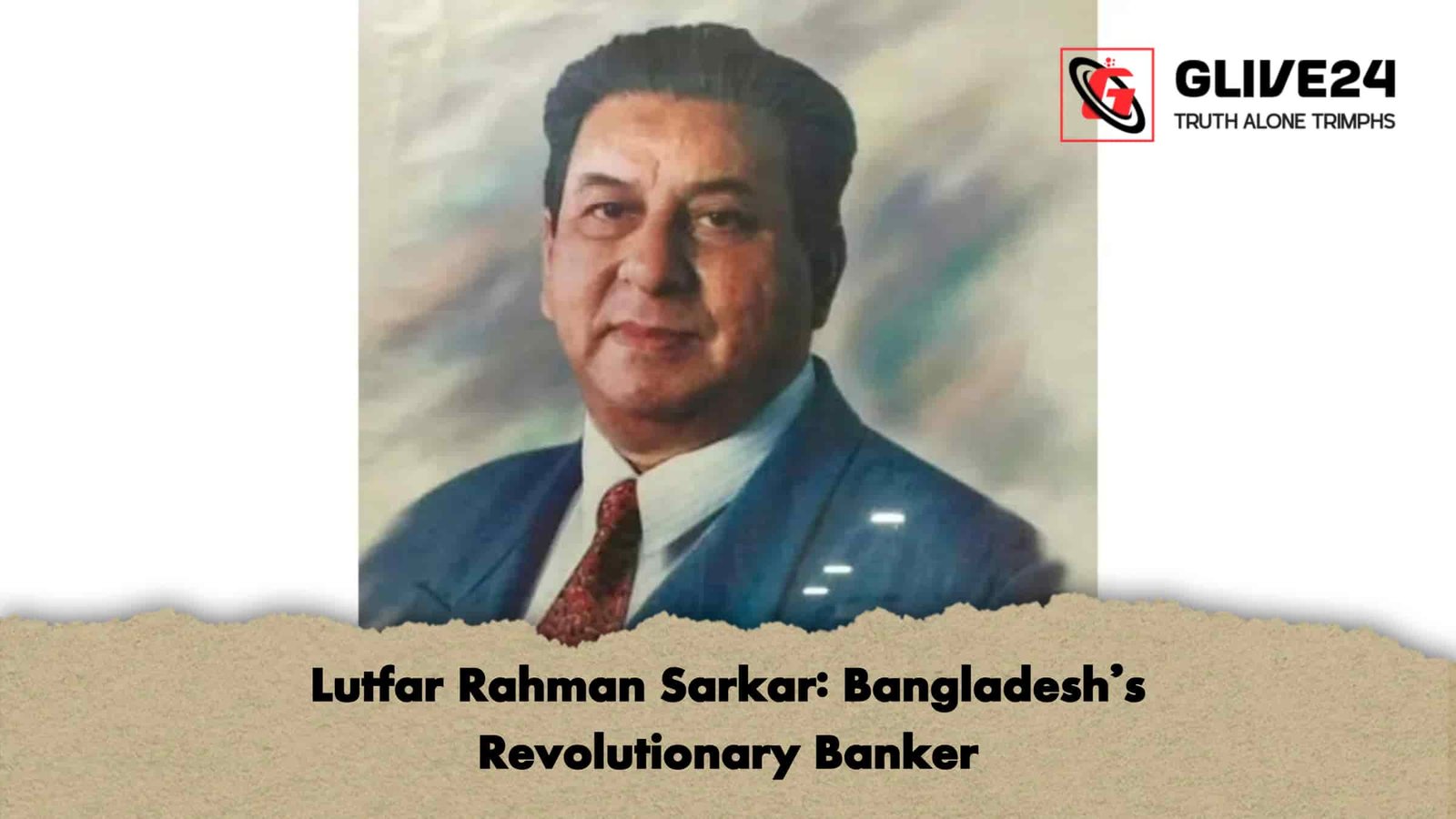
In the annals of Bangladesh’s banking history, the name Lutfar Rahman Sarkar occupies a singular and distinguished place. Far more than a proficient banker, he was a visionary reformer, a fearless advocate for justice, and a devoted custodian of the public interest. Today, 1 February, marks his 93rd birth anniversary—a moment to honour a life dedicated to the nation’s economy, its people, and the broader social good.
Sarkar’s multifaceted career encompassed some of the most significant positions in Bangladesh’s financial and academic sectors. He served as Governor of Bangladesh Bank, Managing Director of Sonali Bank, and founder of the university employment initiative “Bikalpo.” Alongside these roles, he was a part-time lecturer in Finance and Banking at Dhaka University, a prolific author, and a co-founder of the National Poetry Council. Yet behind these titles was a selfless patriot, driven not by personal gain but by the desire to serve society.
Born in 1934 in Phulkot village, Amrul Union, Shahjahanpur, Bogura, Sarkar embodied courage, integrity, and innovation. He believed that banking should not merely serve the wealthy but empower the underprivileged. As he famously remarked, “Our banking system has only been greasing the heads of the rich. Instead, it must empower the deprived.”
This philosophy was realised through initiatives such as the University Employment Project, part-time work schemes, and educational loan programmes. Thousands of unemployed graduates became entrepreneurs under his guidance, generating transformative social and economic impact. Many contemporary banking schemes promoting social welfare and savings trace their roots to his pioneering vision.
Sarkar’s principles often put him at odds with authority. During the military regime, he was briefly detained for rejecting proposals to name a project after himself, only to be released following student protests. He also filed cases against corrupt industrialists misusing bank funds—an enduring testament to his bravery. His introduction of collateral-free microloans and educational loans laid the foundation for Bangladesh’s current SME and student loan sectors.
Beyond banking, Sarkar contributed to literature, culture, and healthcare, supporting modern medical institutions and fostering skilled healthcare professionals through accessible financing.
Key Milestones of Lutfar Rahman Sarkar
| Year | Milestone | Institution/Project | Role/Contribution |
|---|---|---|---|
| 1934 | Birth | Phulkot, Bogura | – |
| 1955 | MA in Political Science | Dhaka University | Graduate |
| 1955–1960s | Early Career | Radio Pakistan & Various Banks | Banking and administration |
| 1980s | University Employment Project “Bikalpo” | Sonali Bank | Founder and Innovator |
| 1996–1998 | Governor | Bangladesh Bank | Reforms and public welfare policy development |
| 2013 | Death | Apollo Hospital, Dhaka | Aged 80 |
Lutfar Rahman Sarkar passed away on 24 June 2013. Yet, his ideals continue to inspire a humane, inclusive, and just banking system in Bangladesh. Revered as the “Revolutionary Banker,” his legacy remains a guiding light for generations of bankers, reformers, and citizens alike.