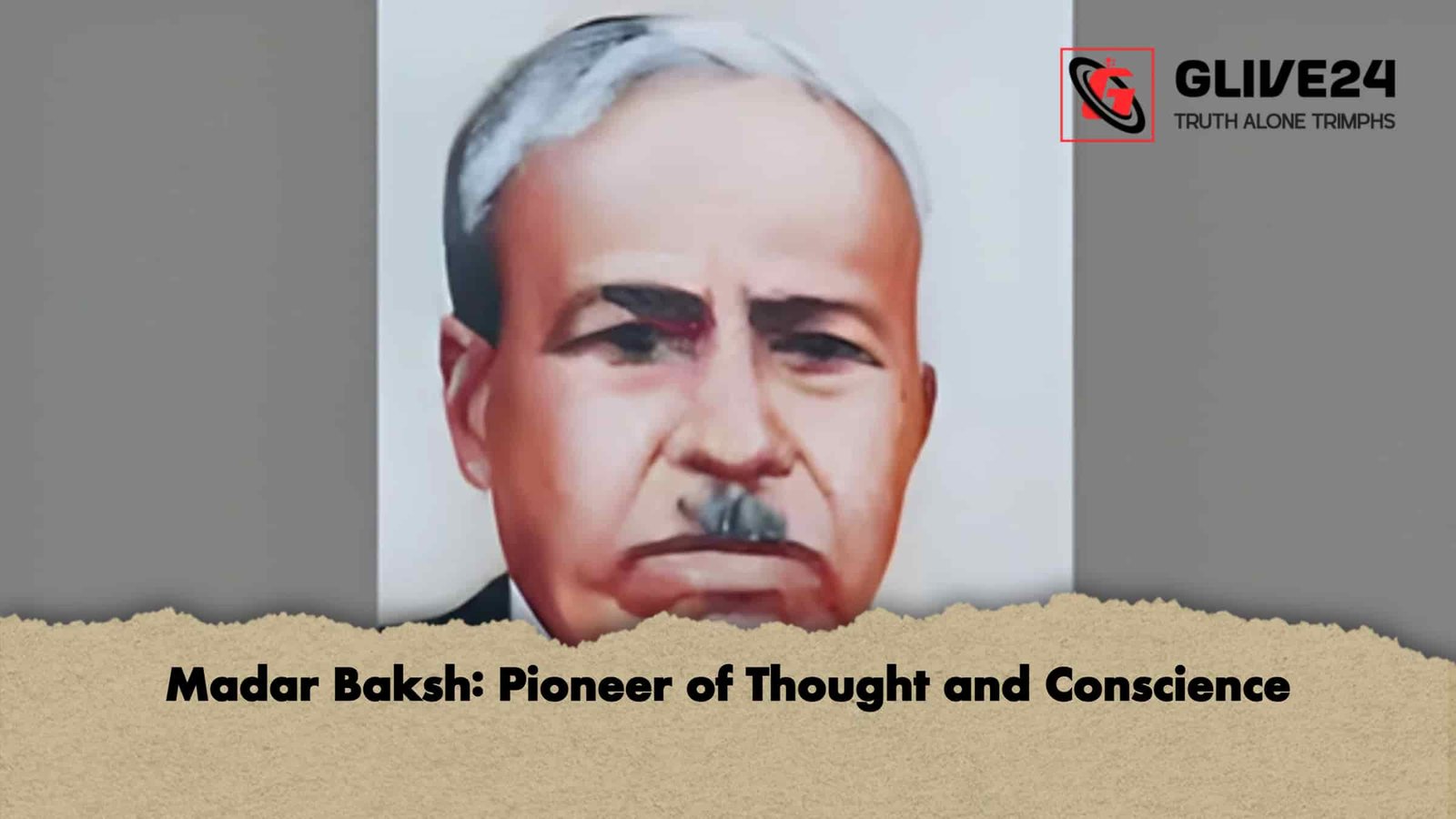
Madar Baksh occupies a distinguished and singular position in the intellectual, linguistic, and social history of Bengal. A frontline activist of the Language Movement, an educationist, a politician, and a social reformer, his contribution was multidimensional and enduring. He was, above all, a visionary who played a decisive role in shaping the landscape of higher education in northern Bengal. The establishment of the University of Rajshahi stands as a lasting testament to his foresight, perseverance, and moral courage. Throughout his life, three core values guided his actions: devotion to knowledge, respect for human dignity, and unwavering ethical integrity.
Born on 14 February 1905 in the village of Sthapandighi, located in the Chalan Beel region of Natore district, Madar Baksh came from a modest farming family. Financial hardship was a constant reality, yet it never dampened his determination to pursue education. From an early age, he demonstrated exceptional intellectual ability and discipline. Through resilience, self-control, and hard work, he overcame adversity and emerged as a progressive thinker committed to social advancement.
His formal academic journey began with his matriculation from Chougram High School in 1922, where he passed with first division. He subsequently completed his intermediate education in 1924 and earned his bachelor’s degree in 1926 from Rajshahi College. Driven by a passion for higher learning, he moved to Calcutta, obtaining a master’s degree in History in 1928, followed by a bachelor’s degree in Law in 1929. This strong educational foundation profoundly shaped his independent outlook and reformist philosophy.
In the final years of British colonial rule, Madar Baksh became politically active through the Muslim League and participated in the broader anti-colonial movement. In 1946, he was elected to the Legislative Assembly, representing the Bagmara area of Rajshahi district and the Atrai–Manda region of Naogaon. Concurrently, he served as Chairman of the Rajshahi Municipality, where his integrity, administrative competence, and commitment to public welfare earned him widespread respect.
However, moral conviction mattered more to him than political office. On issues concerning the dignity of the Bengali language and the rights of the people, he adopted an uncompromising stance. His principled disagreements with party decisions led to imprisonment and, eventually, his withdrawal from mainstream politics. Despite this, his dedication to social reform and educational development remained steadfast.
Madar Baksh’s most enduring legacy lies in the field of education. His intellectual guidance, advocacy, and active initiative were instrumental in the establishment of the University of Rajshahi. By creating opportunities for higher education for thousands of students in northern Bengal, the institution continues to embody his lifelong vision.
After a long life marked by struggle and service, Madar Baksh passed away from cancer on 20 January 1967. He was laid to rest at the Qadirganj graveyard in Rajshahi. In recognition of his contributions, the University of Rajshahi established “Madar Baksh Hall,” ensuring that his ideals continue to inspire future generations.
Key Facts of Madar Baksh’s Life
| Aspect | Details |
|---|---|
| Date of Birth | 14 February 1905 |
| Place of Birth | Sthapandighi village, Natore |
| Education | BA (1926), MA in History (1928), LLB (1929) |
| Political Role | Member of Legislative Assembly (1946) |
| Civic Responsibility | Chairman, Rajshahi Municipality |
| Major Contribution | Key role in founding University of Rajshahi |
| Date of Death | 20 January 1967 |
| Memorial | Madar Baksh Hall, University of Rajshahi |
Madar Baksh was a rare figure who consistently placed principle above power and truth above convenience. His fearless commitment to language, education, and justice continues to illuminate society and remains an enduring source of inspiration for generations to come.