
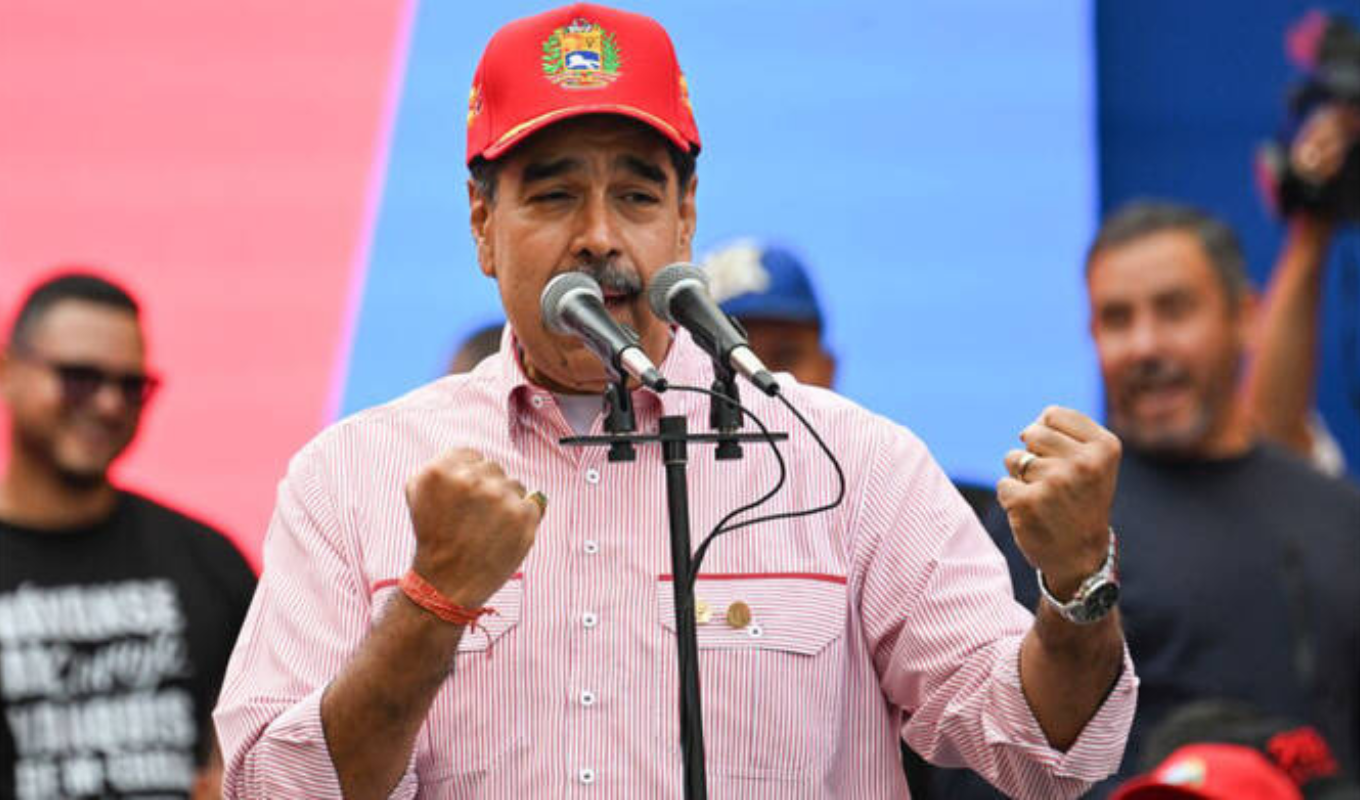
At a large gathering attended by thousands in Caracas, Venezuelan President Nicolás Maduro reiterated his call for peace and affirmed his “total loyalty” to the people, amid heightened tension over possible United States military action. The event coincided with media reports that US President Donald Trump had met his national security team at the White House to discuss “next steps” concerning Venezuela.
Speaking before crowds holding Venezuelan flags outside the Miraflores Palace, Maduro said the country desired peace, but one based on “sovereignty, equality and freedom”. He stated, “We do not want a slave’s peace, nor the peace of colonies! Colony, never! Slaves, never!”
Meanwhile, the US has concentrated significant military assets in the Caribbean, describing it as part of an anti–drug trafficking operation. Venezuela contends the actual intention is to remove Maduro from power. The US has positioned 15,000 troops, deployed the world’s largest aircraft carrier and labelled the Cartel de los Soles—a network it claims Maduro leads—as a “terrorist” group.
Since September, at least 21 strikes have been carried out against suspected drug boats in the Caribbean and Pacific, resulting in at least 83 deaths. Experts argue this level of force exceeds what is required for a drug operation. Venezuela insists the US seeks regime change to gain control of its natural resources, particularly oil.
Maduro accused the US of engaging in “psychological terrorism”. “We have lived through 22 weeks of aggression,” he said. “These weeks have tested us, and the Venezuelan people have shown their love for the homeland.”
Trump confirmed a recent phone call with Maduro but gave no details. Reuters, citing multiple sources, reported that Trump offered Maduro safe passage out of Venezuela during their 21 November conversation. According to three sources, Maduro said he would leave if granted full legal amnesty for himself and his family, the lifting of all US sanctions and the termination of an International Criminal Court case. He also requested removal of sanctions on more than 100 Venezuelan officials.
Trump rejected most of these conditions but granted a week for Maduro to leave. With the deadline expiring on Friday, Trump declared on Saturday that Venezuelan airspace was “closed”. Neither government has commented.
The US maintains it does not recognise Maduro as Venezuela’s legitimate president, asserting last year’s election was fraudulent. Independent observers have stated the opposition won the vote.
Reporting from the Colombia–Venezuela border, Teresa Bo of the media outlet said rumours had circulated that Maduro fled the country following the airspace announcement. Many Venezuelans crossing the Simón Bolívar International Bridge were concerned about a possible US attack.
Venezuela continues deploying military units across the country, strengthening security in Caracas, the airport highway and coastal areas. Defence Minister Vladimir Padrino López has displayed air defence systems and fighter jets.
Bo stated that Venezuela, knowing it cannot match US military strength, is preparing for “irregular strategies”, including sabotage, covert attacks, the use of criminal groups, government supporters and possibly guerrillas. Many citizens want Maduro gone but fear widespread violence.
Glive24/SS