
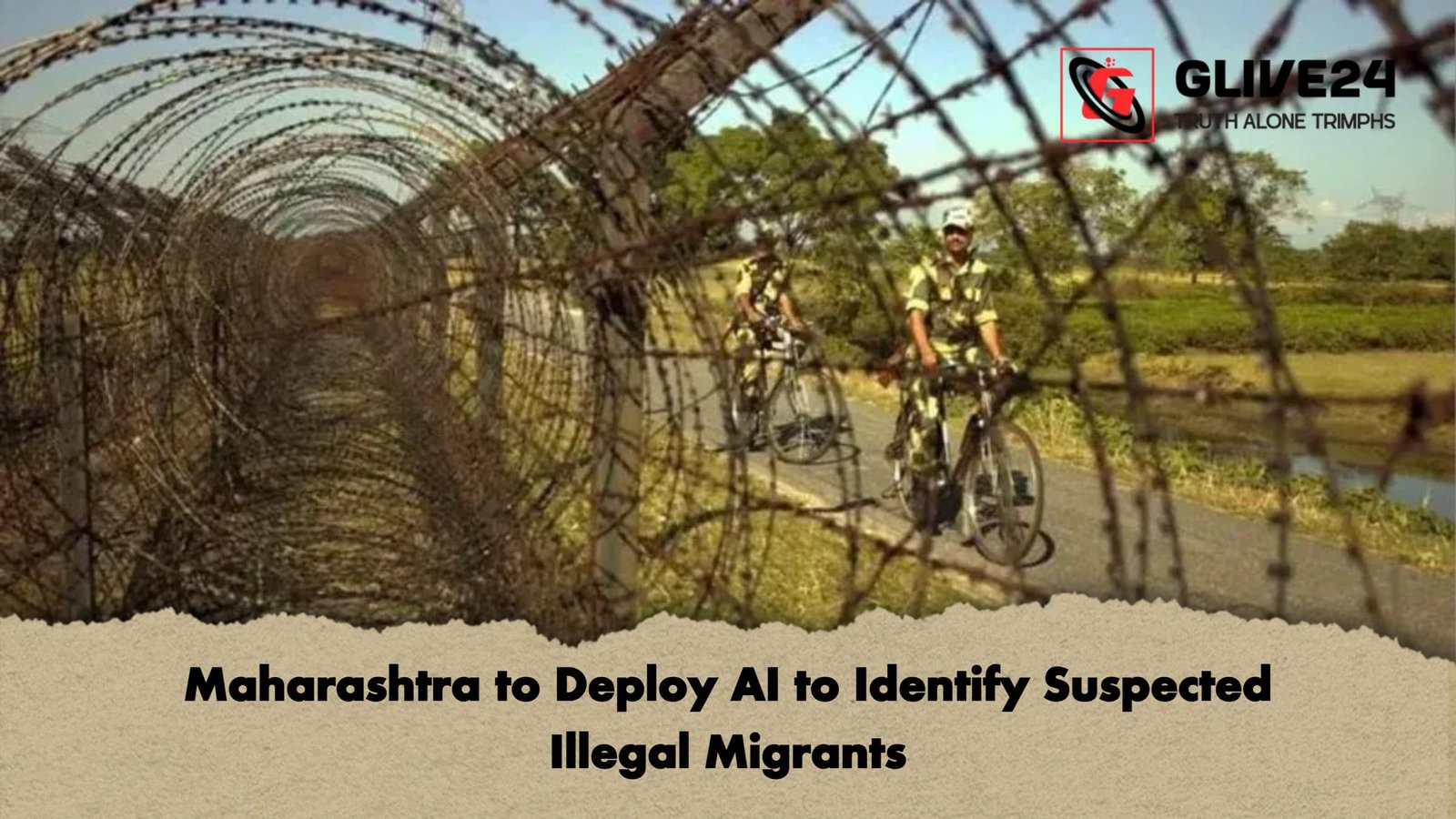
The administration of Maharashtra has ignited a fierce technological and ethical debate by announcing plans to utilise Artificial Intelligence (AI) to identify suspected illegal Bangladeshi and Rohingya migrants. This initiative follows months of intensified citizenship verification drives across India, which have seen numerous individuals detained in camps or deported across the border.
Table of Contents
The Rise of “Algorithmic Identification”
The announcement was made by Maharashtra’s Deputy Chief Minister, Devendra Fadnavis, during a recent broadcast. He revealed that the Indian Institute of Technology (IIT) Bombay is currently developing a bespoke AI tool specifically designed for the Mumbai administration. According to government sources, the software is currently operating at 60% accuracy, with a target of reaching 100% precision within the next four months.
While the specific mechanics of the tool remain opaque, AI specialists suggest it will likely rely on Large Language Models (LLMs) and pattern recognition. The system is expected to be fed vast datasets comprising physical traits, linguistic nuances, dress codes, and regional infographics to create a “profile” of a typical Bangladeshi or Rohingya individual.
Key Concerns Regarding AI Accuracy
| Feature | Data Fed to AI | Potential Margin of Error |
| Linguistics | Regional dialects (e.g., Sylheti, Rajshahi). | High; dialects often overlap with Indian states like Assam and West Bengal. |
| Visual Profiling | Attire, grooming habits, and facial features. | Risk of racial profiling; many Indian citizens share these cultural traits. |
| Phonetics | Speech patterns and accentuation. | Indistinguishable differences between border populations (e.g., Cooch Behar vs. Lalmonirhat). |
| Training Data | Millions of audio and video samples. | High risk of “political bias” depending on who curates the data. |
The Border Paradox: Can Machines Decipher Culture?
Experts have voiced profound skepticism regarding the feasibility of such a project. Arijit Mukherjee, a principal scientist at a major multinational tech firm, warned that human speech does not respect political boundaries. He noted that separating the dialect of an individual from Murshidabad (India) and Rajshahi (Bangladesh) is a task that often baffles even expert linguists, let alone an algorithm.
Furthermore, Joydeep Dasgupta, founder of MediaSkills Lab, highlighted the danger of “stereotyping” within the training data. If the AI is taught that a “typical” migrant wears a specific type of skullcap or follows a particular grooming style, it risks misidentifying millions of Indian Bengali Muslims or even Hindus who share similar aesthetic traditions.
Political Skepticism and the “Data Deficit”
Economist and activist Prasenjit Bose has questioned the necessity of the AI tool, pointing to the lack of transparency in existing verification programmes. He argued that despite massive expenditure on intensive voter list revisions (SIR) across various states, the government has failed to provide a clear tally of how many illegal residents were actually identified.
“This is a digital facade,” Bose claimed. “When existing administrative processes fail to find the alleged millions of infiltrators, they turn to AI to manufacture a crisis.”
Reports over the last ten months have already documented cases where Indian citizens—primarily Bengali-speaking Muslims from West Bengal and Assam—were erroneously labelled as infiltrators and harassed. Critics fear that an automated system with a 40% error margin will only formalise and accelerate these human rights concerns.