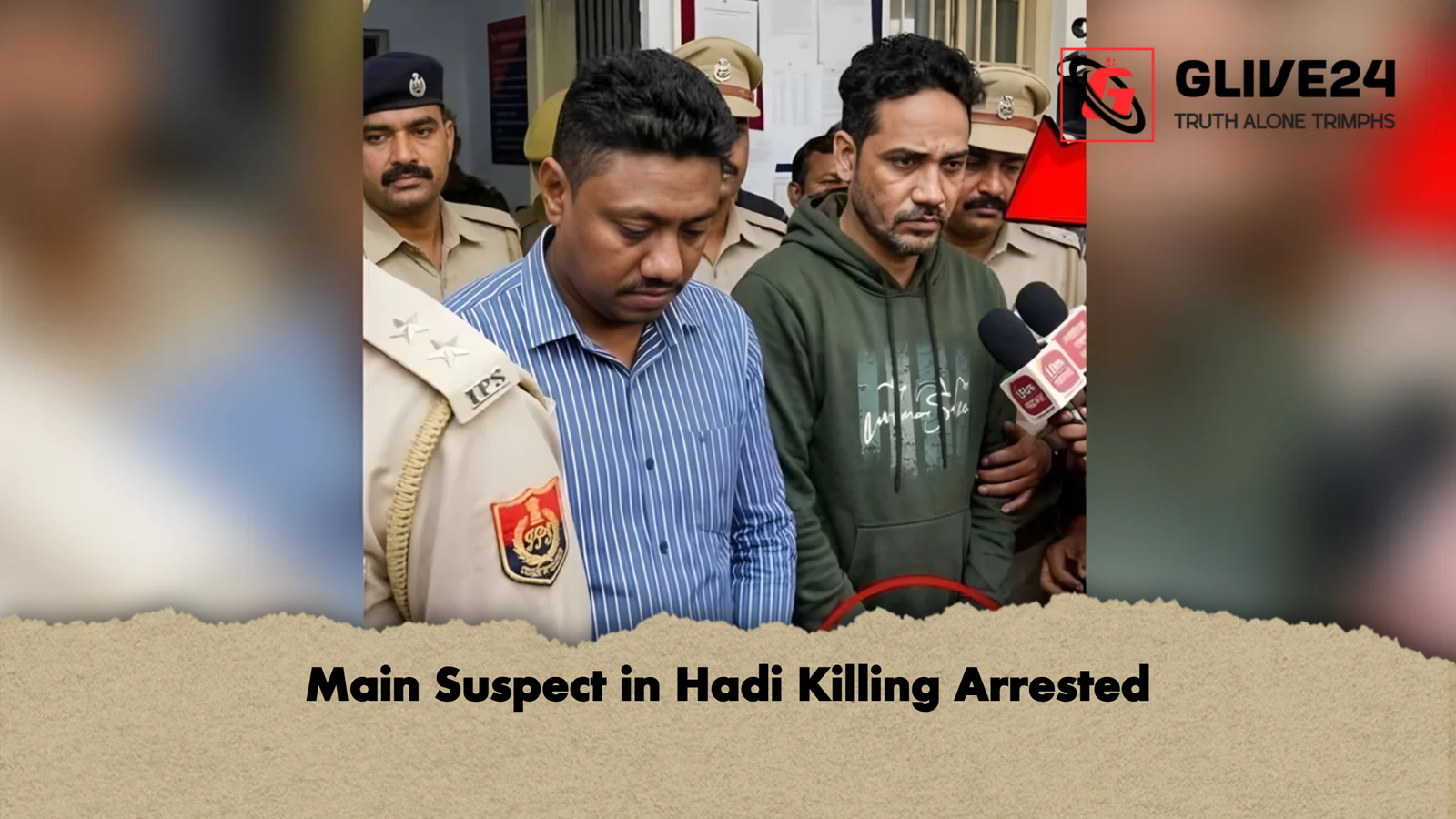
Two Bangladeshi nationals accused of involvement in the killing of Sharif Osman Hadi have been arrested in the Indian state of West Bengal, marking a major breakthrough in the cross-border investigation into the high-profile murder. The suspects—identified as Faisal Karim Masud, the principal accused, and his alleged accomplice Alamgir Hossain—were apprehended by the Special Task Force (STF) of West Bengal Police near the Bongaon border area in the district of North 24 Parganas. Following their arrest, a local court authorised a 14-day remand, allowing investigators to question the pair in custody.
According to a statement issued by the West Bengal Police STF, the arrests were carried out after intelligence officials received information that two Bangladeshi fugitives connected to a serious murder had entered India illegally. The suspects were reportedly attempting to hide near the border region before secretly returning to Bangladesh.
Acting swiftly on the intelligence, the STF launched a late-night operation in the border area of Bongaon on Saturday. Officers conducted a targeted raid in the vicinity and successfully detained the two suspects without incident.
During preliminary interrogation, investigators learned that Faisal Karim Masud—who is also known by the alias Rahul—and Alamgir Hossain had allegedly fled Bangladesh shortly after the fatal attack on Sharif Osman Hadi. Authorities believe the pair initially crossed into Indian territory through the Meghalaya border before travelling across several parts of India. Their eventual arrival in Bongaon suggested they were attempting to make their way back across the frontier into Bangladesh.
The arrests were later confirmed in an official statement from the Special Task Force and reported by the Indian news agency ANI. Citing a post from the STF on the social media platform X, the report noted that the suspects were captured in the Bongaon region of North 24 Parganas district during a carefully planned intelligence-led operation.
Key developments in the case are summarised below:
| Event | Details |
|---|---|
| Victim | Sharif Osman Hadi |
| Principal Accused | Faisal Karim Masud (alias Rahul) |
| Associate Arrested | Alamgir Hossain |
| Arrest Location | Bongaon, North 24 Parganas, West Bengal |
| Arresting Agency | West Bengal Police Special Task Force |
| Court Decision | 14-day police remand |
| Date of Arrest | Early March |
| Escape Route | Entered India via Meghalaya border |
The case originates from a violent shooting in Dhaka on 12 December. At approximately 2:15 in the afternoon, Sharif Osman Hadi was travelling by rickshaw through the Box Culvert area of the capital when he came under attack. Two gunmen arriving on a motorcycle reportedly fired multiple shots at close range before fleeing the scene.
Hadi, critically injured in the assault, was rushed to the emergency department of Dhaka Medical College Hospital. Later that evening he was transferred to Evercare Hospital in Dhaka for specialised treatment. As his condition deteriorated, medical specialists advised that he be moved abroad for advanced care.
On 15 December, he was flown to Singapore by air ambulance. Despite intensive treatment and medical supervision, he died of his injuries on 18 December.
The Detective Branch of the Dhaka Metropolitan Police filed a formal charge sheet on 6 January, naming 17 individuals in connection with the killing. Faisal Karim Masud was listed as the principal accused.
Speaking at a press briefing at the Dhaka Metropolitan Police media centre, Additional Commissioner Shafiqul Islam stated that Masud had previously been associated with the banned organisation Bangladesh Chhatra League. Investigators believe the killing was motivated by political rivalry and long-standing hostility.
Authorities in Bangladesh have already detained 12 of the individuals named in the charge sheet. The arrest of Masud and Hossain in India is expected to significantly strengthen the ongoing investigation and may provide crucial information regarding the planning and execution of the attack.
Officials from both countries are now expected to engage in legal and diplomatic coordination, including possible extradition proceedings, as efforts continue to bring all those involved in the murder to justice