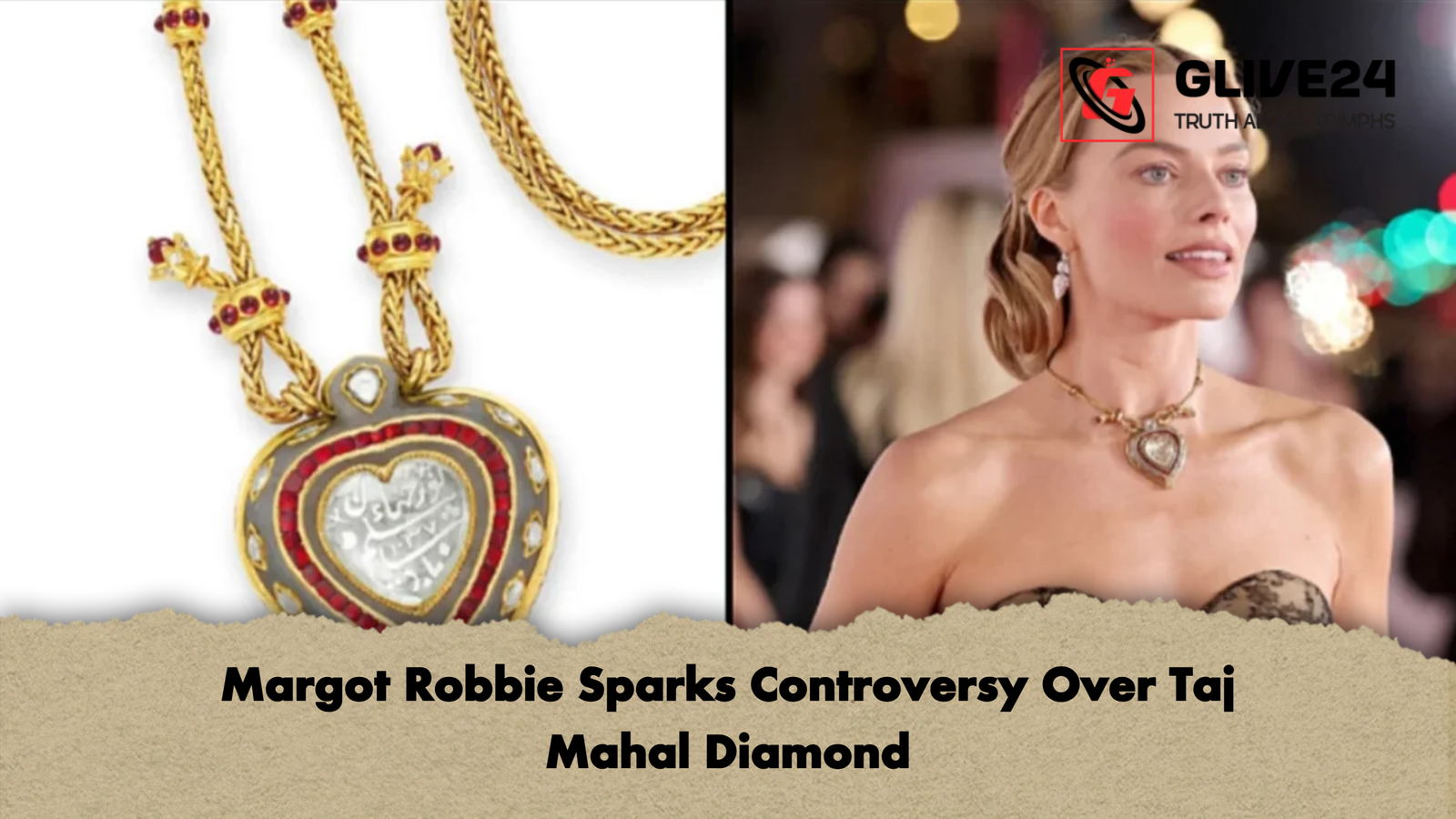
The glittering world of entertainment has recently collided with the complex legacies of colonial-era looted treasures. At the premiere of her forthcoming film “Wuthering Heights”, British-Australian actress Margot Robbie was seen wearing a striking necklace, the centerpiece of which was a 400-year-old historic gem known as the Taj Mahal Diamond.
This priceless diamond, dating back to 1627, was once owned by Nur Jahan, the influential wife of Mughal Emperor Jahangir. Its surface bears intricate Persian inscriptions, providing a rare, tangible connection to India’s rich imperial past. However, the sight of this ancient jewel adorning a Hollywood star’s neck has sparked widespread criticism among Indian citizens and netizens. Many view it as a symbol of cultural heritage being displayed without due acknowledgment of its historical context.
Social media platforms and news outlets have seen a surge of commentary targeting the French luxury jewellery house Cartier, which facilitated the diamond’s use. Critics argue that the jewel was removed from India during the colonial period and eventually passed into Western private collections. It later became part of the personal collection of British-American actress Elizabeth Taylor, and after her death in 2011, it was sold at auction.
The incident has reignited debates similar to those surrounding the Koh-i-Noor Diamond, raising questions about the repatriation of priceless Indian treasures. Last year, Indian singer Diljit Dosanjh reportedly wished to wear a historic necklace once owned by the Maharaja of Patiala at the Met Gala, but Cartier declined, citing its status as part of a display collection. Yet, in 2022, YouTuber Emma Chamberlain was permitted to wear jewels from the same collection, fuelling allegations of inconsistency and cultural insensitivity.
The table below summarises the diamond’s provenance and key events:
| Year / Period | Event |
|---|---|
| 1627 | Owned by Nur Jahan, wife of Emperor Jahangir |
| Colonial Era | Removed from India during British colonial rule |
| Mid-20th Century | Entered private Western collections |
| 2011 | Sold at auction following Elizabeth Taylor’s death |
| 2026 | Worn by Margot Robbie at Wuthering Heights premiere |
Internationally, the controversy has highlighted a growing demand for repatriation of archaeological artefacts and historic jewels from private Western collections back to their countries of origin. While India has long advocated for the return of its cultural heritage, many see Western luxury brands’ selective display policies as emblematic of both double standards and a disregard for historical significance.
For many in South Asia, the Taj Mahal Diamond is no longer merely a piece of jewellery—it represents a lost cultural pride and a tangible reminder of centuries of imperial history. Margot Robbie’s appearance has inadvertently transformed a glamorous red-carpet moment into a renewed debate over ethics, ownership, and the restitution of cultural treasures.