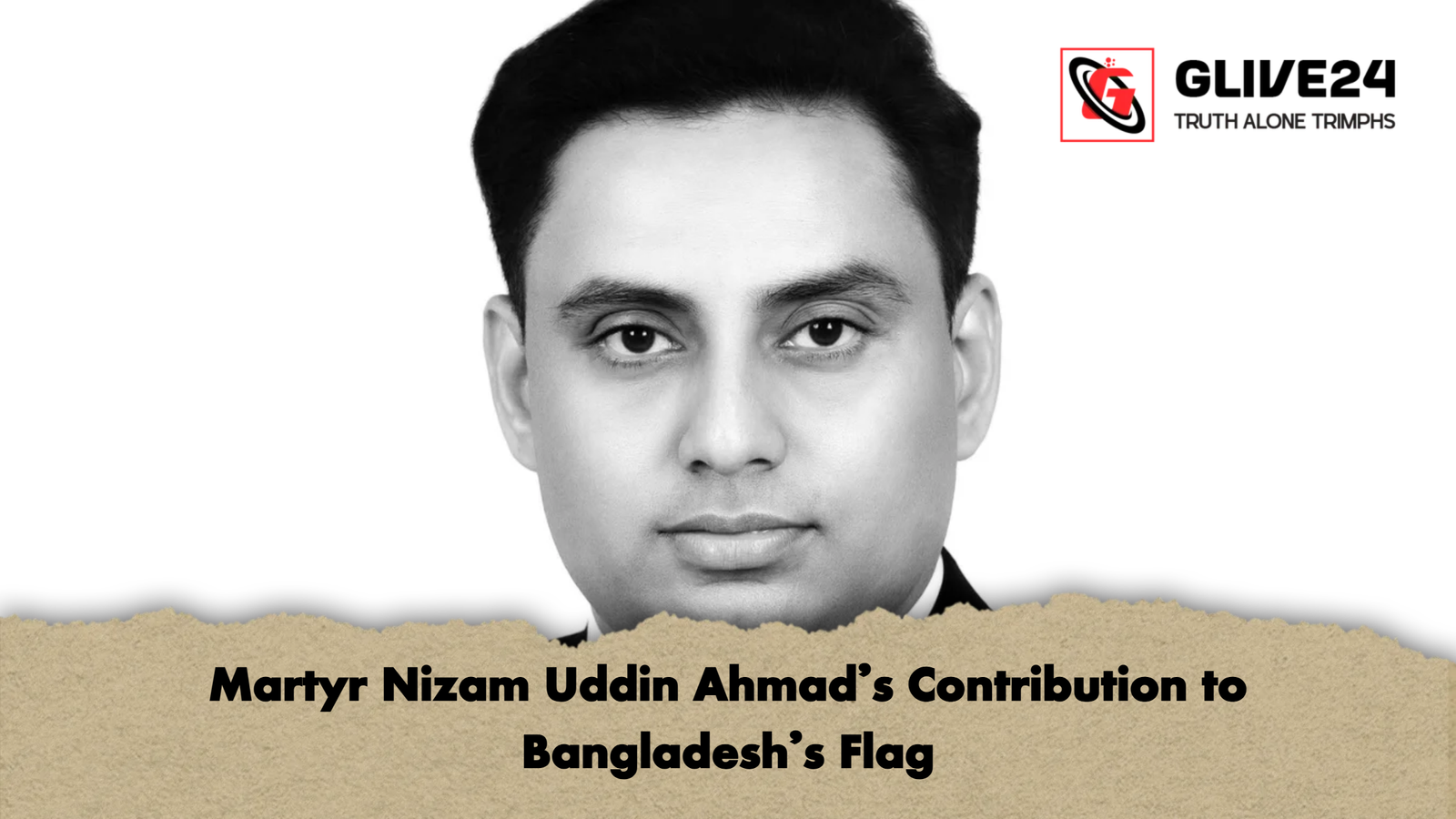
Bangladesh’s history of independence is adorned with countless names whose courage, sacrifice, and unwavering dedication have forever imprinted themselves on the nation’s red and green flag. Among these luminous figures stands the valiant journalist and martyr, Nizam Uddin Ahmad.
Born in 1929 in Mawa village of Louhajong Thana, Munshiganj District, Nizam Uddin was the son of Sirajul Islam, a diligent ship audit officer, and Fatema Begum. Raised in a family celebrated for integrity, discipline, and humaneness, he imbibed values that would shape his lifelong commitment to justice and truth. Tragedy would later strike his family when his daughter, Sharmin, became the victim of the infamous 1988 Sharmin Reema murder case—a haunting episode that still reverberates in the nation’s conscience.
His education began at Bikrampur Bhagykul High School, after which he graduated from there and enrolled in the Government Harganga College. Even as a student, Nizam Uddin actively engaged in progressive political movements. In 1965, he stood as an independent candidate in Field Marshal Ayub Khan’s controversial “Basic Democracy” election, successfully becoming a member of the provincial council—a testament to his people-centric leadership.
Nizam Uddin fearlessly participated in key political movements that shaped the nation: the 1952 Language Movement, the 1954 United Front election, the 1962 education movement, the 1966 Six-Point Programme, and the mass uprising of 1969. His fearless activism naturally steered him towards journalism, where he could champion truth and national consciousness.
He began his career in 1950 with the Civil and Military Gazette in Karachi, later contributing to prominent publications such as Dainik Millat, Azad, Dhaka Times, and Pakistan Observer. His journalistic influence extended to international news agencies, including APP, UPI, PPI, Reuters, AFP, and BBC.
During Bangladesh’s Liberation War in 1971, Nizam Uddin played a pivotal role in transmitting accurate accounts of the genocide and the struggle for freedom to foreign journalists. His meticulous reporting became a critical instrument in shaping international opinion in favour of Bangladesh.
Tragically, this unwavering commitment to truth cost him his life. On 12 December 1971, Pakistani forces and the Al-Badr militia abducted him from Rokonpur, Old Dhaka. That day, the nation lost a beacon of courage and integrity, and his whereabouts remain unknown to this day.
Yet, the sacrifice, honesty, and enduring contributions of Nizam Uddin Ahmad continue to awaken the spirit of the Bangladeshi nation. Today, we honour this fearless word-warrior, martyr journalist Nizam Uddin Ahmad, whose legacy remains eternal.