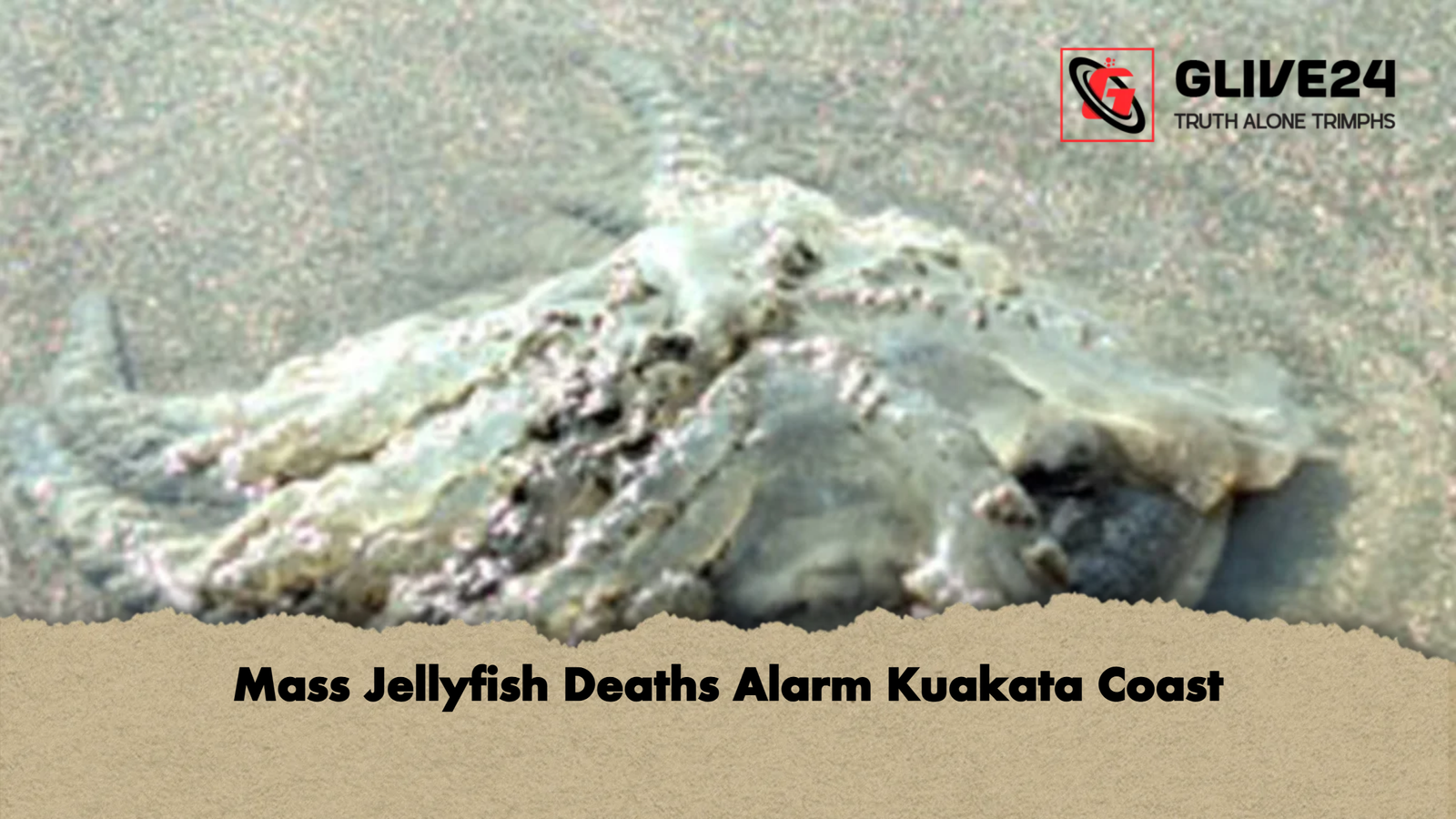
Kuakata, Patuakhali – Concern is mounting among local fishermen and environmentalists after vast numbers of dead jellyfish were found washed ashore along various stretches of Kuakata beach. On Tuesday morning, beaches including Tin Nodi’s Mohona, Char Bijoy, Gangamati Char, Lebur Bon, Kauar Char, and Fatrar Bon were littered with lifeless jellyfish, raising fears about the health of the coastal ecosystem.
Local fishermen recalled that in the first week of January, smaller numbers of jellyfish had also washed ashore over several days. However, experts noted that this time the jellyfish are both significantly larger and far more numerous.
The precise cause of the massive die-off remains uncertain. Fisheries and environmental specialists suggest that deep-sea trawlers and shrimp-gathering trawling boats may inadvertently trap jellyfish in their nets, leading to widespread fatalities. After dying, the carcasses are carried to the shore by tidal waters.
Additional contributing factors may include rising sea temperatures, variations in salinity, and oxygen depletion in coastal waters. Dr Saiful Islam, Associate Professor of Fisheries Science and marine biology researcher at Patuakhali Science and Technology University, emphasised that climate change combined with human activities is likely playing a major role in these unusual jellyfish deaths.
Fishermen, however, offer slightly different explanations. Many believe that excessive salinity and age-related inability to swim against strong currents are causing large numbers of jellyfish to perish. Local fisherman Rahman Majhi told The Daily Star, “We are no longer venturing into deep waters and are fishing closer to the shore. But the sheer number of jellyfish makes casting and retrieving nets extremely difficult. If this continues, we may have to pull nets ashore instead of fishing normally.”
Another fisherman, Helal, added, “Every time we haul the nets, we find dozens of dead jellyfish. They burn our hands and damage the nets, and the worst part is that we are catching very few fish.”
Environmental advocates are equally concerned. K. M. Bachchu, convener of the Coastal Environment Protection Movement (UPRA), said, “Unplanned trawling, illegal net use, and the disruption of marine ecological balance are driving such incidents. If immediate action is not taken, marine biodiversity could face serious threats.”
Ruman Imtiaz Tushar, president of the Kuakata Dolphin Protection Committee, warned, “Jellyfish are a vital part of the marine food chain. Their abnormal deaths could pose a threat to dolphins and other marine species. This issue requires urgent scientific research.”
Callapara Upazila Senior Fisheries Officer Apu Saha confirmed, “Excessive trawling, net abrasion, and environmental changes could be causing the deaths. We are monitoring the situation and will conduct surveys to determine the exact cause and necessary measures.”
Possible Causes of Jellyfish Deaths in Kuakata
| Factor | Description |
|---|---|
| Trawling Nets | Jellyfish trapped during deep-sea fishing and shrimp collection |
| Rising Sea Temperature | Warmer waters reduce oxygen levels, affecting jellyfish survival |
| Salinity Changes | Sudden increases or decreases in salt content hinder swimming ability |
| Age-Related Mortality | Older jellyfish cannot swim against currents, leading to deaths |
| Environmental Stress | Pollution, altered currents, and human activity disrupt habitats |
The massive die-off has not only endangered marine life but is also affecting local fisheries, as nets become clogged and fish catches decline. Experts urge immediate attention to investigate the phenomenon and implement measures to preserve the delicate marine ecosystem.