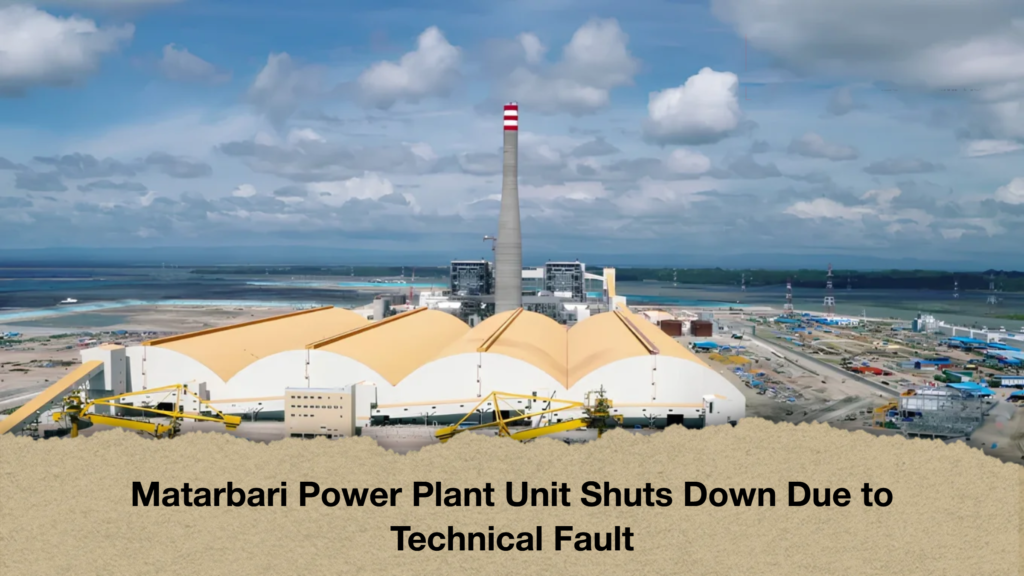
A sudden technical malfunction has forced the suspension of electricity generation at one of the units of the Matarbari 2×600 MW ultra-supercritical coal-fired power plant in Cox’s Bazar. The unexpected disruption occurred at around 12:40 PM on Wednesday, delivering a fresh setback to the country’s power grid amidst ongoing challenges with nationwide load shedding and energy supply constraints. This vital power facility, which serves as a major backbone for the national power network, has now experienced a temporary reduction in its overall capacity, placing additional pressure on power management authorities.
Despite the glitch affecting the first unit, generation from the second unit of the facility remains operational, ensuring that electricity continues to flow into the national grid without a complete halt from the plant. Official monitoring records show that by 2:59 PM today, the plant was successfully supplying a total of 540 megawatts of electricity to the national grid from the remaining functional unit, partially mitigating the immediate shortfall and preventing a more severe grid instability.
Experienced engineers and specialized technical teams have already mobilized on-site to identify the root cause of the mechanical failure and execute necessary troubleshooting and repairs. Authorities from the power plant indicate that active efforts are underway to restore the halted unit within the day. However, the exact timeline for its complete return to full commercial production ultimately depends on the complexity of the internal issues and the overall progress of the repair works.
This temporary shutdown at one of the nation’s premier base-load power facilities highlights the ongoing vulnerabilities within domestic energy infrastructure, particularly during periods of high demand. Industrial stakeholders, businesses, and everyday consumers will be watching closely to see how quickly engineers can rectify the issue, as any extended outage threatens to deepen power deficits, disrupt manufacturing schedules, and increase load-shedding hours across various regions of the country.