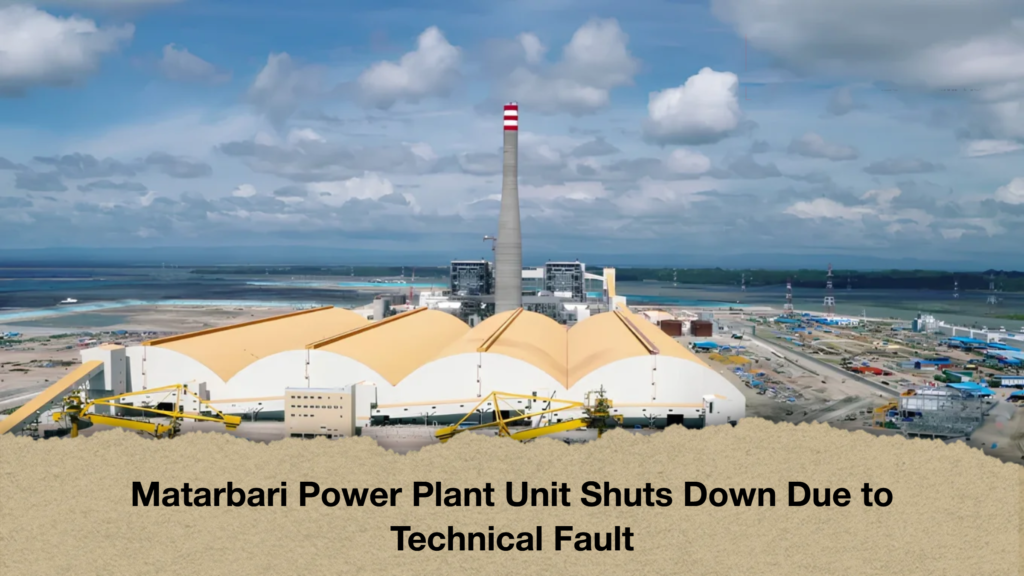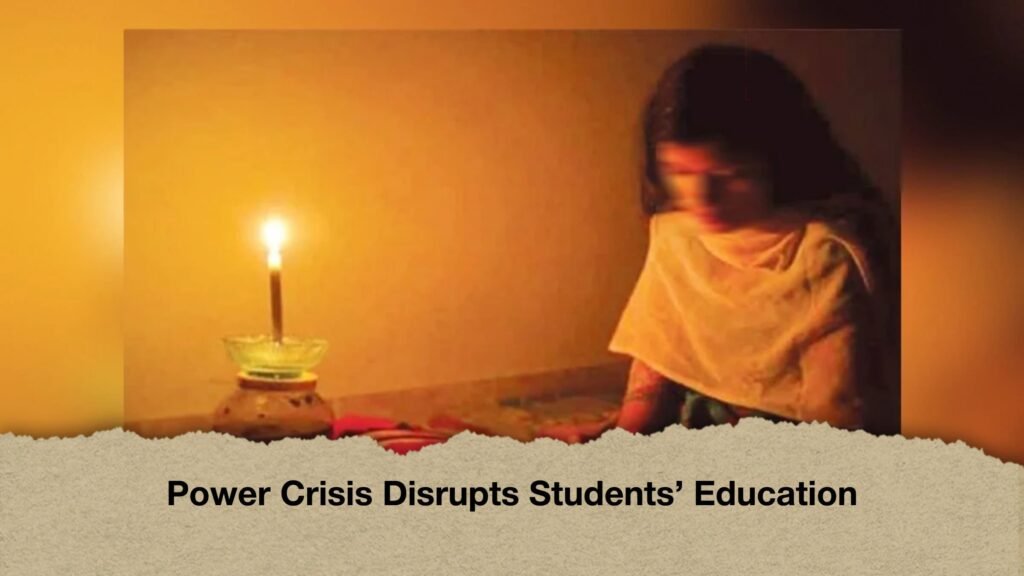
Bangladesh’s worsening electricity crisis is increasingly disrupting students’ studies, with prolonged load-shedding compounding the effects of extreme heat. A shortage of gas has prevented several power plants from operating at full capacity, widening the gap between electricity demand and supply across the country. The disruption is particularly difficult for students, who are struggling to study during the day because of excessive heat and at night because of repeated power cuts. In some rural areas, residents have reported going without electricity for 10 to 12 hours a day. Dhaka has also begun experiencing night-time outages in several neighbourhoods.
The situation has been especially challenging for students preparing for examinations. The written Higher Secondary Certificate and equivalent examinations for 2026 began on 2 July and ended on 8 August. Power supply disruptions occurred in different parts of the country during the examination period. In Kurigram and Lalmonirhat, scheduled load-shedding and planned interruptions were suspended from 29 July to 8 August to ensure uninterrupted electricity during the examinations. The measure underlined how essential a stable power supply is during critical academic periods.
Electricity Shortfall Exceeds 3,000 Megawatts
Recent figures highlight the scale of the crisis. At midnight on 11 August, the country’s electricity shortfall reached 3,592 megawatts. Demand stood at 17,523 megawatts, while only 13,931 megawatts were supplied. At 3pm the following day, the shortfall remained high at 3,382 megawatts.
The situation had been even more severe on the preceding days. On 9 August, the deficit reached 3,671 megawatts at one point, rising to 3,757 megawatts on 10 August. The recent shortfall has also exceeded the previous record of 3,419 megawatts recorded on 27 June 2023.
Rural communities have been among the worst affected. Reports from different areas indicate that some households are facing 10 to 12 hours without electricity each day. In parts of Mymensingh, the period without power has reportedly reached between 10 and 18 hours. Some areas of Sylhet and Barishal have also experienced more than 10 to 12 hours of load-shedding.
The crisis is no longer confined to rural areas. Reports published on 14 August indicated one- to two-hour night-time outages in several parts of Dhaka, including Bashundhara, Eskaton, Kazipara, Mouchak, Karwan Bazar, Panthapath, West Rajabazar and parts of Mohammadpur. Average electricity demand in areas served by the Dhaka Electricity Supply Company is around 2,100 megawatts, while demand in areas under the Dhaka Electric Supply Company is approximately 1,400 to 1,440 megawatts. Each distribution system has reportedly been facing an average load-shedding requirement of around 200 megawatts.
Students Struggle to Study and Sleep
For students, prolonged load-shedding is affecting both study time and rest. During the day, intense heat makes it difficult to concentrate in rooms without fans or cooling systems. At night, repeated power cuts raise indoor temperatures and make sleeping uncomfortable. The resulting disruption can reduce the amount of time students are able to study while also leaving them tired the following day.
Students who rely on online education face an additional disadvantage. Online classes, recorded lessons, digital books, practice examinations and university admission preparation all depend on reliable electricity. When the power goes out, computers and mobile devices may become unusable, while internet-based learning activities are interrupted. In some places, disruptions to mobile networks and internet services alongside power cuts have added to the difficulties.
Zinat Redwana, a fourth-year honours student at National University from Mohammadpur, said power cuts also occur while classes are under way. Repeated outages at home after the evening make it difficult for her to maintain concentration on her studies. She also experiences tiredness when attending classes the following morning because of disrupted sleep, affecting both her studies and daily routine.
Generation Capacity Exists, but Fuel Is Limited
The shortage of fuel is one of the main factors behind the current electricity crisis. Although the country has sufficient overall generation capacity compared with demand, several power plants cannot operate at full capacity because they do not have adequate supplies of gas and other fuels.
Gas-fired power plants require around 2,524 million cubic feet of gas a day, according to recent figures. On 11 August, however, they received only 744 million cubic feet. Because of the shortage, 16 gas-fired and five oil-fired power plants were completely shut down, while another 34 plants were operating below their capacity.
The situation became more difficult after problems emerged at a liquefied natural gas terminal in Maheshkhali towards the end of July. Supplies were also affected when adverse weather reduced deliveries from Summit’s floating liquefied natural gas terminal. As a result, power plants with available generation capacity have been unable to use a substantial portion of that capacity because of insufficient fuel.
Heat and Mosquitoes Add to the Burden
Power cuts are also intensifying discomfort for urban residents by worsening the combined effects of heat and mosquitoes. In the evening, many people have to choose between keeping windows open and allowing mosquitoes inside or closing them and enduring greater heat.
The mosquito problem is particularly concerning amid the country’s dengue situation. More than 17,880 dengue cases have been reported this year, with 59 deaths. Dhaka Division has recorded the highest number of infections and deaths. Health concerns are adding another layer of difficulty for students who already face disrupted sleep and uncomfortable study conditions.
Agriculture and Industry Also Feel the Impact
The electricity shortage is affecting much more than households and educational activities. Agriculture, businesses and industries are also facing disruption. Prolonged power cuts are interfering with irrigation, while shops, workshops, rice mills and various online businesses are experiencing lower productivity.
Many industrial establishments are being forced to reduce production or alter their working schedules. Some are relying on fuel-powered generators at additional cost, increasing their operating expenses.
For students, however, lost time can be particularly difficult to recover. A factory may be able to make up for several hours of lost production later, but a student who misses a crucial period of examination preparation, an admission class or an online lesson cannot always compensate for that lost time. The disruption is therefore affecting not only the quantity of study time but also the continuity of learning.
Government Urges Energy Conservation
Against the backdrop of gas shortages and reduced electricity generation, the government is placing greater emphasis on economical use of electricity. Conservation measures have been strengthened as concerns over fuel supplies and repeated power interruptions continue.
State Minister for Power Anindya Islam Amit has also identified problems with gas supply as one of the key reasons behind disruptions to electricity generation. However, no specific timeframe has yet been given for a complete return to normal electricity supply.
Students Face Continued Uncertainty
Although the written HSC and equivalent examinations have ended, students’ academic activities have not stopped. They are waiting for results, preparing for university admission tests and continuing their regular studies. Reliable electricity remains essential for all of these activities.
The problem is particularly serious for students who depend heavily on online classes and digital learning materials. A power cut can mean more than a temporary interruption: it may result in a missed scheduled class, examination or important educational resource.
Saiful Islam, principal of Alipur Model College in Durgapur, Rajshahi, said frequent power interruptions were affecting irrigation as well as students’ studies in rural areas. He said HSC candidates had also suffered because of the electricity shortage and expressed concern that the disruption could affect their results.
The present crisis therefore extends beyond routine load-shedding. A shortage of gas and other fuels is preventing power plants from making full use of their generation capacity, while the resulting supply deficit is affecting education, agriculture, business and industry simultaneously.
For students, the immediate consequences are reduced study time, disrupted sleep and interruptions to the continuity of learning. With regular academic activities, university admission preparation and examinations continuing, a reliable electricity supply remains essential. The extent to which gas and other fuel supplies can be restored will play a major role in determining how quickly the electricity situation improves.