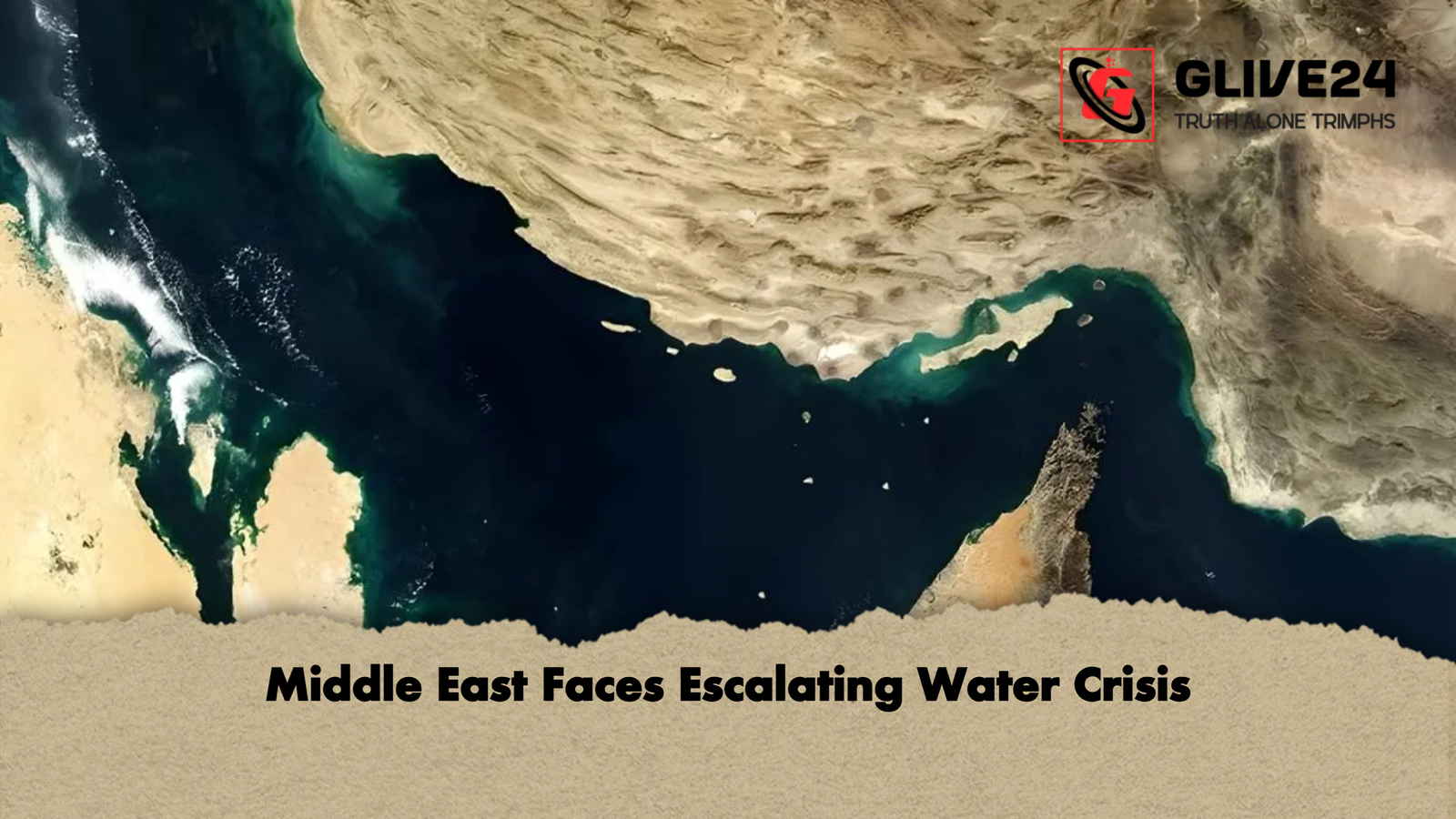
Rising military tensions between Iran and Western powers are not only disrupting oil supplies but also intensifying a looming water crisis across the Middle East. Following recent US and Israeli strikes, Iran has closed the strategically vital Strait of Hormuz, causing interruptions in global oil shipments. Yet analysts warn that the long-term consequences on water resources could far outweigh the effects on petroleum. Damage to water infrastructure threatens not only Iran but the broader region, potentially leaving millions without sufficient freshwater.
Iran’s Severe Water Shortages
Iran is among the countries most affected by water scarcity worldwide. Nearly all of the nation’s renewable water resources are already consumed by agriculture, industry, and domestic use. According to research from the Indian Council of World Affairs, decades of drought, declining rainfall, and over-extraction of groundwater have left Iran’s reservoirs dangerously depleted. Experts project that several key reservoirs could be nearly empty by 2025, threatening food security and livelihoods.
The table below summarises Iran’s current water consumption by sector:
| Sector | Water Use (% of Total) | Key Challenges |
|---|---|---|
| Agriculture | 90% | Inefficient irrigation leading to significant wastage |
| Industry | 7% | Heavy reliance for thermal and production processes |
| Domestic | 3% | Daily household consumption |
The scarcity has far-reaching consequences. Reduced river flows and drying lakes are forcing rural communities to migrate to urban centres, creating social instability and exacerbating environmental stress. Agricultural output is at risk, with potential knock-on effects for national food security.
Geopolitics of Water in the Gulf
The CIA has identified water as a “strategic commodity” in the Middle East. More than 100 million people in the Persian Gulf region rely heavily on desalinated seawater, particularly in Saudi Arabia, Kuwait, Qatar, the United Arab Emirates, and Oman. Iran’s military activities put these desalination plants at high risk.
For instance, Saudi Arabia’s Jubail desalination facility supplies approximately 90% of the country’s drinking water. A 2008 Wikileaks cable noted that without this plant, the national water system would effectively collapse. Any disruption caused by military action or accidents could trigger a severe water shortage across the Gulf states.
A Threat Beyond Oil
While global markets remain concerned about oil instability, experts emphasise that water scarcity represents the region’s more immediate and existential threat. The combination of armed conflict, environmental stress, and overstretched water resources could render parts of the Middle East uninhabitable in the coming decades. As reservoirs shrink and tensions rise, the region’s future may depend less on energy security and more on the availability of freshwater.
In sum, ongoing military tension and deteriorating water infrastructure together create a perilous scenario. Without urgent regional cooperation and sustainable water management, the Middle East faces the prospect of an unprecedented hydrological crisis.