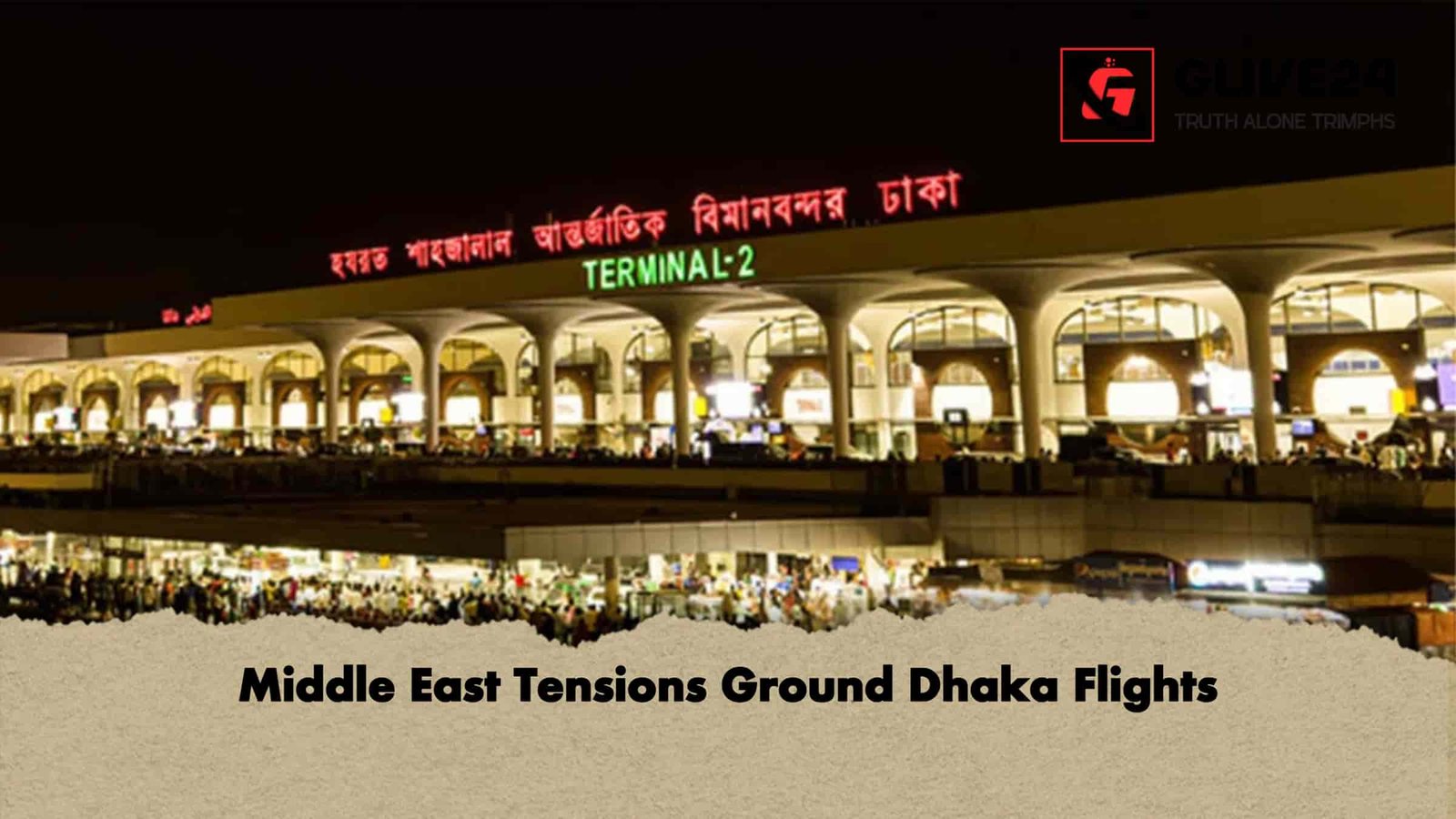
Operations at Hazrat Shahjalal International Airport in Dhaka have been severely disrupted after 131 flights to Middle Eastern destinations were suspended within a span of four days, following escalating conflict across the region. Airport authorities confirmed that the cancellations were enforced due to airspace closures and heightened security risks in several Gulf states.
The disruption began on 28 February, when a worsening security situation prompted multiple countries to temporarily close their airspace. Iran, Iraq, Kuwait, the United Arab Emirates, Bahrain, Qatar and Jordan imposed restrictions on civilian air traffic, immediately affecting scheduled departures from Dhaka. Airlines operating routes to key Gulf hubs were compelled to halt services in phases as the situation unfolded.
Airport data show that cancellations were recorded daily between 28 February and 3 March, with the highest number occurring on 2 March. The figures are outlined below:
| Date | Flights Cancelled |
|---|---|
| 28 February | 23 |
| 1 March | 40 |
| 2 March | 46 |
| 3 March | 22 |
| Total | 131 |
On 3 March, the list of cancelled services included four flights each by Qatar Airways, Emirates, Gulf Air and Flydubai. Kuwait Airways suspended two flights, while Jazeera Airways cancelled four. The affected routes primarily connected Dhaka with Doha, Dubai, Abu Dhabi, Sharjah, Kuwait City and Manama—destinations that serve as major transit and employment centres for Bangladeshi expatriates.
The sudden suspension has created widespread inconvenience for travellers. Migrant workers returning to jobs in the Gulf, business delegates, students and medical patients were among those most severely impacted. Many reported arriving at the airport unaware of the cancellations, leading to difficulties with accommodation bookings, visa timelines and connecting flights through regional hubs.
Airlines have stated that affected passengers are being offered alternative travel arrangements, including rescheduling options and refunds where applicable. Nevertheless, the scale of the disruption has placed considerable strain on airline operations and passenger services.
Officials noted that flights to several destinations have gradually resumed as regional stability shows tentative signs of improvement. However, services to certain Gulf cities remain restricted pending the full reopening of airspace.
Aviation experts observe that geopolitical instability in strategically significant regions can swiftly disrupt global air networks. While such suspensions are economically and personally burdensome, they are widely regarded as essential precautionary measures to ensure operational safety. Travellers have been urged to confirm flight status directly with their airlines prior to departure for the airport.