
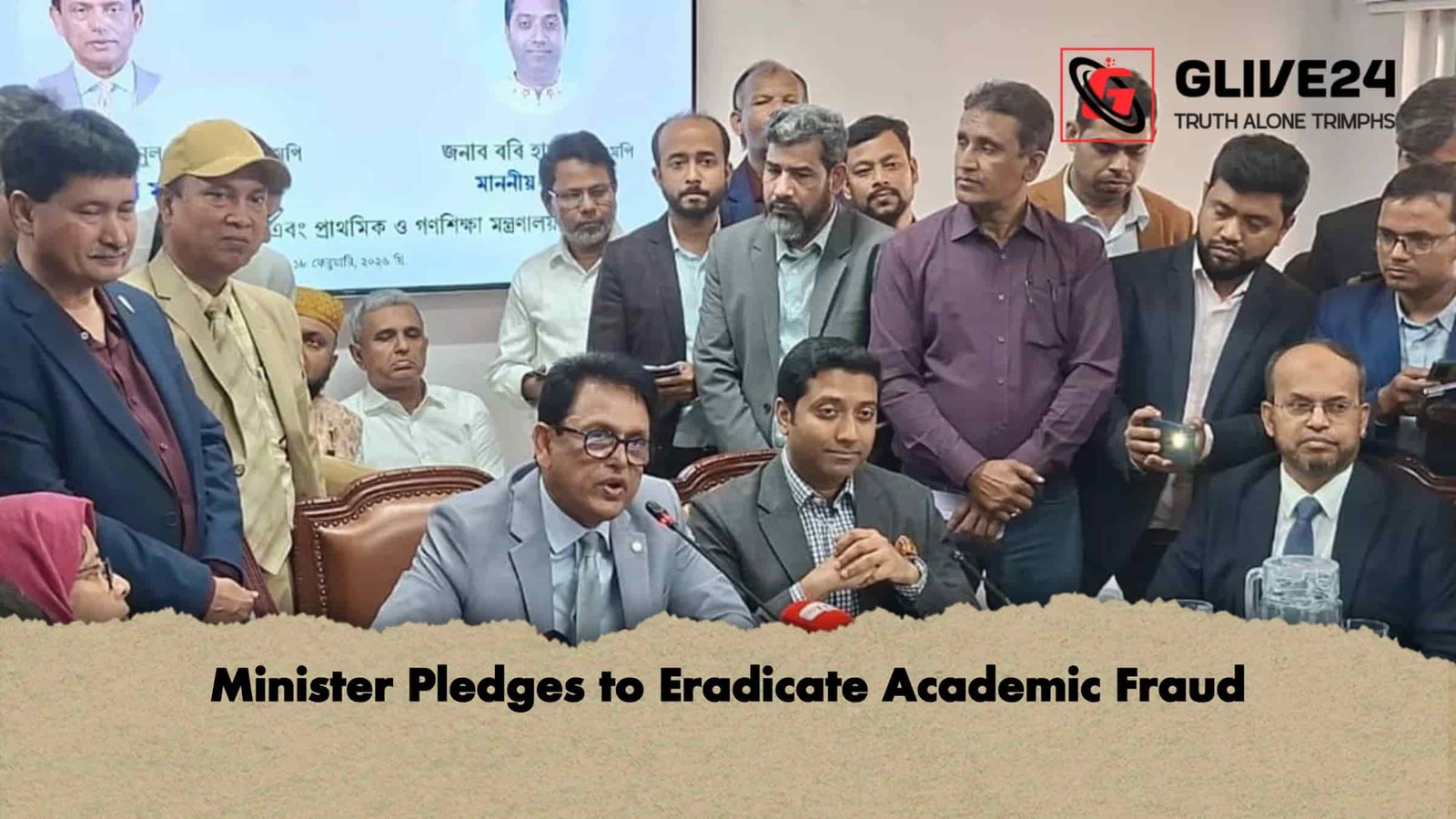
The newly appointed Minister of Education, A N M Ehsanul Haque Milon, has pledged to eliminate academic fraud, examination leaks, and malpractice across all educational institutions in Bangladesh. Speaking at a press conference on Friday, 18 February, held at the Ministry of Education premises in Dhaka, the minister emphasised the government’s commitment to ensuring both the quality and integrity of the nation’s education system.
“We are determined to implement rigorous monitoring and effective measures in schools, colleges, and universities to uphold educational standards and discipline,” Minister Milon stated. Reflecting on his previous tenure, he added, “During my earlier term, we took stringent actions to prevent cheating and question-paper leaks. We intend to continue these measures with even greater vigilance.”
The minister reiterated the government’s commitment to making the education system transparent, accountable, and aligned with international standards.
Modernisation and Curriculum Reform
Minister Milon unveiled an extensive plan to modernise the national education system, aiming to align it with global standards. The key initiatives include:
Comprehensive curriculum review and updates to meet international benchmarks.
Enhanced focus on digital skills and English language proficiency.
Introduction of courses aligned with the Fourth Industrial Revolution, such as nanotechnology, artificial intelligence (AI), and robotics.
Addressing students directly, he said, “We cannot progress with an outdated education system. The world today is a global village. Our education must be knowledge-based and technology-driven, enabling students to meet global challenges successfully.”
Tackling Corruption in Education
On questions regarding corruption in the education sector, Minister Milon emphasised, “My focus is not on the past but on the present and future. No form of malpractice will be tolerated during my tenure. Regular audits and transparent reporting will ensure accountability, particularly in MPO registration and institutional management.” He also acknowledged longstanding issues faced by private-sector teachers, including low salaries and limited benefits, promising timely government intervention to address them.
Key Areas of Proposed Educational Reform
| Reform Area | Proposed Measures | Objective |
|---|---|---|
| Curriculum | Review and update | Align with international standards |
| Digital Skills | Integration of technology-based learning | Enhance students’ competitive abilities |
| Language Proficiency | Emphasis on English | Improve global communication skills |
| Future Technology Skills | Courses in AI, Robotics, Nanotechnology | Meet demands of the Fourth Industrial Revolution |
| Institutional Oversight | Strict monitoring and accountability | Prevent academic fraud and malpractice |
Through these initiatives, the Ministry of Education aims to establish a disciplined, modern, and globally competitive education system. The reforms are designed to equip students with 21st-century skills while positioning Bangladeshi institutions on the international stage.
The press conference was attended by Babi Hazzaz, among other dignitaries.