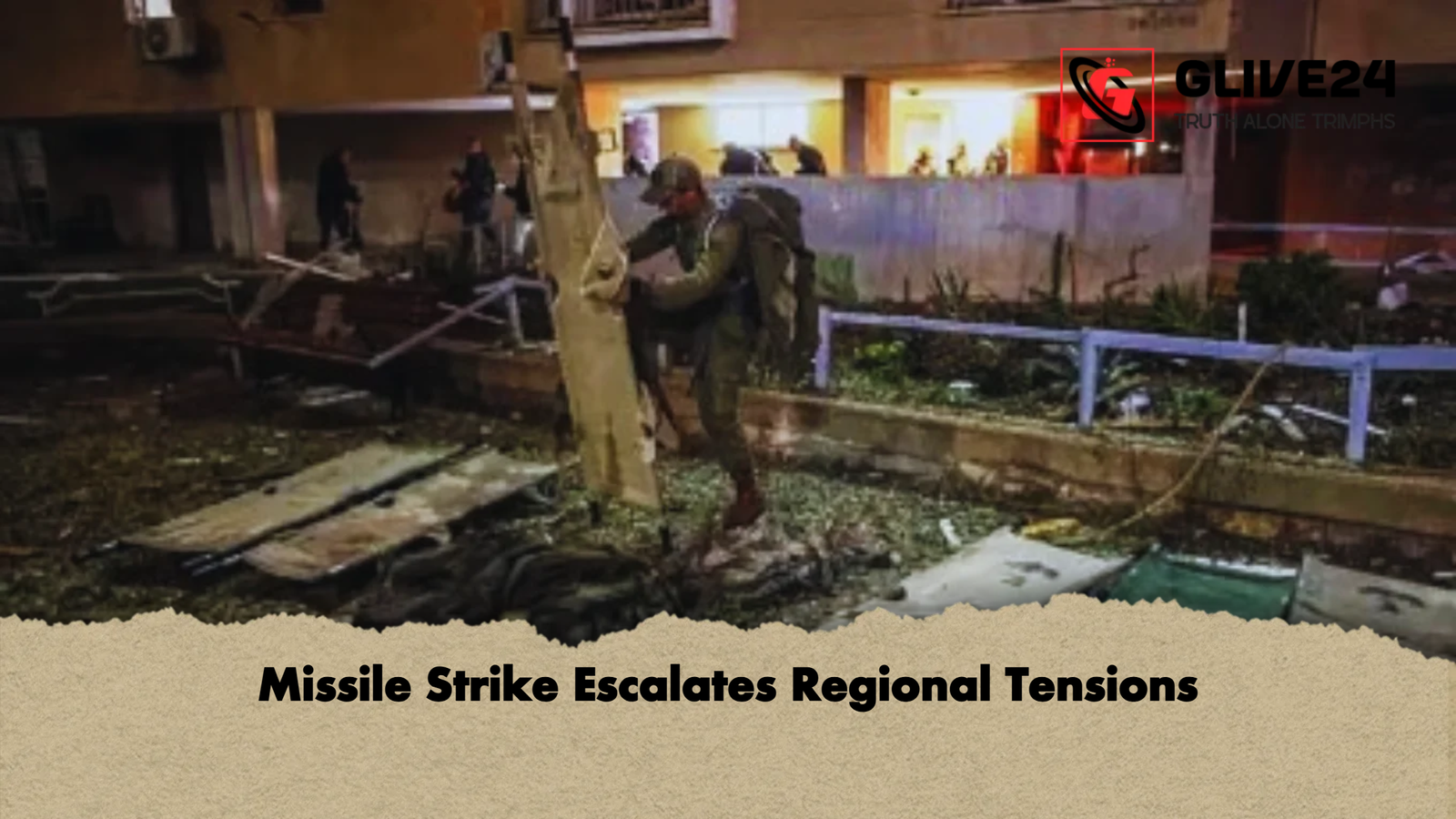
A missile strike attributed to Iran has struck the southern Israeli city of Arad, leaving more than fifty people injured and sharply intensifying tensions across the Middle East. The attack, which targeted both residential zones and nearby infrastructure, has raised fears of a broader regional confrontation involving multiple global powers.
Emergency services in Israel responded swiftly, evacuating the wounded—among them women and children—to nearby medical facilities. Local authorities reported structural damage to homes and public utilities, while the Israeli military activated advanced air defence systems to intercept further incoming threats. Though some projectiles were neutralised, several managed to penetrate defences, underscoring the growing sophistication and scale of the conflict.
The strike comes amid a deepening war of rhetoric and strategic threats between Tehran, Washington, and Tel Aviv. A spokesperson for Iran’s Khatam al-Anbiya Central Command, Ebrahim Zolfaghari, warned that any attack on Iranian power plants would trigger retaliatory strikes against energy infrastructure linked to both the United States and Israel across the Middle East. According to him, potential targets could include oil and gas facilities, electricity generation plants, desalination systems, and even critical information technology networks.
This warning follows remarks by former U.S. President Donald Trump, who reportedly issued a 48-hour ultimatum demanding the reopening of the strategically vital Strait of Hormuz. He cautioned that failure to comply could result in direct strikes on Iran’s energy infrastructure. The Strait of Hormuz remains one of the world’s most crucial maritime chokepoints, through which a significant portion of global oil supplies transit daily. Any disruption there could have immediate and far-reaching consequences for international energy markets.
Further heightening concerns, Iran has reiterated earlier warnings about the vulnerability of regional energy systems. Reports from Fars News Agency cited remarks by the late Iranian official Ali Larijani, who had cautioned that an ment on Iran’s national electricity grid could plunge much of the Middle East into darkness within thirty minutes. Such a scenario would not only cripple essential services but also disrupt economic and security operations across several nations.
The evolving crisis highlights the increasing interdependence of military strategy and energy security in the region. Analysts warn that targeting infrastructure—particularly electricity and water systems—marks a dangerous escalation that could directly impact civilian populations and global supply chains.
Below is a summary of key developments:
| Key Aspect | Details |
|---|---|
| Location of attack | Arad, southern Israel |
| Injuries reported | Over 50 individuals |
| Nature of strike | Missile attack |
| Iranian warning | Retaliation against US-Israel energy infrastructure |
| Strategic concern | Strait of Hormuz and regional energy security |
| Potential impact | Power outages, oil supply disruption, regional instability |
Experts caution that unless diplomatic channels are urgently activated, the situation risks spiralling into a wider conflict. With critical infrastructure increasingly becoming a target, the stakes now extend far beyond military engagements to include humanitarian and economic consequences on a global scale.